by Emrys Westacott
 When terrorist atrocities are visited on civilian populations, the immediate emotional response is a combination of shock, sadness, and anger. That is natural and understandable. But the anger people feel fuels the thought that “something must be done; ” and political leaders, acutely aware of what is expected of them, immediately proceed to take some action or other. Thus, after the recent massacre in Paris, French president François Hollande ordered bombing raids on Raqqa, an ISIS stronghold in Syria. After 9/11 George Bush ordered a military campaign against al Qaeda in Afghanistan. These knee-jerk responses may gratify the urge to act; they also satisfy the politicians' need to appear to be doing something. But these are unworthy ends. Always, the crucial question regarding any action a government takes should be: What are its likely long-term consequences? And very often, it seems, the long-term consequences of the responses to terrorist atrocities are quite contrary to what is intended or hoped for.
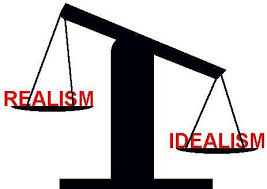
Without question, the violence threatened and perpetrated by organizations like ISIS and al Qaeda has to be addressed directly. Appropriate surveillance, improved security procedures, and sometimes military measures are all in order. But we should challenge the idea that those who support large-scale offensive military actions or draconian domestic security measures are the hard-heads, the realists, the pragmatists, while those who tend to be skeptical about the likely efficacy of such actions are weak, soft, unrealistic, and naïve. If anything, the opposite is true.
Let's face it, the track record of the hard-headed hawks is not exactly inspiring. After 9/11, a US military campaign in Afghanistan ousted the Taliban (who had provided a supportive platform for Al Qaeda). This was certainly applauded by most Afghanis. But fourteen years on, around 150,000 people have been killed,[1] about $700 billion dollars have been spent,[2] and Afghanistan was ranked a year ago by Transparency International as the fourth most corrupt country in the world.[3]
The cost of the US led invasion of Iraq in 2003 and its aftermath has been even greater: over 224,000 deaths (according to the Iraq Body Count Project),[4] $815 billion dollars spent, and Iraq is ranked by Transparency International as the sixth most corrupt country in the world.
Moreover, the dollars and death stats just cited seriously understate the real costs. In addition to all the deaths there are hundreds of thousands of people who are crippled, blinded, deafened, maimed, disfigured, or traumatized, not to speak of millions who are widowed, orphaned, or suffer inconsolable grief at the deaths of their children, siblings, family and friends. Millions have lost or been forced to leave their homes.
Read more »