by Aasem Bakhshi
Why does an apple fall when it is ripe? Is it brought down by the force of gravity? Is it because its stalk withers? Because it is dried by the sun, because it grows too heavy, or the wind shakes it, or because the boy standing under the tree wants to eat it? ‘None of these is the cause. They only make up the combination of conditions under which every living process of organic nature fulfills itself. In the same way the historian who declares that Napoleon went to Moscow because he wanted to, and perished because Alexander desired his destruction, will be just as right and wrong as the man who says that a mass weighing thousands of tons, tottering and undetermined, fell in consequence of the last blow of the pickaxe wielded by the last navy. In historical events great men – so-called – are but labels serving to give a name to the event, and like labels they have the least possible connection with the event itself. Every action of theirs, that seems to them an act of their own free-will, is in the historical sense not free at all but is bound up with the whole course of history and preordained from all eternity.
―Leo Tolstoy, War and Peace
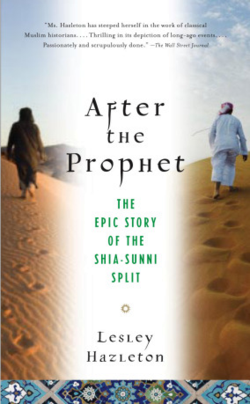
These are all overpowering images, sustained over time, and hard to erase from the slate of our memories. It doesn't matter much if we argue, for instance, that it was not Hind but the black slave Wahshi who actually gouged out Hamza's liver according to a traditional Muslim historian Ibn Kathir's narrative or else that the earliest recording of the incident by the historian Ibn Ishaq is a dubious attribution because of broken chains of narration. Similarly, does it matter that fiddles were non-existent in first-century Rome and it is probably an anciently preserved metaphor, as Nero was famous for his love of extraordinary indulgence in music and play? It would not transform these images the least if we juxtapose the contradicting accounts of Suetonius, Cassius and Tacitus and present evidence that Nero even returned immediately from Antium and organized a great relief effort from his own funds, even opening his palaces for the survivors. And it is pretty much futile to argue ― after BBC popularized Graves' autobiographical account of Claudius by adapting it into a TV series ― that Livia might not be a such a thorough Machiavellian character, and in fact it was not her favorite pastime to scheme political upheavals and poison every other claimant to Roman throne.
Thus after centuries of dust settling over innumerable layers of narratives, the quest for historical certainty, for that which actually happened, is overpowered by popular images that refuse to erase themselves from collective memory.
And this, of course, is also the single most important contribution of British-American psychologist Lesley Hazleton's narrative history of Shia-Sunni split: refreshing and reinforcing some already held soppy images.