by Paul Braterman
Part 1 of this series, “Atoms Old and New: Atoms in Antiquity” can be read here.
The transition to modern thinking
“It seems probable to me, that God in the beginning formed matter in solid, massy, hard, impenetrable, movable particles… even so very hard, as never to wear or break in pieces; no ordinary power being able to divide what God Himself made one in the first creation.” So wrote Sir Isaac Newton in his 1704 work, Opticks. Apart from the reference to God, there is nothing here that Democritus would have disagreed with. There is, however, very little that the present-day scientist would fully accept. In this and later posts, I discuss how atoms reemerged as fundamental particles, only to be exposed, in their turn, as less than fundamental.
The scientific revolution and the revival of corpuscular theory – 1543–1687
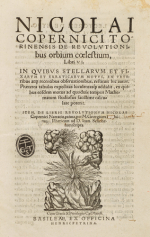
Before this scientific revolution, European thinking about nature still followed that of Aristotle. The Earth lay at the centre of the Universe. Objects on Earth moved according to their nature; light bodies, for instance, containe, air or fire in their makeup, and these had a natural tendency to rise. Earth was corrupt and changeable, while the heavens were perfect and immutable, and the heavenly bodies rode around the centre on spheres within spheres because the sphere was the most perfect shape. By its end, Earth was one of several planets moving round the Sun in elliptical orbits, the movements of objects were the result of forces acting on them, the laws of Nature were the same in the heavens as they were on Earth, and all objects tended to move in straight lines unless some force deflected them from this path. The Universe ran, quite literally, like clockwork. This mechanical world-view was to last in its essentials until the early 20th century, and still remains, for better or worse, what many non-scientists think of as the “scientific” viewpoint.