by Michael Liss
“Our commitment to academic freedom means that we do not support so-called ‘trigger warnings,' we do not cancel invited speakers because their topics might prove controversial, and we do not condone the creation of intellectual ‘safe spaces' where individuals can retreat from ideas and perspectives at odds with their own.”
—John Ellison, Dean of Students, University of Chicago
 I was an undergraduate at Johns Hopkins University in the 1970s, a place and a time where the phrase “safe space” referred to the stocked civil-defense structures under the campus, and “trigger warnings” were letters you didn't want to be receiving from people in positions of authority.
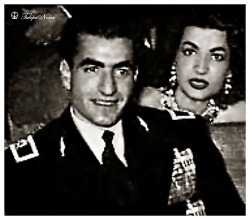
I raise this not to launch into a “when men were men” rant, but rather because Dean Ellison's letter reminded me of two lectures I attended at JHU—the first given by Alger Hiss, the second, in connection with the receipt of an honorary LLM awarded by the University, by Princess Ashraf Pahlavi of Iran. Hiss, as people of a certain vintage would know, was a government and State Department official accused, in 1948, of being a spy for the Soviets. in 1950, he was tried and convicted for perjuring himself before the House Un-American Activities Committee, and jailed for three and a half years. He then spent the rest of his life protesting his innocence. Princess Ashraf was the once-exiled twin sister of the Shah.
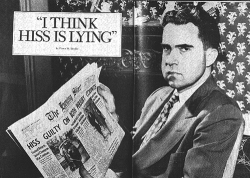 Hiss's talk was fascinating. Tall, thin, balding, and wispy looking, his cultured voice a little grainy with age, he inhabited the stage—if I recall, he had a stool, but moved about a bit—with the ease of an actor. His memory was like an old library filled with leather-bound books. He would select an event, pull it out, find some passages to share, put it back, and move to the next volume.
He was playing before an easy crowd—liberal college kids and faculty who loathed both Richard Nixon and the McCarthy-Era mindset he sprang from. Watergate was burning up everything in sight, and the yin-yang of Hiss and Nixon seemed to illustrate the obvious innocence of Hiss. A profound injustice had been done—Hiss had been made to pay an enormous price (his career and his freedom) to satisfy the colossal ego, ambition, and paranoia of Nixon and a passel of self-appointed patriots who looked for Commies under every bush.
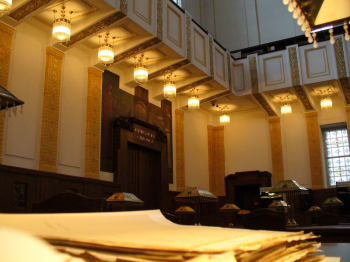
That is at least what we thought, when going into Shriver Hall. And yet, after hearing him speak, my friends and I left with more questions than we had when we arrived. There was something about Hiss, maybe his affect, maybe just a studied compartmentalization, a reserve that came from living a life too often in shadows and alleyways, that gave us a slightly clammy feeling. We didn't buy Nixon's accusations of Hiss endangering the fiber of American life, but there was the odd sense of not hearing the entire story, of things omitted, choices unrevealed.
Read more »