by Carol Westbrook
I live in a flyover state, Indiana, USA. You know, one of those states that you fly over but you don’t stop in, as you travel East Coast to West Coast or the post-industrial Midwest. You know, the vast prairies where no one important lives, mostly rural and small town. Where the people are mostly white, socially conservative highly religious and staunchly Republicans. Where there are too few people to influence national politics. You know, the ones who put Donald Trump in office.
This May, I was the Election Inspector for the primaries in our precinct, Pine 2, of Porter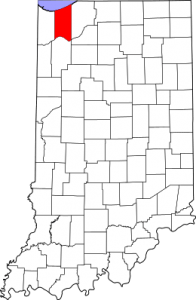 County, Indiana. Porter County is not exactly flyover country–we’re more of a hybrid flyover/northern city. We are tucked into the northwest corner of Indiana, a region filled with heavy industry and a few large cities on the shores of Lake Michigan. Our population, 166,000, is only 3% that of Chicago, and is 93% white.
Pine 2 is only 60 miles from Chicago and is filling with Chicago expatriates seeking lower property and sales tax, cheaper houses, or wooded country retreats an easy hour commute to Chicago. Pine 2 itself has no industry, but it includes my little town of Beverly Shores, which houses a high proportion of artists, intellectuals, Chicago commuters and retired University of Chicago professors. Democrats outnumber Republicans three to one. The other 132 precincts of Porter County, though, are truly flyover country. Forty percent is farmland; it is is dotted with small towns and small industry. It is socially and politically conservative, strongly religious, and staunchly Republican. Read more »




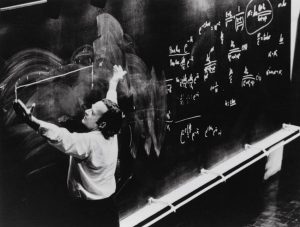 On May 11th, to mark the 100th anniversary of Richard Feynman’s birth, Caltech put on a truly dazzling evening of public talks. I heard that tickets sold-out online in four minutes; and this event was so popular that attendees started queueing up to enter the auditorium an hour before the program began. Held in Caltech’s
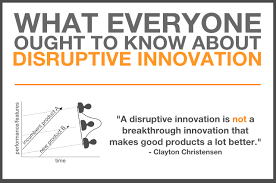 30 years ago I moved from the UK to New York City and I gave up my car. I had mixed feelings about doing so at the time – I was only 21 and driving was still a novelty and an expression of independence. When I moved out of New York City to upstate 13 years later, I again became a car owner and regular driver. After my divorce, when I moved back to New York City, I once again gave up my car, this time happily. I would honestly be thrilled if I never had to get behind the wheel of a car again. I don’t enjoy driving, I’m not the most confident driver (I cannot reverse to save my life even after over 30 years of driving) and I generally would prefer to be driven. My transportation needs are now taken care of by a combination of public transport, ride sharing services and a boyfriend with a car who is very good about driving me around. And thanks to online shopping, the retail convenience of a car ownership has almost totally disappeared. As far as I’m concerned, this is a perfect state of affairs.
  The freer the market, the more people suffer.
 It’s with a certain pleasure that I can recall the exact moment I was seduced by the musical avant-garde. It was in the fourth grade, in a public elementary school somewhere in New Jersey. Our music teacher, Mrs. Jones, would visit the classroom several times a week, accompanied by an ancient record player and a stack of LPs. You could always tell when she was coming down the hall because the wheels of the cart had a particularly squeak-squeak-wheeze pattern. However, such a Cageian sensibility was not the occasion of my epiphany. I’m also not sure if fourth-graders are allowed to have epiphanies, or, which is likelier, if they are not having them on a daily basis.