by Pranab Bardhan
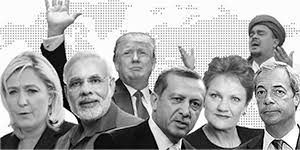 The ill-defined term ‘populism’ is used in different senses not just by common people or the media, but even among social scientists. Economists usually interpret it as short-termism at the expense of the long-term health of the economy. They usually refer to it in describing macro-economic profligacy, leading to galloping budget deficits in pandering to all kinds of pressure groups for larger government spending and to the consequent inflation—examples abound in the recent history of Latin America (currently in virulent display in Venezuela). Political scientists, on the other hand, refer to the term in the context of a certain widespread distrust in the institutions of representative democracy, when people look for a strong leader who can directly embody the ‘popular will’ and cut through the tardy processes of the rule of law and encumbrances like basic human rights or minority rights. Even though I am an economist, in this article I shall mainly confine myself to the latter use of the term.
This kind of populism now raging in many parts of the world has often been portrayed by a broad brush, with pointers to common factors behind the rise of Trump in US, Orban in Hungary, Brexiteers in UK, Putin in Russia, Kaczynski in Poland, Babis in the Czech Republic, Erdogan in Turkey, Modi in India or Duterte in the Philippines. There are indeed several common factors that apply to these cases, like widespread anxiety from job insecurity, a surge of ethnic nationalism that tries to legitimize majoritarian repression of minority rights and due process, a hankering for supreme leaders offering seductively simple solutions to complex problems, and so on. For my take on the commonalities in our understanding of the populist challenges all over the world, you may look up this article in the Boston Review.
But these portrayals often overlook some special characteristics of developing-country populism which are qualitatively different from those in rich countries. Keeping this in mind may help in calibrating a nuanced response to the populist challenge in different cases. Read more »
 When Mrs. William Shakespeare died on this August day in 1623, her family and friends believed they would lay her to eternal rest beside her renowned husband. They did not. They did inter an ordinary wife and mother, but the memory of her went out to become a Frankenstein monster, cut up and reassembled down the centuries. Few of the many makeovers done to Anne Hathaway Shakespeare since her passing have been flattering.
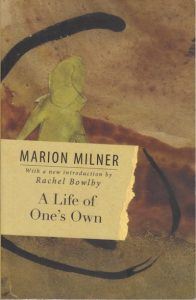 I’m tempted to describe Marion Milner’s book A Life of One’s Own as the missing manual for owners of a human mind. However, it’s not didactic or prescriptive. In fact, it’s useful mainly because it’s nothing like a manual or a self-help book. The book is more like an insightful travelogue by an articulate and honest observer with a gift for using vivid physical imagery and metaphors to describe her inner world.
 The 2020s will have a name. In the nursing homes of the future, Millennials’ grandchildren will hear all about the coming decade. Gran will remove her headset, loaded out with VR-entertainment and the latest in biometric tech, and she’ll tell the kids about the world as it was in the third decade of the 21st Century. For now, we look ahead to the Twenties, a decade certain to be charged with meaning, roaring in one way or another.
 One of my favorite quotes about artificial intelligence is often attributed to pioneering computer scientists Hans Moravec and Marvin Minsky. To paraphrase: “The most important thing we have learned from three decades of AI research is that the hard things are easy and the easy things are hard”. In other words, we have been hoodwinked for a long time. We thought that vision and locomotion and housework would be easy and language recognition and chess and driving would be hard. And yet it has turned out that we have made significant strides in tackling the latter while hardly making a dent in the former. The lower-level skills seem to require significantly more understanding and computational power than seemingly more sophisticated, higher-level skills.

 As a child, I feared dogs. A neighbor kept his German Shepherds, Heidi and Sarge, in a large pen along the alley. The yard and house, his parents’, were the biggest for many blocks. On the alley side, the chain link fence stood 10 feet. The dogs would charge out of their houses silently and hurl their bodies at the fence snarling and barking. I was caught unaware at the fence a few times. My stomach curdled and legs buckled. My mother’s family are dog people. My grandparents cared for a series of large overfed dogs who cavorted in the swamps surrounding their Massachusetts home and otherwise slumped under the kitchen table waiting for my grandmother to put together meals of breakfast scraps bound with maple syrup or for treats from a cookie jar on her counter. My uncles had shambling dogs who would leap into rough water off Cape Cod to retrieve balls from seaweed choked waves. As their fur dried, they smelled of sour salt water and general funk. At the rented house, they showed a gentle deference to humans and lolled on the grass or carpet while my cousins and I ate and talked.
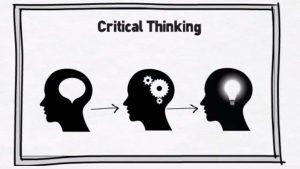 Having taught Philosophy for 46 years in three Universities—two State and one private—and never taught a Critical Thinking course one might have some questions about my choice of topic. My response is two-fold. First, there is a sense in which no matter what the topic of a particular course philosophy is always about critical thinking. One’s lectures are intended to model careful, reflective thought, sensitive to both the considerations favoring one’s views as well as the strongest objections. Second, because it is always going to be essential to use and define essential logical terminology.
 For a Baptist, the Bible exists like gravity. Not believing in gravity will not change the outcome if you step off a building; not believing the Bible will not change the consequences if you ignore its precepts and commands. Both are laws of nature, fixed and unchanging.
 Few topics have captured the attention of the internet literati more than the topic of Jordan B. Peterson. Peterson,