by Tim Sommers
Do You Own Yourself?
In 1646, the Leveller leader, Richard Overton became the first person in the English-speaking world to assert that we own ourselves. “To every Individuall in nature, is given an individuall property by nature, not to be invaded or usurped by any,” he wrote, “for every one as he is himselfe, so he has a selfe propriety, else he could not be himself.”
We might question the claim that without owning ourselves we couldn’t be ourselves. After all, we don’t need ownership, or property law, to explain why my beliefs are mine or why my actions are mine.
But it’s easy to appreciate the political strategy behind Overton’s use of self-ownership – once you hear it.
The Levellars, so-named originally by opponents for supposedly having leveled hedges during the enclosure riots, were the egalitarians of the English Civil War preaching that sovereignty was founded on consent and that the franchise and property ownership should be extended to all men. Overton was responding to the argument that only men of property should be allowed to vote, when he wrote that all men are men of property, because all men have property in themselves.
Do they, though? It sounds plausible. But do you own yourself?
Actually, that’s an easy one. Ownership is a legal notion. In no legal system in the world do you own yourself. (About as close as you can come to a legal precedent, in American law, that might be interpreted as supporting self-ownership has to do with copyright: celebrities do, at least to some extent, own the use of their image for commercial purposes.)
But even if you don’t own yourself, maybe, you should. Read more »

 Little Miracles 2:


 The dangers of climate change pose a threat to all of humankind and to ecosystems all over the world. Does this mean that all humans need to equally shoulder the responsibility to mitigate climate change and its effects? The concept of CBDR (common but differentiated responsibilities) is routinely discussed at international negotiations about climate change mitigation. The basic principle of CBDR in the context of climate change is that highly developed countries have historically contributed far more than to climate change and therefore need to reduce their carbon footprint far more than less developed countries. The per capita rate of vehicles in the United States is approximately 90 cars per 100 people, whereas the rate in India is 5 cars per 100 people. The total per capita carbon footprint includes a plethora of factors such as carbon emissions derived from industry, air travel and electricity consumption of individual households. As of 2015, the
 A number of scenes in Eugene Zamyatin’s dystopian novel
 The link to Charles McGrath’s ‘No Longer Writing, Philip Roth Still Has Plenty to Say’ which appeared in the New York Times in January, only a few months prior to Roth’s death in May this year, was forwarded to me by a friend who thought I might find the article interesting. How indebted I am to my friend that he thought of me in those terms, for the sending of that article rekindled my acquaintance with Roth; life’s events and circumstances had left my reading of his work to the margins.

 The past years have seen many debates about the limits of science. These debates are often phrased in the terminology of scientism, or in the form of a question about the status of the humanities. Scientism is a
 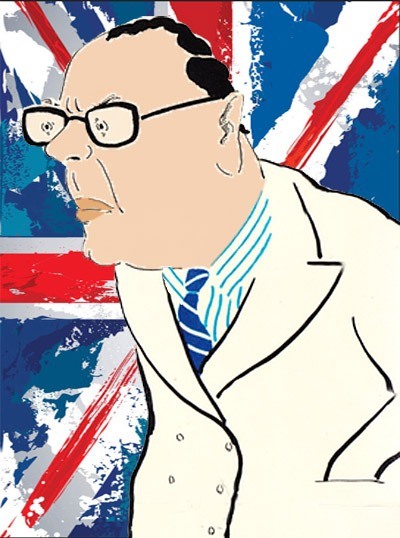 The career of Kenneth Widmerpool defined an era of British social and cultural life spanning most of the 20th century. He is fictional – a character in
 It’s a Saturday in May. I’m 17, and I’ve spent the morning washing and waxing my first car, a 1974 Gremlin. I’m so delighted that I drive around the block, windows down, Chuck Mangione playing on the radio. Feels so good, indeed. I’ve successfully negotiated a crucial passage on the road to adulthood, and I’m pleased with myself and my little car. Times change, though, and sometimes even people change. Forty years later, with, I hope, many miles ahead of me, I sold what I expect to be my last car.
 I like playing Scrabble, and part of the reason is creating new words. That and the smack talk. I played a game with the swain of the day decades ago, and he challenged my word, which was not in and of itself surprising. As you may recall, if you lose a challenge, you lose a turn. With stakes so stupendously high, you mount a vigorous defense. I ended up losing the battle (and probably won the war) and thought no more of it. The ex-boyfriend brought it up a few years ago; I think he has put that on-the-spot coinage next to a picture of me in his mind. It is a shame that the word he will forever associate with me is “beardful.”