
by Anitra Pavlico

In April, the U.S. Senate Judiciary Committee voted favorably on a bill aimed at protecting Special Counsel Robert Mueller from being fired by the President without good cause. Some Republican senators doubted the legality of the bill, based on a one-judge dissent in a U.S. Supreme Court case decided in 1988, Morrison v. Olson. One senator even considered himself “bound” by Justice Scalia’s dissent in that case. A dissent in a case in Supreme Court, or any court, is the losing argument and cannot bind anyone to follow its reasoning. Was Scalia’s opinion correct and the rest of the Supreme Court justices made a terrible mistake? Maybe shooting down the bill is what the framers of the Constitution–because this is in fact a constitutional question–would have wanted? Well, no. As constitutional scholar Victoria Nourse writes, “Cloaking themselves in Scalia’s lonely and incorrect dissenting opining, senators opposing the Integrity Act are attempting to upend the Constitution by embracing a dangerous constitutional argument contrived to render the President immune from scrutiny.”
The so-called unitary executive theory animates critics’ claims that the bill impermissibly curtails the President’s authority. Under this theory, any attempt to limit the President’s control over the executive branch is seen as unconstitutional. You may recall it rearing its head during George W. Bush’s presidency, as its adherents relied on it to justify the infamous “torture memo” drafted by White House counsel John Yoo, who argued, “The historical record demonstrates that the power to initiate military hostilities, particularly in response to the threat of an armed attack, rests exclusively with the President. [. . .] Congress’s support for the President’s power suggests no limits on the Executive’s judgment whether to use military force in response to the national emergency.” Carried to its extreme, the unitary executive theory could potentially undermine a democracy. Read more »
 Try it: try talking about the subject of reading without drifting off into how the Internet has changed the way we absorb information. I, along with the majority of people I know whose reading habits were formed long before the advent of digital magazines and newspapers, Google Books, blogs, RSS feeds, social media, and Kindle, usually feel I’m only really reading when it’s printed matter, under a reading lamp, with the screen and phone turned off. But the reality is that I do a vast amount of reading online.
 Polynesia could swallow up the entire north Atlantic Ocean. It’s that big.
 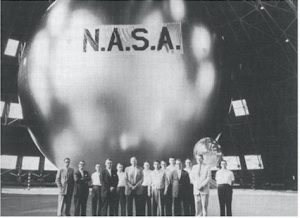 spanning George Boole to Claude Shannon. By some measures the works of these men combine to give us our modern, programmable computer.
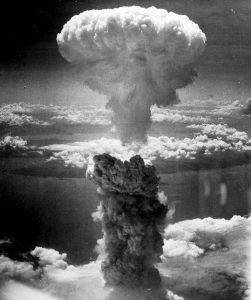 Will you know what to do when the atomic bomb drops?

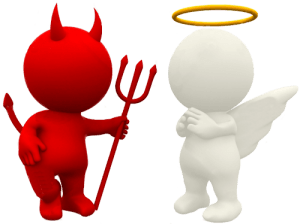 Even as we want to do the right thing, we may wonder if there is “really” a right thing to do. Through most of the twentieth-century most Anglo-American philosophers were some sort of subjectivist or other. Since they focused on language, the way that they tended to put it was something like this. Ethical statements look like straight-forward propositions that might be true or false, but in fact they are simply expressions or descriptions of our emotions or preferences. J.L. Mackie’s “error-theory” version, for example, implied that when I say ‘Donald Trump is a horrible person’ what I really mean is ‘I don’t like Donald Trump’. If we really believed that claims about what is right or wrong, good or bad, or just or unjust, were just subjective expressions of our own idiosyncratic emotions and desires, then our shared public discourse, and our shared public life, obviously, would look very different. One of Nietzsche’s “terrible truths” is that most of our thinking about right and wrong is just a hangover from Christianity that will eventually dissipate. We are like the cartoon character who has gone over a cliff but is not yet falling only because we haven’t looked down. Yet.
 Our first act of communication is to look in each other’s eyes, or not to. Many descriptors center subtly on the gaze: I might be shifty if I’m looking away from you too often and too purposefully, diffident if I cast downward when I ought to be looking you in the eyes, or unsettling if I never stop looking at you.

 In the science fiction short story “
 The major “National-Socialist Underground” trial