
by Tim Sommers
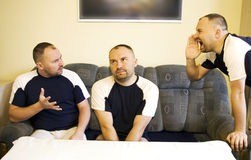
Here are some well-known facts. Human beings are limited beings. We take up a limited amount of space, we exist for a limited amount of time, and, in that time, we move around in a relatively confined area. When it comes to the substance of our lives we constantly make choices that limit our options going forward, and we must often choose one path over another in a way that sometimes (maybe, often) forecloses the other path forever. It’s hard to even conceive of what it could mean for us to not be limited in these ways. But here’s one conceivable way we could be less limited. What if there could be numerically more of us? What if, for example, instead of choosing between paths we could make copies of ourselves and go both ways?
Since we can’t do that, we might wonder why the question is even worth asking. I am tempted to say it’s because we might be able to do that one day (or that it may, in fact, be happening to us right now, though we don’t know it) – but, of course, that’s not why. It may not be worth asking such a question. But if it is, it will be because it tells us something about ourselves right now.
So, would it be better if there were more of you?
That’s not quite the question I want to answer. It seems clear to me that the world would be a better place if there more Shakespeare’s and more Virginia Wolff’s, more Ada Lovelace’s and more Einstein’s, more Gandhi’s and more Ruth Bader Ginsburg’s – not to mention more Denis Johnsons’. I don’t mean that it would be better if there more people like, for other examples, Mac McCaughan’s or Martin Luther King, I mean the world would be better if there were numerically more of these particular people – or, if you prefer, if there were more (initially) exact copies thereof. Read more »
 My
My 


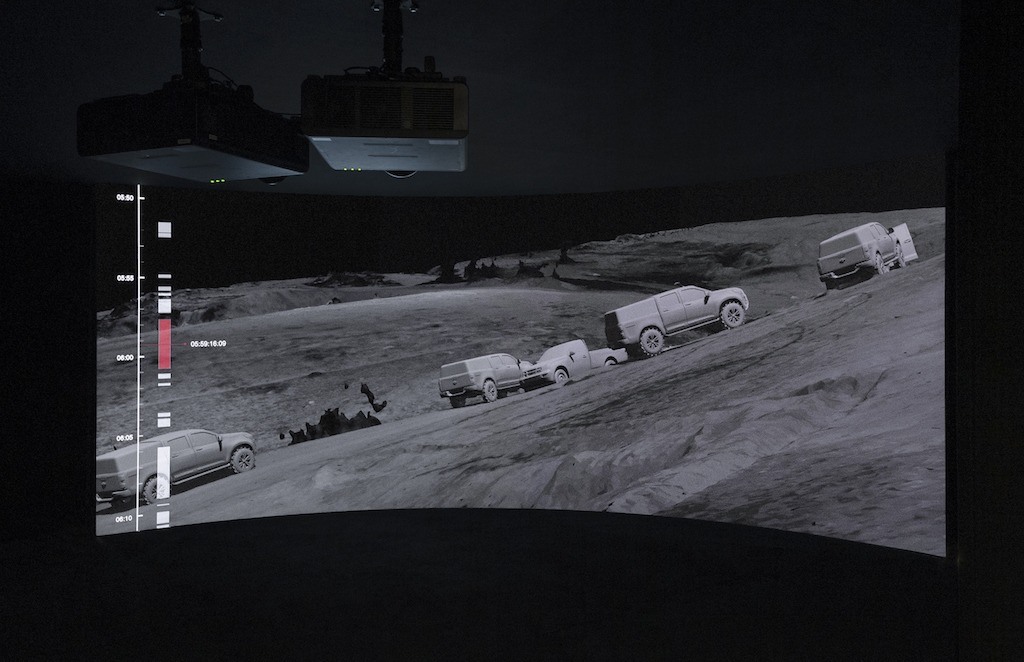
 Every October there’s a huge book fair in my town, where used books donated by the community are put up for sale in a large hall at the fairgrounds. It’s no exaggeration to say that it’s a high point of my year.
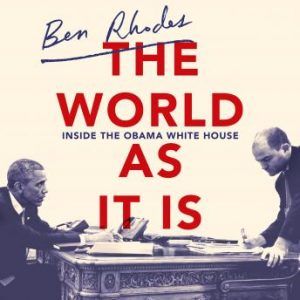 As the first African American president of the United States (US), Barack Obama is a uniquely historical personality. Each of us has our opinions, or will formulate opinions, as to the success or limitations of his eight years in office as a Democratic president from 2009-2017, and as to the person who is Obama. Helping us in the formulation of our views on Obama and his presidency, is Ben Rhodes book, The World As It Is: Inside the Obama White House.
 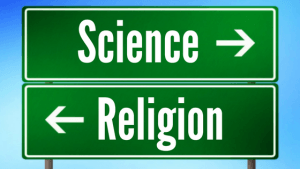 One of the most simple, elegant and powerful formulations of the conflict between science and religion is the following bit of reasoning. ‘Faith’ is belief in the absence of evidence; science demands that beliefs are always grounded in evidence. Therefore, the two are mutually exclusive. This is an oft-repeated argument by modern atheists, and it connects different aspects of what is usually called the ‘Conflict Thesis’: the idea that science and religion are opposed to each other not just now, but always and necessarily.
 In the Mood for Love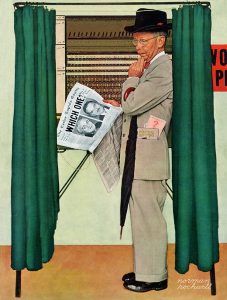

 One of the things I love about sports is they’re a low-stakes environment in which to practice high-stakes skills. For most people, most of the time, the results of a sporting match don’t affect the long-term quality of their lives. This is what I mean by “low-stakes.” In the grand scheme and scope of our lives, the outcomes of games rarely matter. Which is what makes sports such a great place to practice skills that really can and do impact our lives for the better. This is what I mean by “high-stakes.”
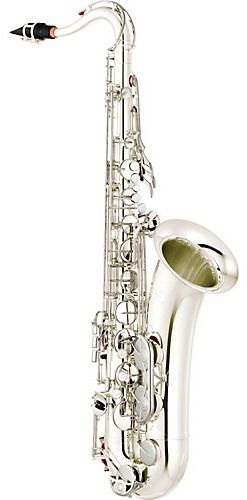 In the fall of 1970, I brought a Bundy tenor saxophone home from school. I was nine and in Mrs Farrar’s 5th grade class. To celebrate, my father slid an LP called “Soultrane”out of a blue and white cardboard jacket. The first sounds from the record player’s single speaker: a muscular folk song with rippling connective tissue that quickly spun free into endless cascades. Dad explained that it was my new horn, in the hands of John Coltrane. I didn’t know his name and nothing that day seemed possible, anyway.
 Recently, CNN sent their reporter to cover yet another Trump rally (in Pennsylvania), but this time reporter Gary Tuchman was assigned the more specific task of interviewing Trump supporters who were carrying signs or large cardboard cut-outs of the letter “Q” and wearing T-shirts proclaiming “We are Q”.