
by Nickolas Calabrese
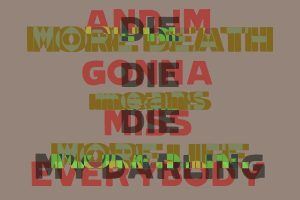 1. “…And I, who timidly hate life, fascinatedly fear death.” Fernando Pessoa, The Book of Disquiet.
2. I didn’t ask to be born, yet I’ve been condemned to death. Early on in Plato’s Phaedra, Socrates declares that it’s the job of the philosopher to prepare for death. Addressing Simmias and Cebes he states, “I am afraid that other people do not realize that the one aim of those who practice philosophy in the proper manner is to practice for dying and death.” There is something vulgarly sunny in the way he suggests it, but it also rings clearly true. What philosophers talk about when they talk about ‘the good life’ is a life not regretted when it comes time to exit it. Theirs is the pursuit of truth and understanding, and our own mortality could not be a more present topic to pursue.
3. Quite a few artists are engaged in a similar investigation. Although theirs is not as pure as the philosophers’, the good ones have a strong tendency to make work that both eviscerates vanity and frames mortality. By its very nature, the subject becomes the object. The countless examples of musicians, artists, poets, etc., examining the finitude of their own lives constitutes a vast list. Those who have spent time producing work in this vein are legion: from Bob Dylan to Future, from John Donne to Amiri Baraka, from Cady Noland to Andy Warhol. It comes as no surprise that one’s own death is an attractive topic. After all it’s something that every person ever has either done or will do in their lives. Death is more common than emotions. Not all people are capable of, say, love, but everyone must die. But what artists try to do with their work is antithetical to what Socrates was defining: artists are trying to cheat death. I’ll say more about this further down. Read more »
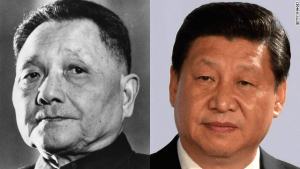 This is the 40th anniversary of the onset of economic ‘reform and opening-up’ (gaige kaifang) in China under the leadership of Deng Xiaoping, which eventually led to a dramatic transformation of its economy and global status. It is, however, remarkable that China’s current supreme leader, Xi Jinping, marked the anniversary in a speech in the Great Hall of People in Beijing mainly emphasizing the Party’s pervasive control. It is also remarkable that in recent years this leadership seems to have forsaken Deng’s earlier advice of tao guang yang hui (“keep a low profile”). In the flush of Chinese nationalist glory, Xi explicitly stated in the 19th Party Congress that China has now entered a “new era”, when its model “offers a new option for other countries and nations who want to speed up their development while preserving their independence”. Many people both in rich and poor countries seem to be already awe-struck by this model.
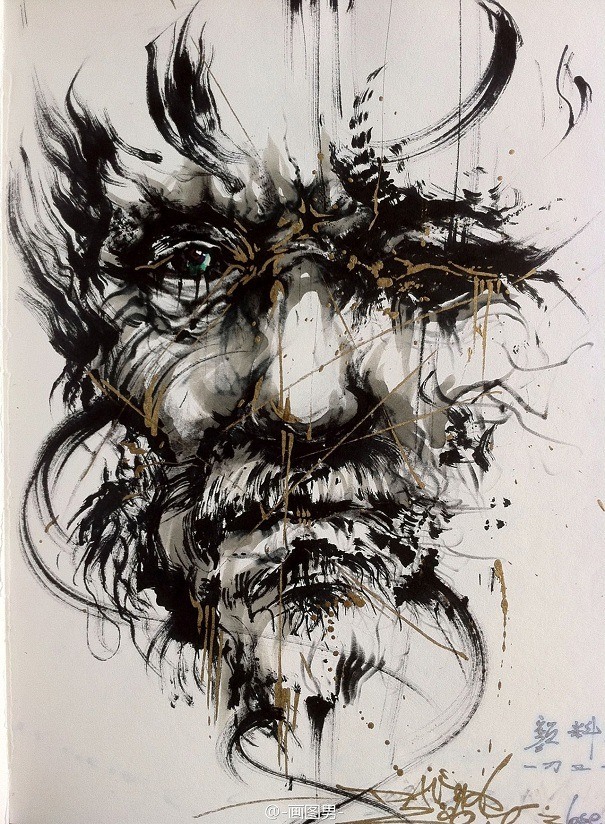

 I wrote the first draft of this post on my typewriter. Like much of my other writing, this piece began as handwritten notes and drafts typed on a nice little portable typewriter, which is a little younger than I am and which I expect to use for the rest of my life.
 The traveler comes to a divide. In front of him lies a forest. Behind him lies a deep ravine. He is sure about what he has seen but he isn’t sure what lies ahead. The mostly barren shreds of expectations or the glorious trappings of lands unknown, both are up for grabs in the great casino of life.
 Although we know bias and racism exists in most societies, when put into coherent terms in the form of research the impact is stark and exposes just how much a part of life racism is for so many people. Booth and Mohdin’s (The Guardian 2018) article ‘Revealed: the stark evidence of everyday bias in Britain’ setting out the findings of a poll on the levels of negative experience, more often associated with racism, by Black, Asian and minority and ethnic groups in the United Kingdom(UK) does just that. Thus, for example, from amongst its many findings the survey revealed that 43% of those from a minority background had been overlooked for work promotion in the last five years in comparison with only 18% of white people who reported the same experience. Likewise, 38% of people from ethnic minorities said they had been wrongly suspected of shop lifting in the last five years, in comparison with 14% of white people. Significantly, 53% of people from a minority background believed they had been treated differently because of their hair, clothes and appearance, in comparison with 29% of white people. In the work-place also 57% of minorities said they felt they had to work harder to succeed in Britain because of their ethnicity, and 40% said they earned less.
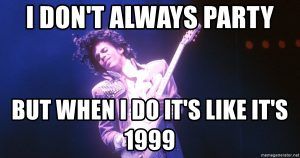 In the immortal words of Prince Rogers Nelson’s party gem from 1982:
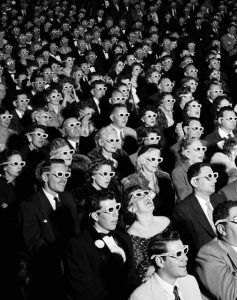
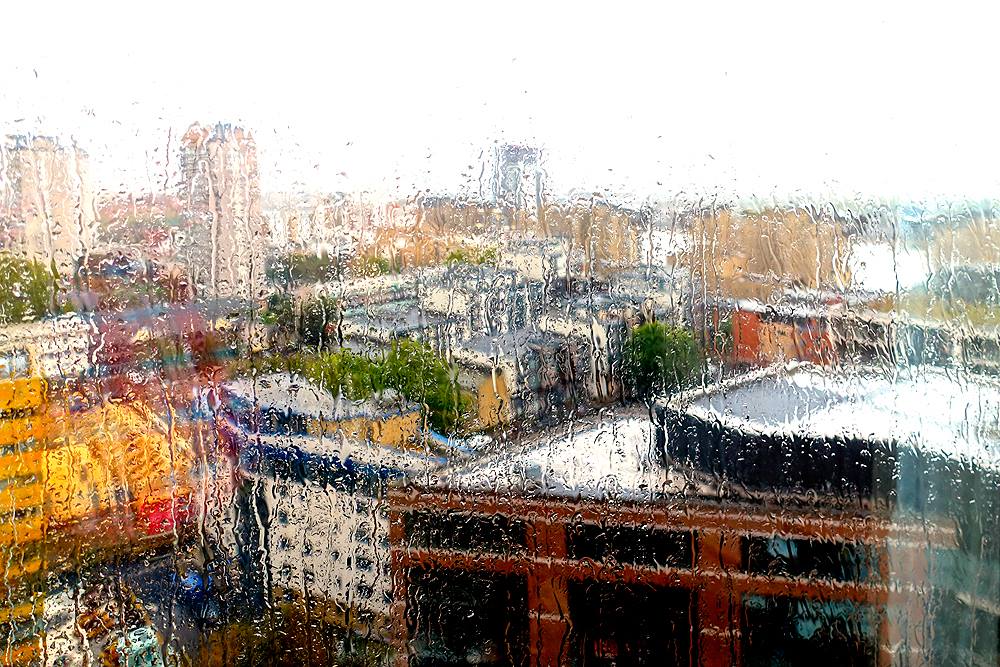
 first day. To the ancients, the sun was God Himself–the Egyptians had Ra, and the Aztecs,
  monuments to track it. In the dark days of winter we brighten our homes with candles and holiday lights. Winter religious holidays like Christmas and Chanukah emphasize lights and candles to brighten the darkness, while other holidays come during spring, when the days get longer. Many of us feel the need to travel south in
  the dead of winter, to get a few days of bright light and longer days.
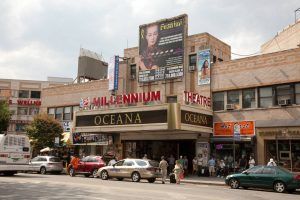 “Eets beeg place. Millennium Theater. Brighton Beach. You see it. We start seven. Very good band. Leader has gigs coming up. I tell him you coming.”
 Like millions of other people in the US, I often begin the day by listening to ‘Morning Edition,’ the early morning news program on National Public Radio. Sometimes, though, I get so disgusted by the rubbish spewed by the politicians being interviewed, or so infuriated by the flimsiness of the questions put to them, that I just can’t stand it and have to take myself out of earshot. Friday was a case in point.
 . . . I want to thank Professor Owens once again for his electrifying lecture on determining the outcome of any baseball season by crunching the data from a ten-game sample, reducing the number of games played by 152. Like so much breakthrough research, this also produced an unintended benefit: the freeing up of nearly 10,000 extra hours on TBS for reruns of The Big Bang Theory. I know we are all grateful.