
by Tim Sommers
 Cosmology is a young science. Maybe the youngest. Some people say it started in the 1920’s when these little glowing clouds visible at certain points in the sky were found, by better and better telescopes, to be composed of billions and billions of stars, just like our own galaxy – the Milky Way – and it was then discovered that no matter what direction you looked they were all rushing away from us. More than one cosmologist has wondered if these galaxies know something that you and I don’t.
On the other hand, maybe, cosmology is the oldest science – if looking up at the stars counts. Anyway, well before the discovery of other galaxies we knew that the universe was very old and very large, but, boy, we had no idea.
Other people say cosmology began when Einstein’s General Relativity gave us some of the math we needed to talk about the universe as a whole for the first time and began to raise questions about its shape.
For me, I say, cosmology didn’t really start until the 1960s when satellites designed to detect tiny amounts of microwave radiation mapped what we now call the “cosmic microwave background radiation”. Here’s the thing that we had missed for so long, the thing that is so hard to believe that we all take for granted now – hardly worth talking about. If the galaxies are all very far apart and getting further apart all the time, doesn’t it follow that there was a time when they were all very close together? Doesn’t it follow, in fact, as most likely, that there was a starting point? Isn’t this, for the first time in the history of humanity, empirical evidence that the universe had a beginning? And if there was such a beginning would it make a sound even if no one was around to hear it? The answer is, yes, yes, and it would make a sound, it does. If you have an old radio or tv, detune it or stop between stations and hear the static, the fuzz. That’s it. That’s the sound of the cosmic microwave background radiation. It’s been there since the beginning of time.
But if the universe has a beginning, will it have an end? And how will it end? Read more »
 Many decades back when I was teaching at MIT, a senior colleague of mine, Paul Rosenstein-Rodan, a famous development economist, asked me at the beginning of our many long conversations what my politics was like. I said “Left of center, though many Americans may consider it too far left while several of my Marxist friends in India do not consider it left enough”. As someone from ‘old Europe’ he understood, and immediately put his hand on his heart and said “My heart too is located slightly left of center”. A 2015 study by psychologist Jose Duarte and his co-authors found that 58 to 66 per cent of social scientists in the US are ‘liberal’ (an American word, which unlike in Europe or India, may often mean ‘left of center’), and only 5 to 8 per cent are conservative. If anything, social scientists in the rest of the world are on average probably somewhat to the left of their American counterparts. If that is the case, for the world in general social democracy is likely to be an important, though not always decisive, ingredient of their ideology. In European politics and intellectual circles there was a time when social democrats were considered the main enemy of the communists, at least in their rivalry to get the attention of working classes, but now with the fading away of old-style communists, social democrats have a larger tent, which includes some socialists of yesteryear as well as liberals, besieged as they both now are by right-wing populists.

 I’m disappointed in my columns so far. Not to say that they’ve been completely without value; I’ve managed to turn out some decent pieces and some kind readers have taken the time to tell me as much. But, taken together, my output exhibits a fault that I had sought to avoid from the outset. It has been far too occasional, too reactive, too of the moment in an extended, torturous moment of which I very much do not wish to be. There are exculpatory circumstances, of course. These are difficult times, and we are weak and vulnerable beings, and I am nothing if not an entrenched doom-scroller with a tendency for global anxiety. This is not an apology, because a core tenet of my approach to writing is a complete disregard for my audience. You’re all lovely people, I’m sure, but in order to write I have to provisionally discount your existence. This is, rather, a confession to the only person whose opinion matters to me as a writer. And that would be myself.
 Ariana Reines and Terry Tempest Williams, writers one would never expect to be buddies, but who bonded at Harvard Divinity School, are having a public Zoom discussion in order to sell books. It’s a lovely, friendly discussion, but I’m shocked, shocked to hear that they send each other AUDIO letters. Audio letters? When they are so good at writing? When they have the chance to write to each other? Though, okay, why not? Henry James famously dictated his novels. Reines is amazingly articulate talking off the top of her head. Still, how is the pleasure the same? Williams does mention loving to actually write letters, so perhaps I shouldn’t judge.
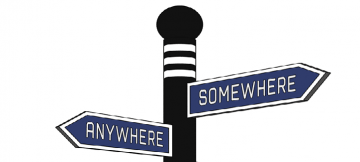 Well, I’ve looked at David Goodhart’s book (The Road to Somewhere – The New Tribes Shaping British Politics: 2017) and I’m obviously an Anywhere. [All quotes are from the Kindle edition]. “They tend to do well at school [Well, reasonably], then usually move from home to a residential university in their late teens [Yes] and on to a career in the professions [Teaching] that might take them to London or even abroad [Yes, indeed] for a year or two [or eighteen!]. Such people have portable ‘achieved’ identities, based on educational and career success which makes them generally comfortable and confident with new places and people [Generally!].”

 One of the strangest books to come out of Europe in the sixteenth century – and that is saying a lot – is John Dee’s
 Michele Morano’s first collection of essays, Grammar Lessons: Translating a Life in Spain, is a classic of travel literature that I have taught several times, to the great pleasure of over a decade’s worth of students. Now she has bested the power of that excellent book with a new collection of essays,
 If you go to Kashmir today this is what you will see. As you drive away from Srinagar’s Hum Hama airport, a large green billboard with white lettering proclaims, Welcome to Paradise.
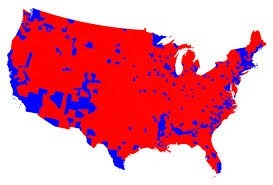 Like millions of others, my reaction to the result of the US presidential election was primarily relief. Relief at the prospect of an end to the ghastly display of narcissism, dishonesty, callousness, corruption, and general moral indecency (a.k.a. Donald Trump) that has dominated media attention in the US for the past four years. Also, relief that American democracy, very imperfect though it is, appears to be coming off the ventilator after what many consider a near death experience. The reaction of Trump and the Republicans, trying every conceivable gambit to thwart the will of the people, indicates just how uninterested they are in upholding democratic norms and how contentious things would have become had everything hinged on the outcome in one state, as it did in the 2000 election.