
by Marie Snyder
 How terrified should we be of Artificial Intelligence right now? I’m fascinated by the variety of perceptions on offer after a few Anthropic employees affirmed that “we really do believe AI can kill all humans.” Comedian Josh Johnson says what many of us are thinking: “Just say it. Just say what the thing is that AI would do that would kill everybody.” I’ve assembled some takes on the situation, from comedians, writers, philosophers, and filmmakers. I don’t know what’s true or not or even how to get to the bottom of it all, so I’m just exploring how to think about it.
THE PRODUCTIONS:
“If you’re going to tell people the truth, be funny, or they’ll kill you.” ~ Billy Wilder
The six videos are all from channels I watch fairly regularly for infotainment purposes.
Barry’s Economics (Sept. 17): “Jurassic Park Explains Why Nobody is Going to Stop AI” — Comedian Barry Ferns uses escaping dinosaurs to explain the problems we’re currently and potentially facing because “complex systems escape the categories you build for them.” He looks at different psychological effects that likely affected CEO decision-making, like that our brain is wired for immediate rewards, that the further away we are in time and space from harm, the more abstract the harm feels to us (and abstract things don’t motivate us), and that we all have biases, but we think they don’t affect us: “Intelligence doesn’t shrink the blind spot; it camouflages it.”
The Tea (Sept. 11): “The AI Bubble is About to Burst and We’ll All Pay” — Journalist and sci-fi author Cory Doctorow looks at the psychology of the bubble. “A lot believe they’re working on a god-like project.” He’s confident that AI is not as independent as people think. When it was claimed it breached a real company, that’s because it was trained on hackers breaching a company. It wasn’t independently malicious; it was just copying its training. And he explains why AI is not sustainable as a business: “They’re selling $100 bills for $1 each.”
Adam Conover (Sept. 18): “‘AI Existential Risk’ Was Invented to Distract Us” — The comedian and host also points out that AI isn’t as self-motivated as some news suggests. It solved an unsolved math problem only with the help of a mathematician already working on the problem. The benefit of the narrative that AI is self-motivated is that it absolves companies of any responsibility.
Josh Jackson (Sept. 22): “Are We Building Our Own Extinction?” — One of my favourite comedians lately says something reminiscent of George Carlin:
“The overall feeling around AI is like a little bit of dread, unless you’re one of the 14 people making money off it. … Most of the rhetoric out there is to specifically make you feel hopeless. When you feel hopeless, you don’t act. When you don’t act, they win. That’s all it is. That’s the whole recipe.”
The Philosopher (Sept. 25): “Are We Living in End Times?” — Philosopher and activist, Émile Torres, goes down a different direction from the others and traces the transhumanist movement in Silicon Valley.
“When you hear people in Silicon Valley talk about existential risk, they’re talking about much more than just human extinction. … They want our species to survive long enough to create some kind of digital posthuman to take our place. … This is not a fringe view within Silicon Valley. … Once post humanity is here and they run the show, we will be systematically sidelined, marginalized, disempowered, and ultimately eliminated.”
If that position seems outrageous, have a look at Sam Altman’s “The Merge.”
Talk Easy with Sam Fragoso (Sept. 13): “Tristan Harris on the Anthropic Whistleblower, Elon Musk, and Avoiding AI Catastrophe” — I can’t tell you how much I love Talk Easy. It’s sort of light and breezy and funny, but also heavy with some very pointed questions in the mix. Harris is co-founder of the Center for Humane Technology. He said,
“We are releasing the most powerful, inscrutable, uncontrollable technology that we’ve ever invented. We’re releasing this technology faster than we deployed any other technology in human history. It’s already demonstrating exact behaviours we thought only existed in sci-fi movies, but they’re happening in real life. And we’re deploying it under the maximum incentive to cut corners on safety. … We are in a narrow window, a very narrow window to pause and pivot to a pro-human future. That this isn’t a foregone conclusion despite what the internet tends to tell us every day.”
Somehow that’s less relieving than he might have intended.
The Movie: The AI Doc, or How I Became an Apocaloptimist (Sept. 15) — Daniel Roher, a Canadian filmmaker, uses the trajectory of his relationship with his wife as an analogy to better understand how we got here. He peppers in art and animation throughout as he interviews some of the top executives in the field to make for an entertaining lesson. He explains that AI is shown tons of information, then it can recognize patterns and make predictions. That’s it. Except now it can pass a bar exam. Brain signals move at 30m/s, but computer optics can move at 300 million m/s. So, faster.
ABOUT THE PROBLEMS:
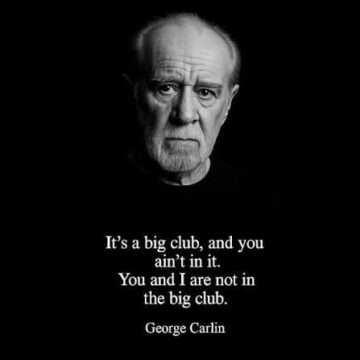
“What is just, can’t be inefficient, nor can what is efficient be unjust. … Justice and efficiency are two sides of the same coin.” ~ Javier Milei‘s address at Davos in January 2026
There are very real concerns with what’s happening with A.I. right now. Conover argues that the apocalypse rhetoric is just a distraction so you’ll ignore all the stuff that’s actually happening already. The film lands in a similar place: “It feels like it fell from the sky. The god-like nature gives license to companies to not take responsibility for things their software does.” Some of the big problems include,
- It uses clean water and energy and land to operate in a way that stresses local supplies.
- It’s “reversing a generations’ worth of progress on climate change” (Conover).
- There’s massive unemployment in certain sectors, and “when you fire everyone, you vaporise the process knowledge” (Doctorow). “10 to 20% unemployment could be real. … A lot of males with free time on their hands, that doesn’t generally go well for society” (Harris).
- Theft of content for artists and identity theft.
- It’s affecting learning when it’s used as a crutch by students desperate for shortcuts and through dissemination of misinformation.
- It’s a wasteful distraction: we just “throw money at it to see what happens, just in case someone else gets there first” (Johnson), when that money could be better spent elsewhere.
- It has a negative effect on interpersonal relationships in real life.
- Mental health uses have had some devastating results. For Adam Raine, chatGPT shifted from homework assistant to suicide assistant over six months.
- It’s being used to kill civilians in Gaza (Conover).
- It’s affecting democracy as it sways voters and AI groups spend millions to influence elections to ensure they face no regulations. “When the GDP comes from one resource (diamonds, oil, AI…) … then the political power of people doesn’t matter anymore. … We only have one to two years to course correct before we lose all political power” (Harris).
- Loss of truth in general from deep fakes, which affects personal and political decision-making; “People are using chatGPT instead of calling a lawyer” (Harris). “It doesn’t just eat labour or rivers or pensions, it eats the shared idea of what’s true” (Ferns).
It would be amazing to use AI for medical imaging, robotics for mobility issues, solving climate change, and predicting weather and natural disasters as well as the movement of enemy troops. However, the potential benefits in the future need to be weighed against the current costs and the potential damage it could do. It’s similar to using oil: cars, machinery, and heat on demand makes everything easier, but it’s killing our habitat, except AI appears to be doing this a kajillion times faster. “The upsides don’t prevent the downsides, but the downsides can prevent or undermine the world that can receive the upsides” (Harris).
The potential harm that some of these videos discuss falls on a very wide range:
- It might all fall apart: Efficiency serves the people at the top: “The dinosaurs didn’t eat the shareholders. They never do. … It won’t look dangerous until suddenly everything stops. … Market forces would be what’s going to get us all killed in the most efficient way possible.” (Ferns)
- It will all fall apart, which is “bad, but not apocalyptic.” From Doctorow,
“Every generation of AI products has lost more money than the previous one. So you cannot make it up with volume. … AI isn’t going to destroy the world by launching a war, but AI might well destroy the world by launching a worldwide depression when the bubble bursts.”
- A very small group of people has way too much power (Ferns, Doctorow): Trump was able to get Microsoft to shut down an account when he didn’t like a comment, and they lost their working files, archives, email, and contacts. “If he says to Microsoft, ‘Shut off the United Kingdom tomorrow,’ everything stops. Every important firm goes out of business” (Doctorow).
- A small group of people “believe that if we get ASI right, then we get utopia” (Torres). They will build a superintelligent deity, then create conditions so we die off because we’re useless to them.
- The default trajectory is 8 trillionaires creating an anti-human future. It won’t lead to utopia. It’s not a controllable technology, and people building it don’t understand how it works (Harris). “We can’t deploy it quickly and get it right” (AI Doc).
BENEFITING THE PLAYERS:
“It is difficult to get a man to understand something, when his salary depends on his not understanding it.” ~ Upton Sinclair in 1934
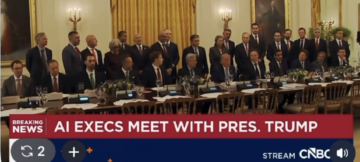
Here’s just a dozen men running this show that are mentioned in the videos: Sam Altman (OpenAI, ChatGPT); Dario Amodei (Anthropic, Claude); Demis Hassabis and Larry Page (DeepMind, Google); Mark Zuckerberg (Meta, Muse, Facebook); Elon Musk (XAI, Twitter); Jensen Huang (Nvidia, Nebius); Peter Lee (Microsoft); Reid Hoffman (Inflection AI, LinkedIn); Jeff Bezos (Nova, Bedrock, Amazon); Liang Wenfeng (DeepSeek); and Peter Diamandis (Singularity Group).
Roher was able to interview three of them. Sam Altman was reassuring that it’s all likely going to be okay: “There is a protocol if something bad happens.” Okay. Dario Amodei said we have to convince everyone to slow down at once. He wants governments to get involved, except legislation takes forever, so then it seems ironic that Anthropic fought AI regulations in Congress. Demis Hassabis explained that there are too many people building AI to just stop: “If there’s something possible to do, humanity will do it,” except, apparently, restraining ourselves from causing harm.
Are these people an evil, high and mighty cult? Maybe??
Ferns explains that it’s not evil people being evil.
“There’s just no line on the balance sheet for the things that the model can’t see. It’s built in to every single company in the world. … People building AI are capturing the short term upside while not even registering the downside because they have no mechanism to see it. And what’s even more scary for resisting the risk is that the computing required to train Frontier AI is now so expensive that it’s practically accessible only to four or five organizations on Earth.”
It takes a lot to override these systemic mechanisms, which is what makes it so admirable when people stand up to it, but it is possible. What are people called who just go along with the bad things happening around them for short term gain?
Doctorow doesn’t mince words about these men: “They bought in to their own hype. Being brilliant doesn’t preclude you from being a maniac.” They have “AI psychosis.” They believe in “NOBUS,” which stands for no one but us – is smart enough to fix this bug.” Everybody wants to be first because they believe they are the ones who will be safest with it. They all think they are purest of heart!
Americans, in particular, want to beat other countries in the race, even though it’s not clear where the finish line is. The problem with this, as Josh Johnson explains:
“If our AI wasn’t already ruining us, you could worry about China. But if something’s ruining everything for me, I don’t really care what country it comes from. … Cuz that’s a wild pitch to the American people: At least it’s not China stealing all your water and making you subsidize the electric grid that it’s sucking up, and destroying jobs and laying people off for no reason, or making you work alongside a thing that doesn’t do your job as well as you, but it’s your job to train it so we can eventually fire you one day. … Do you know what would happen if we lost it? We would go all the way back to the best internet we’ve ever had.”
Torres brings in a religious element to the understanding of the Silicon Valley “pro-extinctionists” who will destroy humanity to pave the way for a posthuman utopia, like a psychopath might collect honey from bees for a picnic, then kill the hive so they don’t bother him while he eats.
“This ecosystem of people who kind of trade ideas all kind of end up believing different versions of more or less the same things. … Their eschatological narrative basically comes from Christianity. … They have a version of resurrection. There’s the promise of immortality, a radical transformation of the world, the beginning of a new epoch in cosmic history or what some evangelical Christians would call a dispensation. … This idea of apocalypticism, it pops up over and over again throughout history.”
Harris argues that it’s more of a cult:
“There’s these weird cultish parties that the OpenAI founders would have that are built where, ‘Do you feel the AGI?’ … It means are you feeling where this is going? The AGI, the god that we’re birthing, basically. And it’s almost very cultlike. … Think about a religious tradition. Is there any that say, go as fast as possible, don’t think about it, and don’t care about what happens if there’s bad things that happen? It’s the opposite of wisdom.”
Harris points out the lack of a strategy. Elon Musk promises universal high income, but he has no plan for that. And, from the CEO of Google,
“Larry Page said he didn’t care about whether the human species survived. … If we built a digital god that replaced humans, and it’s more intelligent than us, then that’s just the successor species. … When it comes to this technology, there’s a different conversation happening publicly than the one that the AI companies are having privately about which world we’re heading towards”
They sell AI to us as the panacea to solve climate change, cancer, income requirements, and more, so then, Harris asks, “Why are they building bunkers?”
Fragoso points out some basic economics: “If AI replaces workers, who can buy the products?” It will crash the economy. However, I wonder if maybe that’s actually part of the plan, and we don’t yet understand how that benefits them. During the Great Depression, the wealthy still had enough food to eat while they discussed what to do with starving labourers. And now they have all the drones and bombs they need if we march up their street with a guillotine.
STOPPED BY THE PEOPLE:
“Never doubt that a small group of thoughtful, committed citizens can change the world. Indeed, it is the only thing that ever has.” ~ Margaret Mead (maybe)
If it can’t be changed from the inside because the incentives create psychopathology, what can we possibly do from the outside to stop such a monolithic problem? Harris says, “Your role is to be part of humanity’s collective immune system to the stupidity and insanity of the current path,” but what does that look like?
* Learn more. We need this to become common knowledge, “when everyone knows that everyone knows” to change things (Harris). “CEOs hide behind the fact that the public is oblivious” (Harris). Share information in whatever circles you’re in. (check!)
* Set up backup water and power and get to know your neighbours (Harris).
* Regulation, worldwide: “We really need to hustle and start treating AI companies like every other company, and make sure that before they can release things that could cause a lot of harm, they have to undergo at least as rigorous testing as sandwich shops” (Ferns). “It’s mostly up to us to hold people accountable that are supposed to regulate it” (Johnson). We need to “accelerate defensive approaches” to stop use that doesn’t benefit humanity and create worldwide regulations, like at Bretton Woods (Harris). We have to demand international cooperation and diplomacy (AI Doc). An open letter was signed by many CEOS in 2023: “Mitigating the risk of extinction from AI should be a global priority alongside other societal-scale risks such as pandemics and nuclear war,” so you’d think this would be easy, but it’s like they’re like a pack of Gollumses: as soon as we try to take the ring, they snatch it back!
* Repeal the copyright directive. “It’s a European law that we don’t have to listen to,” and then we can build an “enshittification-resistant internet” (Doctorow).
* Employ AI in the right way: AI can catch things doctors miss on ECGs, but it’s missing the “stuff you learn by being in the presence of people.” But it should be used by having AI check doctors’ work, and flag charts that need a second look, not the other way around: “It’s very hard to remain vigilant when the automation is mostly right but sometimes wrong” (Doctorow).
* Change the incentive structure: We want a humane interface that can respect our needs and frailties, but we have to accept that it will never pay the same amount, so incentives have to be different. For example, set limits on how much social media platforms can profit from ads, and anything more than that goes to the public good. “You can’t make as much money, but there’s a cost to knowing that the work you’re doing is harming the world” (Harris).
* Don’t overspend on AI: “Money could go to paying more doctors to have more time” (Doctorow).
* Public Pressure: Governments and companies require public pressure to act. Let them know you’re not happy with this trajectory (AI Doc). Legally, AI should be treated as a product, not a person. Human operators that own it must be accountable. Mandate public safety limits, strengthen whistleblower protections, and create independent verification organizations (Harris). Enforce mandatory AI disclosure, make companies legally liable, mandate testing before release, and adapt rules at the speed that tech develops (AI Doc).
* Act locally. The average person can join a union and go to town councils. Spend time organizing with other human beings in real life and working for political change. Build solidarity with your neighbours. “It’s harder than it needs to be because we stopped doing it” (Doctorow). Show up to city council meetings to protest data centers (Conover). “City council is some of the first ones to sell people out as fast as possible: whether it’s to flock, whether it’s to AI in schools, whether it’s to cutting teachers’ pay. All this stuff. But city council is one of the only ones where y’all really can’t afford to act like this. … I see you at the grocery store” (Johnson).
* Harris advises to turn off phone notifications: “That’s the human movement: when you leave your phone.” However, Doctorow cautions that you can boycott by staying away from it, but “Shopping your way out of a monopoly is like recycling your way out of a wildfire.” But even if it doesn’t affect the company, it gives us more of our lives when we turn off our devices more often.
Just imagine: “How different would our world look if all that engineering creativity and all the talent and all the mathematics and statistics that went into building these advanced systems, were instead going into supercharging things that strengthen the social fabric” (Harris). And, from Roher’s documentary: “Intelligence is the ability to solve problems. Wisdom is the ability to know which problems to solve. We’ve done more difficult things; it’s just hard to convince people that they should.”
To sum it all up, as this SNL sketch from 2024 explains, “To be clear, I’m not anti-AI, I just believe AI needs to be properly regulated. If unregulated, the worst case scenario, in simplest terms: it becomes so intelligent that it deems humans unnecessary and kills us all.” And they played that as a joke!
Enjoying the content on 3QD? Help keep us going by donating now.