
by Marie Snyder
 I’m curious about the intersection of psychology, philosophy, and spirituality, and the more I read, the more closely they all appear to intertwine until they’re sometimes indistinguishable. Buddhism overlaps with Stoicism, which influenced Albert Ellis’s REBT (then CBT and all its variations). They dig down to acknowledge and question mistaken core beliefs. Plato inspired some of Freud’s work, which mixed with Sartre and Camus to become the existential psychotherapy of Irvin Yalom and Otto Rank. They have a focus on the acceptance of death, which comes back around to the Buddhist prescription to meditate on our bones turning to dust. Yet, despite a general theme being repeated, it’s striking how hard it is to get out from the minutia of daily life to attend to it.
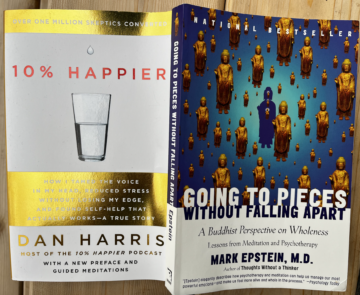
This mix can be found on Dan Harris’ channel, 10% Happier, which I stumbled on when he had comedian Bill Hader as a guest. Harris was a journalist who had a panic attack on air, then turned to meditation for help. I dove into his 2014 book, in which he chronicles his skeptical and very gradual buy-in to the whole idea in a very relatable way. He debunks a few well-known gurus over the course of the book, and then he ends up guided by a few contemporary Jewish Buddhists, including psychiatrist Dr. Mark Epstein. I went back to re-read his 1998 book, Going to Pieces without Falling Apart to flush out some concepts.
ACCEPTING CHANGE
“No man ever steps in the same river twice, for it’s not the same river and he’s not the same man.” ~ Heraclitus
These are both books that hope to show us a way to calm our mind enough to be able to think more clearly. Epstein calls the Buddha the original psychoanalyst who teaches us to take a step back from our monkey mind, or the “imperialistic tendency of mind” (prapañca) that can get us spiralling from one tiny error at work towards a vision of living in a cardboard box. We overthink all the time, but it’s possible not to do that. We don’t have to let the spiralling continue. Harris has a metaphor I like of our overwhelming thoughts and feelings bombarding us like a waterfall: we can take a step back to stand safely behind the waterfall to watch it all go by. Harris and Epstein agree that we need to practice this strategy of stepping back through meditation.
“Mindfulness is the ability to recognize what is happening in your mind right now — anger, jealousy, sadness, the pain of a stubbed toe, whatever — without getting carried away by it. We want it, reject it, or we zone out. … Mindfulness is the space behind the waterfall.”
I still don’t meditate with any regularity. While I believe it’s likely a healthy habit to form, like joining a gym, I’m still in that good enough state where it doesn’t feel necessary. I also think it’s possible to be behind the waterfall without meditation, even if it might not be as easy.
They claim that the superpower of meditating isn’t about controlling or managing the ego, but seeing that it has no substance. We’re watching a litany of moments of joy and terror play out, but we aren’t that. The waterfall just keeps moving, and nothing is really stable, and that’s okay. Absolutely. That just makes sense, and that kind of argument was made by Hume and Locke as well. We’ve all had experiences of losing ourselves in flow states or in creating or in play or in sports or having sex, but our mind always comes back to a list of tasks to do or some past events to dwell on. I agree that a meditation practice likely helps to keep us in the here and now a little more to quiet that litany or to hear it differently. It’s not about stopping the waterfall, but no longer being blasted by it. I think of it like the difference between being in a forest hearing a cacophony of noise, which feels chaotic, compared to being able to identify a chickadee, a woodpecker, a hawk… and understanding what that means about the forest’s current state. It’s no longer noisy when it’s clearer to us.
We all tend to just live out our prior conditioning without thinking too much about it, and then we get annoyed when we don’t end up where we intended. William James wrote a whole book on Habits, what the word means and how to notice them and alter them. Even without meditation, the more we notice our conditioned responses to our inner and outer world, the more we can respond to events instead of habitually reacting to them. James was first to mention the plasticity of the mind, and now we better understand how neural pathways can form and change. However we understand it, it takes the same kind of work to notice it all and take a step back from it.
Harris uses Tara Brach’s acronym RAIN to remember to Recognize what’s going on internally, Allow it, and Investigate it, but with Non-identification. That feeling or thought isn’t me, it’s just what’s happening within me. We can notice our immediate physical reaction to an event — maybe our face is flushed and our chest tight — and recognize that we’re feeling angry without identifying as an angry person. It’s pretty much the “processing” of psychotherapy. By noticing it, it stops having quite so much power over us.
“The Buddhists were always talking about how you have to let go’, but what they really meant is ‘let it be’. Or, as Brach put it in her inimitable way, ‘offer the inner whisper of: yes.’ … Sitting with your feelings won’t always solve your problems or make your feelings go away but it can make you stop acting blindly.”
We’ve heard this same message from existential psychotherapist Viktor Frankl in Man’s Search for Meaning (1946): “Between stimulus and response there is a space. In that space is our power to choose our response. In our response lies our growth and our freedom.” And Nietzsche said something similar in Twilight of the Idols (1889):
“One must not respond immediately to a stimulus; one must acquire a command of the obstructing and isolating instincts. . . . All lack of intellectuality, all vulgarity, arises out of the inability to resist a stimulus: — one must respond or react, every impulse is indulged.”
NON-ATTACHMENT
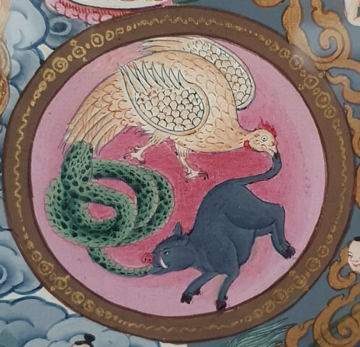
Buddhists famously believe that all suffering (dukka) is from having attachments, so suffering is reduced by eliminating desire. Epstein suggests dukka might be better thought of as ‘unsatisfying’ or ‘stressful’. Nothing in the world will last, which makes it forever unsatisfying and unreliable. Epstein illustrates the concept with a story of Freud on a walk with a friend who was missing all the beautiful scenery around them. This walk provoked Freud to develop a theory to understand why we avoid beauty:
“The proneness to decay of all that is beautiful and perfect can, as we know, give rise to two different impulses in the mind. … The one leads to the aching despondency felt by the young poet, while the other leads to rebellion against the fact asserted.”
Freud realized people at both ends are “trying to fend off an inevitable mourning.” This is what the Buddha calls attachment (depression about impermanence) and aversion (anger at impermanence). Epstein further explains, “Only by cultivating a mind that does neither, taught the Buddha, can transience become enlightening.” It’s easy to see how this aversion to beauty also affects our needs for intimacy. We want things but can’t bear the tension of knowing it will inevitably end but not knowing when or how. We’re on a “one-way journey toward separateness,” but we don’t have to be.
“Separateness, independence, and clear boundaries are not glorified in Buddhism the way they are in our culture. They are seen instead as potent sources of suffering, as illusions that perpetuate destructive emotions like hatred, jealousy, and conceit.”
It doesn’t mean that we must stop all desire, though. We can enjoy things we love and avoid things we hate, but “the key is not to get carried away by desire. … Buddha calls everything we experience — sights, sounds, smells, etc. — the ‘terrible bait of the world.'” We keep getting hooked over and over, and noticing that in order to stop the spiraling can get easier with practice. In Harris’ words, “A few slippery little thoughts … can weasel their way into the stream of my mind and pool in unseen eddies, from which they hector and haunt me throughout the day.” I think we can all relate to that. But the takeaway from these books is that, while it takes an effort to let those thoughts just flow on by, it’s a game changer! I understand it as setting goals, but notice that first hint of clinging to that goal as if it has to happen like this or everything will be ruined. Ideally, goals are directions, not destinations.
We do also have to interrogate our goals, though, because we lie to ourselves that as soon as the next thing happens, the promotion, party, vacation, relationship… then we’ll be happy. That’s part of what makes us cling to events, and then, “the pursuit of happiness becomes the source of our unhappiness.” Or, as the stoic Epictetus said,
“If thou wilt make a man happy, add not unto his riches, but take away from his desires. … Riches according to nature are of limited extent, and can be easily procured; but the wealth craved after by vain fancies knows neither end nor limit. He who has understood the limits of life knows how easy it is to get all that takes away the pain of want. … The first duty of salvation is to preserve our vigour and to guard against the defiling of our life in consequence of maddening desires.”
We have a natural tendency to attach, avoid, or be indifferent, but we can train ourselves to change our default setting from these three to compassion.
Harris discusses one problem with current mindfulness training is that it often misses this “central plank in the Buddhist platform.” There’s a kindness that’s part of Buddhist teachings that helps us acknowledge that we don’t need to keep beating ourselves up when we make a mistake in order to be more perfect next time. That flagellating strategy doesn’t work, but it’s really hard to trust that it doesn’t work once it’s become our go-to motivator. We can meet it over and over with compassion.
“In the Buddha’s day, he first taught generosity and morality before he gave his followers meditation instructions. … the Buddha even compiled a list of the eleven benefits to practicing metta [loving-kindness meditations]. … The attempt itself was a way to build the compassion muscle the same way that regular meditation built the mindfulness muscle.”
ON MEASURING
“Not everything that can be counted counts, and not everything that counts can be counted” ~ William Bruce Cameron, Informal Sociology
Harris has a section of the book full of proof, citing studies from Harvard and Yale using MRIs to show brain changes after meditation. I’ve written about the drive for evidence before. The meditation studies are often criticized for having a very small sample size or unclear measurement criteria, but also, this buys into the worst part of the psychological model that still triumphs over philosophy and spirituality. We love to measure things. We love certainty, to finally know something for sure. I’m not convinced we can have certainty when it comes to human nature. We’re fascinatingly unpredictable as individuals.
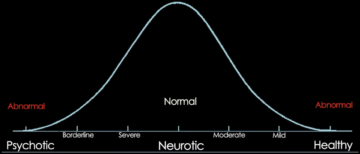
Even when there’s a strong correlation to demonstrate the usefulness of a certain modality in psychotherapy or of meditation or even a medication, it typically means this works better than nothing for a significant number of people. However, there are always the tail ends of a normal distribution curve that don’t quite fit with the model: the “abnormal” part. A strong correlation tells us that this is a good starting point to try, and meditation might help, but it doesn’t mean it will work for me.
Psychology gives us an illusion of certainty instead of provoking us to accept the uncertainty of human nature. We’re told in these books to get comfortable with ambiguity, while being given assurances that it’s all backed up with data! What I love about philosophy is that it invites questioning forever. It’s not an attempt to find the final answer, but to provoke debate in order to get to an even better landing spot. What I love about spirituality is the idea that there are some things that are unknowable. There are, and will always be, mysteries in life. We can slap labels and numbers on them all we like, but things aren’t as clear or predictable as we’ve been led to believe, and that can be exciting! It’s a wild ride, and meditation is an idea that might help, but who knows what will happen next! Unfortunately, measurements are more marketable.
Epstein uses a West/East delineation instead of disciplines: the West wants to solve all the puzzles, so the unknown of inner emptiness feels distressing and scary enough that we distance from it, when instead, Eastern practices have us transform our relationship to it. “Buddhism authenticates a feeling that nearly all Westerners seek to deny, that psychotherapy endeavors, unsuccessfully, to eradicate. … I did not have to know myself analytically as much as I had to tolerate not knowing.” He discusses a nonjudgmental awareness that is able to hold dissatisfaction and feelings of imperfections and impermanence. It’s similar to Marsha Linehan’s Distress Tolerance practice, which she learned from living at a Zen monastery. Epstein writes,
“The hollow space became an enriching space as well as a scary one. … One of the most important tasks of adulthood is to discover, or rediscover, the ability to lose oneself. … When we are afraid to relax the mind’s vigilance, however, we tend to equate this floating with drowning and we start to flounder. In this fear, we destroy our capacity to discover ourselves in a new way. We doom ourselves to a perpetual hardening of character, which we imagine is sanity but which comes to imprison us.”
We need to make friends with the unknowable.
ON STRIVING
“Do you want to improve the world? / I don’t think it can be done.” ~ Lao Tzu
Harris has another section in which he tries to fit the competitiveness of his profession with Buddhist practices. He recognizes that we often get upset when others succeed because we feel like we deserved that trophy or promotion or praise. “The answer is in nonattachment to the results. … When you are wisely ambitious, you do everything you can to succeed, but you are not attached to the outcome.” But are striving and competing examples of right thought, action, and livelihood?
There’s a flavour to this part of the book that’s a bit unsavoury. It’s as if Harris is trying to look for loopholes so he can continue to strive and compete as hard as he always had while ascribing to Buddhism. It seems clear that trying isn’t a problem — putting forth our best effort isn’t incompatible with Buddhism — but the search for a work-around feels uncomfortable. Maybe it’s because we’re currently surrounded by pretend Christians who have so many ways to rationalize why it’s okay that they’re amassing fortunes, demonizing whole groups of people, and gleefully breaking all the big rules from idolatry to adultery. I’m a little sensitive to attempts to water down ideals to make ourselves feel like we’re hitting them rather than accepting we’re all just works in progress. I’m really bad at not coveting, but that just means I’m a typically fallible human being. Looking for a way to make it okay to covet feels sneaky. We have to concede that we’re not quite there, likely forever not quite there, and keep working on it.
He has perhaps a useful consolidation, though, for that fear of getting behind when everyone around you is busy and productive and you’re choosing to take the time to meditate: If you’re worried, then it’s because you have no faith that the practice of sitting still actually gets you ahead. But, then again, is it okay to meditate in order to get ahead? Is it provoking a reassurance that we’re still winning instead of a non-attachment to the finish line? I prefer the response he quotes from Sharon Salzberg:
“Often it’s not the unknown that scares us, it’s that we think we know what’s going to happen–and that it’s going to be bad. But the truth is, we really don’t know. … Fear of annihilation can lead to great insight because it reminds us of impermanence and the fact that we are not in control.”
She suggests that, if we can really accept that we don’t know the future, then we can relax because it’s all unknowable anyway! It’s all the negative scenarios we imagine that keep us fretting, and they’re all just in our head.
IMPERMANENCE
In his discussion with Kieran Setiya, Harris explains how nonattachment differs from denial. Loosely paraphrased, Setiya comments that the idea that we shouldn’t be pained by things restricts intense feelings, which isn’t something to get rid of because it keeps us in touch with others. Harris explains, it’s not about denying grief, but being open to whatever you feel but not being swamped by it: neither drowning in it or compartmentalizing to manage it. It’s interacting with people while understanding that we’re all impermanent, so you’re aware of it and have the wisdom to see it.
Harris calls this spinning “preemptive mourning” in the best way, but I see it more as noticing and letting go of an attachment to a fantasy that anything can last forever. Like with any expectation, it’s just a story in our head that we made up, and then we get mad when reality goes off-script. If we really accept death, then we can maybe love others and life even more fully. It’s not that we’re grieving in advance, but that, like Freud suggested, we catch a glimpse of grief, and run the other way, causing all sorts of misery. This comes back to that Salzberg quote: we think we know the future, and it looks horrible (what we love will leave or die), but the truth is that the future is unknowable. With any luck, we could die first and never suffer the loss of others! Like the Buddhists, Stoics, Epicureans, and Existential Psychotherapists all write about, if we can get comfortable with grief then we can have more full and authentic lives. We just have to make peace with the impermanence of it all. Unfortunately, that’s ridiculously difficult.
Enjoying the content on 3QD? Help keep us going by donating now.