
by Herbert Harris
I met Paul Gilroy at a conference on racial identity at Yale in the early 1990s. I was finishing my training and eager for new ideas. He was soft-spoken and thoughtful, but his presentation was quietly electrifying. He seemed to be rethinking race, culture, and identity in a radically creative way. The presentation distilled many ideas he would soon publish in The Black Atlantic: Modernity and Double Consciousness, a book that has influenced the field for more than thirty years. A key argument is that, over centuries of the Atlantic slave trade and beyond, a transnational culture has emerged that isn’t solely African, American, Caribbean, or British, but a blend of all these. It arose from the history of slavery and colonialism, but what holds it together isn’t its shared history or ongoing oppression. Gilroy argues that this common culture, which he calls the Black Atlantic, is maintained through the continuous movement of people, ideas, and creative works across the ocean. Its fluidity, hybridity, art, music, and literature are its defining features.
As I revisited Gilroy’s ideas over the years, they grew more impressive in their explanatory and predictive power. The Black Atlantic feels more alive and enduring than many nations, cultures, and institutions. Yet the question remains: how did it attain that durability, and how did art and music play such a central role in its flourishing?
Living in multiple subjectivities would seem bound to produce conflict and fragmentation. The Black Atlantic is nothing if not a plurality. In collectives such as nations and cultures, the multiplicity of subjectivities would seem to put them at constant risk of coming apart. W.E.B. Du Bois introduced the concept of double consciousness to capture this tension. Gilroy embraced double consciousness and hybridity as constitutive features of the Black Atlantic, not as problems to be overcome but as sources of its vitality. What kind of psychology could make this possible? What enables hybrid identities to flourish rather than fragment?
The idea of intersubjectivity, a shared world constituted by mutual recognition, may provide an explanation.
The concept has a rich lineage. Husserl introduced it in response to the problem of other minds: how can I know that you experience the world as I do? In the psychoanalytic tradition, thinkers like Robert Stolorow and George Atwood developed the concept of intersubjectivity to describe something more intimate: the overlapping of personal identity that occurs in the therapeutic relationship, where analyst and patient come to inhabit a shared psychological space that belongs fully to neither. Intersubjectivity, in this sense, is a partial sharing of personal identity.
I have tried to ground this idea in a naturalistic account of how self-consciousness may develop through a framework I term active intersubjective inference. The key insight is that selfhood is not a private achievement. It emerges through mutual recognition, the reciprocal process by which two minds come to identify each other as selves. The process begins in early life, when a child and caregiver discover that they are looking at the same thing. From that seed of shared attention, a shared world gradually grows, populated by objects, concepts, meanings, and eventually by self-conscious selves who understand themselves in relation to one another.
The crucial consequence is that personal identity is relative. I am me relative to you. This is not a poetic flourish. It means that who I am is partly constituted by how I am recognized, and who you are is partly constituted by how I recognize you. Neither of us possesses a fixed, freestanding identity independent of this relationship. When identity is understood as relative in this way, it becomes capable of something that fixed identity cannot do. Individuals can merge, split, overlap, and diverge. A single person can participate in multiple intersubjectivities without contradiction, because there is no unitary self that must be divided. There are only relationships of recognition, each constituting a different facet of who one is.
This is what makes double consciousness possible as the normal condition of a self that lives in more than one shared world, rather than as a pathology.
Intersubjectivities can scale. From the intimate dyads of child and caregiver, or therapist and patient, they expand to encompass families, communities, nations, and civilizations. Different kinds of glue keep different intersubjectivities together. It might be geography, history, language, belief, or constructs like race and nation. People participate in multiple intersubjectivities simultaneously, and these overlap, conflict, and reshape one another in constant motion.
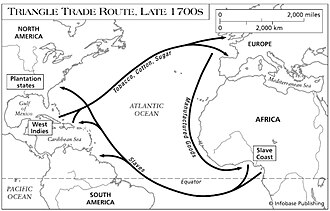
Here we see modernity and intersubjectivity looking at the same globe but perceiving very different things. Modernity draws lines and solidifies fixed boundaries between nations, races, and civilizations. It defines in-groups and denies recognition to out-groups, leaving them with what Du Bois described as the sense of always looking at oneself through the eyes of a world that sees you as others. Intersubjectivity understands that the connections between people are more complex and dynamic than any map can depict. Ultimately, they depend on mutual recognition.
This is precisely what Gilroy saw in the Black Atlantic. He argued against both Eurocentrism and Afrocentrism, rejecting any framework that treated culture as hermetically sealed or ethnically pure. The Black Atlantic was defined not by racial essence but by the movement of people and ideas across the ocean, by routes rather than roots. The cultures it produced were fundamentally hybrid, drawing on African, European, Caribbean, and American sources while being reducible to none of them.
The Black Atlantic is a paradigm of global intersubjectivity. But it is important to be clear about its origins. Some intersubjectivities coalesce around shared belief, geography, or worldview. Others are formed through exclusion and denial of recognition by a dominant group. The Black Atlantic arose in large part from exclusion. It is a history of centuries of enslavement and colonization, forced diaspora, and systematic cultural exclusion. It exists because the dominant intersubjectivity of the West drew a line and said, we do not recognize you.
Yet the Black Atlantic found a means of cohesion and mutual recognition. It arose from creative expression that produced vibrant, self-sustaining art, music, dance, and the creative use of language. Gilroy placed music at the center of his analysis for good reason. From spirituals and jazz to reggae and hip-hop, Black Atlantic music has sustained a communal identity across vast distances, even when the original cultures of its participants were stolen from them.
In all forms of art, the dialogue between the artist and the audience creates a process of mutual recognition, a partial sharing of identity, and intersubjectivity. A work of art embodies a self-conscious mind’s contemplation of its own experience. To appreciate the art, the audience engages with the artist’s creative self-consciousness. Through the mediation of a work of art, the audience learns how they are seen by the artist, and the artist learns how they are perceived by the audience. Successful art is a vehicle for mutual recognition. The listener, reader, viewer, and artist enter a world of intersubjectivity. When people in London, New Orleans, and Kingston are moved by the same musical tradition, they are participating in a common self-consciousness.
***
Enjoying the content on 3QD? Help keep us going by donating now.