
by Philip Graham
Ross Barkan is certainly having a moment. His third and most ambitious novel, Glass Century, set in New York and encompassing over fifty years of the city’s history, has recently been published and is enjoying a raucously enthusiastic critical reception.
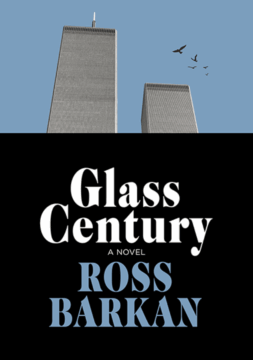
I wasn’t surprised by the praise for Glass Century. Having been a New York City cabdriver in the ’70s, a volunteer near Ground Zero in 2001, and the father of a daughter who refused to abandon her West Village apartment and beloved city during the Covid crisis, I found myself utterly convinced on every page by Barkan’s long game of interweaving intimate family secrets with the public unfolding of the city’s historic crises. And he can write a mean tennis match, too.
Meanwhile, this week Barkan’s long-time friend and political comrade-in-arms, Zohran Mamdani, has triumphed in the Democratic primary for New York City mayor. One might say that Ross Barkan, a 35-year-old novelist, journalist, essayist and political commentator, is feeling the warm embrace of the zeitgeist.
Philip Graham: Your novel Glass Century begins with the two main characters, Mona Glass and Saul Plotz, as they prepare the final arrangements of a false marriage. That their wedding will be staged is a secret built on another secret: Saul is already married and has two children. Mona believes this fictional wedding with her lover will fool her parents, who are relentless in their insistence that their fiercely independent daughter settle down and start a family.
Somehow, they manage to pull off the deception, not only for the wedding but for the many years of their actual committed relationship. A lot of people in this novel have to maintain the secret, and at least an equal number need to ignore or adopt a complicit silence about their suspicions—Mona’s parents and Saul’s wife and children, in particular. And somehow you manage as author to maintain this tightrope trick throughout the novel. It certainly rang true for me. Every family, I believe, cloaks some truth or truths that must remain silent.
Ross Barkan: Secrets are everything: shameful, powerful, ennobling, destructive. There isn’t a family without secrets. It’s only a matter of how large they are. Secrets were on my mind as I wrote Glass Century. How do we keep them? Whom do they hurt? Who benefits? A secret, sometimes, offers something of a counter-life. You slip in and live in a way you might not have otherwise. Already married Saul, in this instance, finds Mona to be something like his counter-life. And Mona, in turn, has the image of marriage, which was so important to her traditional parents in the 1970s. Of course, what makes this all interesting, as you point out, is that there are others aware of the ruse. There’s complicity. It’s plausible, certainly, to be skeptical of all of this—how is it possible? In a fictional world, there can be a just-so quality to events but I wanted to write in a manner where it didn’t seem so fantastical for secrets like these to be held. Men and women do have affairs, lives are carved out within lives, and families, in a way not so dissimilar from organisms, must adapt gradually to all of it. As I wrote the novel, I considered image versus reality, and how, from the outside, we know so very little about people. That’s the beauty of the novel form, and why I love it so: there’s the ability to excavate that interiority, that consciousness. I loved living in the pages with Mona and Saul.
PG: I know from my own childhood experience how the fantastical nature of secrets can be quietly, effectively normalized. Near the end of the novel, Mona and Saul’s son Emmanuel reflects on his parents: “It was unlike either of them to make declarative statements about the occurrence of personal changes in their lives. You were expected to observe and absorb.”
Our exchange so far may give the impression that the central concern of Glass Century is how dysfunctional families improvise their own functionality—and that is one of its pleasures. But this novel has a great historical sweep, 50 years of cultural and political change seen through the prism of New York, beginning with the city’s shambolic disorder of the 1970s, which you capture quite effectively. I worked as a cab driver during the summer of ‘72, and I remember the shock of seeing a man race across upper Broadway as if for his life, chased by a man brandishing a knife, while a crowd of about 30 angry, shouting people pursued them. Later touchstones of your novel’s narrative include the devastation of 9/11 and the city’s Covid-shutdown of 2020—great public events and tragedies that shape the inner lives of your characters.
RB: Yes, the sweep of history was very much on my mind. I’m proud that Glass Century is both an intimate and big novel, loud with events, resonant with its eras. I grew up in New York, and though I did not live through the 1970s, it’s a decade that’s always fascinated me. It was the last gasp of the old city, the city before neoliberalism’s rise, and it was, undoubtedly, a culturally vital city. It was more egalitarian. It was also more violent, and poorer.
I wanted to begin there, with the generation of my parents, and proceed onward. I didn’t want to stop in the 1970s. A deeply formative day for me, as it was for many, was Sept. 11. I lived through it, being eleven at the time, and I’m cognizant that there’s now a whole generation of adults who have no memory of it. I’ve been writing around and about 9/11 in some form for many years now. It was the end of childhood, a cleaving between—what felt to me at least—a more benign past and an uncertain future. My father worked at the World Trade Center (like Saul, he averted death through happenstance) and my mother worked very close by. There’s never really been a good 9/11 novel; my arrogant view is that Glass Century may be the first one. It is such a difficult day to write about properly. A major character (I won’t spoil too much) does not make it through 9/11 and this was the unsettling reality for so many—an ordinary Tuesday morning turned into a mass casualty event. It was the effective start of the 21st century.
I finished at Covid because that is when I finished the novel, in 2020. Covid, of course, was an even greater mass casualty event for New York City. It felt natural to bookend the novel there; we’re now living in the post-pandemic era, and the 2020s aren’t yet fully formed. I hope to write more on this particular time we live in. In the meantime, with the novel itself, it remains the most powerful medium for understanding the human being’s inner life. I love trawling through the consciousness of a character. History is not A Great Thing Happened, Then Another—it’s people. Through wars, famines, genocides, and dictatorships, it’s families forging onward, with their own domestic affairs. History weighs down upon them but they also must get up in the morning. They still fall in love. They still keep secrets.
PG: This weaving of the intimate and expansive effects of history reminds me of Elsa Morante’s monumental novel of World War II, History: A Novel. The blending of dramatic scales creates a simmering tension: readers may know what will happen next, on the grand scale, but are uncertain how particular characters will react or survive when those events arrive.
RB: History is funny like that. In retrospect, it always seems like a procession from A to B, and we forget that everyone in “history” lived in the murkiness of the present. Though my novel leaps decades and there’s certainly that kind of procession, I wanted to be, as much as I could, in that present consciousness. For example, with 9/11, I aimed to capture the reality that many believed it was an accident when the first plane hit. That was the genuine reaction. The very start of 9/11 was not, necessarily, the screaming that came across the sky, to cite Pynchon. It wasn’t even terror. It was curiosity. When the second plane hit, fear arrived. The new century began. We were under attack, and no one knew what was next. I remember thinking, as a child, the whole city will be bombed and blown up. In that way, I had the sense of living in history.
PG: In your novel a television broadcaster, trying to keep up with the chaotic and unpredictable events of that day, “continued to describe the smoke and the fire as if he were delivering new revelations, his necktie crisp and power red. Every few seconds, he reused an adjective. Extraordinary. Terrifying. Unprecedented. He was advertising the uselessness of human language.” Yet Mona, in the midst of protecting her son and riven with worry over a friend who works in one of the towers, nails it when she thinks, “It would be a day that triggered a new timeline entirely, a divergence that would haunt them all until they died. She was living and breathing through a pivot point.”
Another intimate touchstone that particularly resonates is the moment in the novel when Mona realizes that at the age of thirty-nine she is willing to continue an unexpected pregnancy and raise a still unimaginable child. She surprises herself: “This was knowledge on the scale of a dream, with its own logic she couldn’t quite name.”
RB: I was thinking a great deal about when historical shifts happen, when eras change, and how we know when they finally do. September 11th was the pivot, in so many ways. And once the cataclysm had come, one had to reckon with the reality that all of life would never be the same again. Mona does this. Beyond the world-historical, though, how do we know what we know? How do we make decisions? There can be a real dream logic to our lives. We aren’t automatons. We aren’t running algorithms. We’re processing experience, and human consciousness is a fickle thing. As a great admirer of Virginia Woolf’s fiction, this has always been an important consideration for me—the movement of the mind, and how we settle on the course of events.
PG: I love how Mona’s mind works. When she neared her thirties, she “understood that childhood selves never vanished into adulthood the way she once imagined.” Childhood trauma—but also a child’s vibrant embrace of experience—never ends, and she comes to the conclusion that “the past, a ghostly exoskeleton, wrapped her and would not let go.” The first time we see Mona in the novel, she’s running. She’s an athlete—a jogger, a tennis player—and she retains, throughout the narrative of her life—physically, mentally, and metaphorically—her “barbarian daughter” self.
RB: I’m convinced we don’t ever truly lose the inner child. There’s a part of childhood that’s always there, inside all of us. Mona is incredible kinetic: she’s vigorous, and cannot sit still. In adulthood, there’s a sort of discipline you’re supposed to find, a gravity or even somberness that should come with responsibility. But the vulnerability of childhood lingers. We grow up, find new selves, and the old—the discarded—cannot vanish entirely. The athlete is a child at heart, even at the elite level because all games are for children, and we indulge in them as adults because we long for that kind of simplicity. I’ve loved and played sports my whole life. Like Mona, I played a good deal of tennis. I was never as good as Mona, not even close, and she embodies a certain athletic genius I’ve always admired. There’s nothing quite like winning, whether it’s on the tennis court or baseball diamond. You’ve proven yourself, unambiguously. Everyday life rarely offers that degree of clarity.
PG: Your prose really hits its stride when you write about sports, not only in your novel but, I’ve noticed, in your nonfiction Substack posts. One of my favorite scenes in Glass Century is set on the tennis court. Mona and her best friend are playing when an obnoxious male player in an adjacent court incites Mona to challenge him to a game (it was the era of the highly publicized Billie Jean King-Bobby Riggs match-off, when women were seen as usurpers). Of course Mona dismantles the poor sap. The play-by-play action of this scene is exhilarating, delicious.
The scenes of Mona jogging are equally effective. Running—her life-long passion—seems like a two-pronged race: what she runs from, what she runs toward.
RB: Athletics have always been important to me, and I love great sports writing. I fear, in the age of declining newspapers and magazines, it’s becoming something of a lost art. The tennis scenes were some of my favorite to write in the novel. I grew up playing tennis and I consider it a highly literary sport, deeply psychological, a contest against yourself as much as it is against someone else. Mona is Billie Jean King-like and the Battle of the Sexes was on my mind. This was the era when women’s athletics was just beginning to be taken seriously. Mona comes out of a pre-Title IX world and her glory is on the amateur level, in the parks as an adult; she never plays high school or college tennis. On the court, she can be fully herself. She controls her own fate. The contingencies and stupidities of everyday life can be forgotten. She can soar.
PG: Yes, that’s another of the pleasures of reading Glass Century, to follow Mona as she navigates her autonomy across decade after decade. That, and the historical range and accuracy of your depictions of those decades. And the clarity of your prose, which abounds with quiet but often evocative description, as when, in Brighton, “apartment buildings of sour red brick reared up.”
And above all, your poignant observations on the American experiment, which now more than ever need to be given voice: “But it is Americans who can grow most alienated from their country. Immigrants have a devotion to the ideal. The myth will always carry meaning. They came here, therefore they cannot be disappointed. To reject America is to reject yourself—the decision you made, what your essence became.”
RB: Glass Century is a novel of ideas and a novel of history, but it’s one I hope that came across as very human. I am interested in sound and sense. I am interested in light and color. I like to think about what it means to be alive in a given moment, in both the grand and mundane ways. That is the greatness of the novel as an art form. I believe it can do so much. Even now, in this hyper-tech age, the novel endures. It will not be defeated.
***
Ross Barkan is a novelist, journalist, essayist and political commentator who has published his work in The New Yorker, The New York Times, The Guardian, Esquire, and many other venues. He is the author of three novels, the most recent being Glass Century. The Washington Post has called him “consistently one of the most interesting and original essayists of his generation.”
Philip Graham is the author of eight books of fiction and nonfiction, including the recent novel What the Dead Can Say. He has published his work in The New Yorker, Washington Post Magazine, Paris Review, and McSweeney’s, among others. He is the co-founder of and current Editor-at-Large for the literary/arts journal Ninth Letter.