
by Jerry Cayford
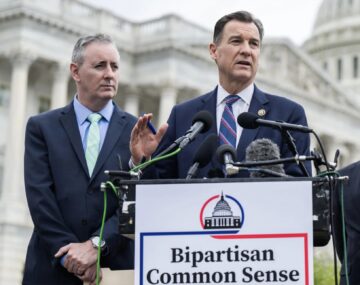
I was going to take a break from the topic of redistricting, which has been my main focus for 2026. But then big news happened: the House Problem Solvers Caucus announced on July 1 that they have established a gerrymandering reform framework and a working group to develop legislation to end gerrymandering permanently. They explicitly list “algorithmic mapping”—what I advocate—among the reforms they would support. The Problem Solvers are a militantly bipartisan caucus, which is an important advantage for them in the election reform struggles, which I will get to below. Since not everyone may understand why this announcement is big news, I decided that a summary of the overall redistricting project would be useful: its landscape, parts, and players.
My desired endpoint in this project is national legislation mandating a single algorithm that determines all district boundaries for federal offices. (Why this is the right goal is the subject of my earlier article “Resist, Adapt, Redistrict.”) Many different groups will have to collaborate to reach that desired point. Politicians propose and pass legislation. Their staffs need academics and technical experts to produce plausible algorithms and a consensus as to which one is best. Advocacy groups mobilize support among the public and politicians. Lawyers and legal scholars refine legislation to minimize the court challenges that inevitably arise. Some of these groups will not be able to perform their functions without funding from philanthropic organizations supportive of the end goal. All of these actors influence each other; each category contains factions within it that have competing ideas; and the algorithmic redistricting that I propose is a relatively new concept to all of them.
That is a rough sketch of the terrain. Add in some dynamic factors—the gerrymander war; Supreme Court hostility to racial districting; the increased power of big data computing to game the electoral system—and you can see the forces and the resources that this project for algorithmic redistricting has to manage to end gerrymandering. Read more »