Tim Rollins and K.O.S.

Angel Abreu at The Paris Review:
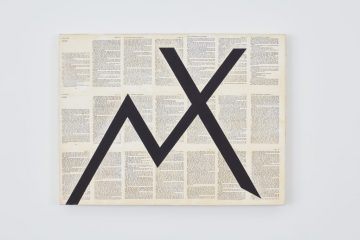
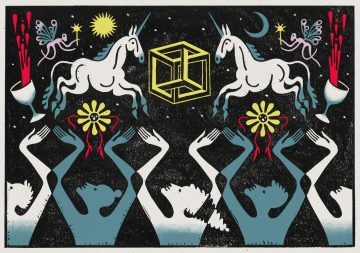
In 1986, at the age of twelve, I joined Tim Rollins and Kids of Survival. I first met Tim as a seventh grader at the Intermediate School 52 where he was teaching at the time. Tim had only intended to stay at the school for a few weeks. The students had made charcoal drawings on the ceiling of the classroom, and the walls were covered in graffiti. Tim often described the art room as the “Hip-Hop Sistine Chapel.” He was convinced that there was a profound reason he was there.

Timothy William Rollins was born in 1955 in a small town in central Maine. Similar to the South Bronx, Pittsfield was economically downtrodden and its youth struggled against the pitfalls of low expectations. Tim was extremely motivated and precocious. He was a gifted artist, an avid reader, and an amateur scholar of Martin Luther King Jr. Dr. King’s writings and speeches, combined with Tim’s Sunday school teaching, would form the basis of his pedagogical philosophy with K.O.S. Tim earned his BFA from SVA in 1977 and after graduate studies at New York University, in art education and philosophy, he began teaching in the New York City public school system. In 1982, Tim stepped off the 2 train at Prospect Ave in the South Bronx for the first time.

more here.
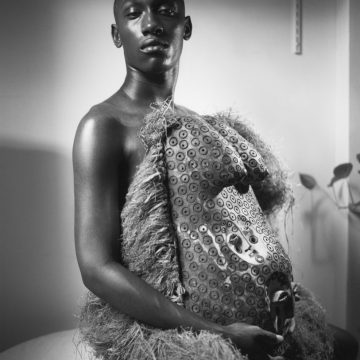
The Whitney Biennial in an Age of Anxiety

Peter Schjeldahl at The New Yorker:

“Technology will surely drown us. The individual is disappearing rapidly. We’ll eventually be nothing but numbered ants. The group thing grows.” So said Marcel Duchamp to an interviewer in 1966, as quoted in the catalogue of the 2019 Whitney Biennial, by Adam Weinberg, the museum’s director. Weinberg has in mind the deleterious effects of social media, but Duchamp’s bull’s-eye prophecy could do as a capsule review of this Biennial. With scarce exceptions, the mostly youthful artists gravitate to identity or otherwise communitarian politics—strikingly, they are not, for the most part, militant, as if they had resigned themselves to ineffectiveness, but they appear entrenched. The show is about many things, but the irresponsible joy of aesthetic experience is only fitfully one of them. Nearly all the artists are technically adept in mediums that include photography, video, and performance, as well as painting and sculpture, but most of the work, though charming at times, is derivative in form, recycling modes that would not surprise any art-school student of the past quarter century. Lucas Blalock’s photographic images of normal interiors inhabited by surreal whatsits are suavely sensual, and studio photographs by John Edmonds suggest Robert Mapplethorpe’s tony classicism translated into slang.

more here.

Frances Arnold Turns Microbes Into Living Factories

Natalie Angier in The New York Times:

Dr. Arnold won fame and the Nobel Prize for developing a technique called directed evolution, a way of generating a host of novel enzymes and other biomolecules that can be put to any number of uses — detoxifying a chemical spill, or example, or disrupting the mating dance of an agricultural pest. Or removing laundry stains in eco-friendly cold water, or making drugs without relying on eco-hostile metal catalysts. Rather than seeking to design new proteins rationally, piece by carefully calculated piece — as many protein chemists have tried and mostly failed to do — the Arnold approach lets basic evolutionary algorithms do the work of protein composition and protein upgrades. The recipe is indeed an engineer’s dream: simple. You start with a protein that already has some features you’re interested in, such as stability in high heat or a knack for clipping apart fats. Using a standard lab trick such as polymerase chain reaction, you randomly mutate the gene that encodes the protein. Then you look for slight improvements in the resulting protein — a quickened pace of activity, say, or a vague inclination to carry out a task it wasn’t performing before, or a willingness to operate under conditions it deplored in the past.

…Through directed evolution, Dr. Arnold’s lab has generated microbes that do what organisms in nature have never been known to do. Some of them, for instance, stitch together carbon, the element that defines life, and silicon, the stuff of sand, glass and computer chips but heretofore not of life (unless you are a Horta, the rock-shaped beings who famously mind-melded with Mr. Spock on “Star Trek”). All it took were a few mutational tweaks to a bacterial protein called cytochrome c. “We showed for the first time that living organisms can use their own machinery to bring carbon and silicon together to form a bond,” said Jennifer Kan, a postdoctoral scholar in Dr. Arnold’s lab who performed the experiments. “We didn’t even have to nag the protein too hard to get it to do it.”

More here.

Sunday, May 26, 2019

Lucian Freud’s Fat Lady Sings

Jeremy Sigler in Tablet:

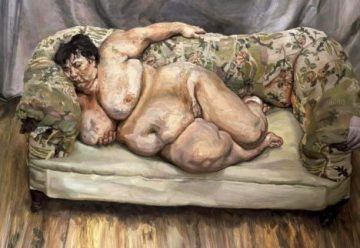
British painter Lucien Freud became the world’s priciest living artist at an auction when his graceful portrait of a 280-pound civil servant named Sue Tilley sold for £17 million at Christie’s International in New York.

No matter how regressive or irrelevant a painter you think he is, you have to admit Freud has always made headlines. According to one tabloid journalist, back in his prime, Freud did well with women, snagging the gorgeous socialite Lady Caroline Blackwood. She became his second wife and the subject of many early portraits, but also ushered him into the jet set, and off to Paris to flirt with the likes of Picasso. Another gossipy writer offered that Freud is believed to have sired somewhere in the double digits illegitimate children with countless mistresses. I also read somewhere online that Freud inked a million-dollar bird tattoo on the supermodel Kate Moss’ dimples of Venus. (It seems to have occurred when the two were palling around—Kate was pregnant and modeling for a painting.) You might say Freud was grandfathered in to the “over 80 and still pinching ass” club—he was a tolerated, incorrigible, narcissistic predator before he died in 2011 at age 88.

Does the thought of Freud trigger a different set of emotions and warrant a more sympathetic evaluation?

More here.

What conceptual means are available to prevent deviant and undesirable behavioral conditions from being diagnosed as mental disorders as a result of social bias and stigma?

Awais Aftab in Psychiatric Times:

Consider a hypothetical society that severely marginalizes individuals with red hair and considers red hair to be a genetic disorder with a recessive pattern of inheritance. The “pathology” is determined to be an imbalance between the levels of the red pigment pheomelanin and dark pigment eumelanin in the hair filaments. Red-haired individuals—and parents of red-haired children—in this society go to extreme lengths to dye their hair black. In fact, this society has spent extensive resources to develop complex dyeing procedures, performed only by specially trained medical professionals, that work best for red hair and last longer than regular dyes.
Variants of this thought experiment are sometimes utilized in the gene-environment debates; for gene-environment theorists, the thought experiment provides a scenario in which a socially sanctioned phenotype leads to reduced biological fitness solely because of that sanction. However, I utilize this scenario to explore a different question. The disorder designation in this case is entirely arbitrary on part of the society. There is nothing inherently pathological about red hair. The designation is arbitrary in this case because any hair color, if stigmatized, could have been regarded as a disorder. Disorder designation is one of the ways in which this stigma is expressed, although possibly a relatively humane way, since disorder designation recognizes that the condition can potentially be fixed with a treatment (in this case, hair dyeing), and treatment may lead to alleviation of the social exclusion.

More here.

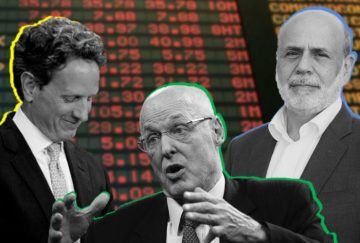
Ben Bernanke, Timothy Geithner, and Henry Paulson describe fighting the fire of the 2008 financial crisis

Reed Hundt in the Boston Review:

The Great Crash of 2007–2009 stripped American middleclass families of wealth. It gave rise to nativist politics on the right and socialism on the left, killing credence in neoliberal market capitalism in both the United States and Europe. It buried the Washington consensus that had energized bipartisan support for U.S. leadership around the world. Indeed, China has replaced the United States as the leading country whose investment drives the global economy.

In his 2018 letter to shareholders, Jamie Dimon, CEO of JPMorgan Chase, described the state of the union as follows: “Middle class incomes have been stagnant for years. Income inequality has gotten worse. Forty percent of American workers earn less than $15 an hour, and about 5% of full-time American workers earn the minimum wage or less, which is certainly not a living wage. In addition, 40% of Americans don’t have $400 to deal with unexpected expenses, such as medical bills or car repairs.”

More here.

Commonsense tells us that both dogs and cats experience jealousy. Are we being anthropomorphic or can we know for sure?

Paul Thagard in Aeon:

My friend Laurette has two cats, Zhanna and Pixie. When Laurette pets Zhanna, Pixie interferes by attacking Zhanna. By analogy to humans, it is natural to interpret Pixie’s behaviour as jealousy, but perhaps Pixie is just attempting to assert dominance or establish territoriality. There have been no experimental studies of cats to discriminate between jealousy and alternative hypotheses, but studies of dogs support the claim that they actually do get jealous.
The logic of attributing mental states to nonhuman animals is complicated. We cannot use deductive inference, because there are no general rules that would tell us that when an animal has a specific behaviour, then it is jealous. Probability theory is also useless, because we do not know the likelihood of an animal’s behaviour given that an animal is jealous, which is needed to calculate the probability that an animal is jealous. Instead, we can use a form of reasoning that philosophers call inference to the best explanation. We can legitimately infer that cats or dogs are jealous if that hypothesis provides the best explanation of all the available evidence.

Several factors contribute to determining the best explanation. First, how much does a hypothesis explain?

More here.

Sunday Poem

Another Life

Women spend the afternoon squatting on the porch,
picking lice from each other’s hair.
They spend the evening feeding the little ones,
lulling them to sleep in the glow of the bottle lamp.
The rest of the night
they offer their back to be slapped and kicked by the men of the house
or sprawl half-naked on the hard wooden cot.
Crows and women greet the dawn together,
the women blowing into the oven to start the fire,
tapping on the back of the winnowing tray with five fingers
and, with two, picking out the stones.
Half their lives women pick stones from the rice.
All their lives stones pile up in their hearts,
no one there to touch them even with two fingers.

by Taslima Nasrin

~~~~~~~~

Taslima Nasrin, an award-winning writer, physician, secular humanist and human rights activist, is known for her powerful writings on women oppression and unflinching criticism of religion, despite forced exile and multiple fatwas calling for her death.

No direction home: the tragedy of the Jewish left

Maurice Glasman in New Statesman:

A few weeks ago, a friend of mine, Paul Embery, found himself hit by a Twitter storm. Paul is a trade unionist, a socialist and is emerging as a polemical journalist of some distinction. Like many, but not all who identify as Blue Labour, he argues strongly for the democratic and radical possibilities of Brexit, which he views as a class issue. He found himself engaged in a Twitter spat with Mike Harding, who describes himself on his website as a “singer, songwriter, comedian, author, poet, broadcaster and multi-instrumentalist”, and there is no reason to doubt that he is all those things and more. He views Brexit as a horrible prelude to a new world war. Mike is from Crumpsall in Manchester, Paul is from Dagenham in the borderlands of Essex and east London. It was never going to go well.
Harding posted a tweet, roughly consistent with the vision of John Lennon’s “Imagine”, which stated that a “nation is not a home” but a collection of individuals who share a status of citizenship and not anything like a “homeland”. Paul replied that “this encapsulates the divide within society between a rootless, cosmopolitan, bohemian middle class… and a rooted, communitarian, patriotic working-class”. Mike Harding suggested that Paul Embery should read Hitler’s Mein Kampf.

Muhammad Ali once said that “you never get knocked out by a punch you see coming”. It is a good rule in politics, too. Paul Embery did not go to university and he did not spend his youth reading histories of the Soviet Union. His first paid work almost ended when he called the shelf stackers in his local Asda out on a wildcat strike. He joined the fire brigade when he was 22. He had never heard the word “trope” until, in this Twitter spat, he was accused of using one. I, however, am precisely a “rootless, cosmopolitan, bohemian” and I knew that the phrase “rootless cosmopolitan” was minted by Stalin and his executioners in the show trials to exterminate Jews, particularly Trotskyists, for whom this became the standard expression. I cannot hear it without the dread fear of the knock on the door by the Cheka in the early hours. Paul, because of what he’d written – and then, by association, Blue Labour – was accused of anti-Semitism.

More here.

Why Fiction Trumps Truth

Yuval Noah Harari in The New York Times:

Many people believe that truth conveys power. If some leaders, religions or ideologies misrepresent reality, they will eventually lose to more clearsighted rivals. Hence sticking with the truth is the best strategy for gaining power. Unfortunately, this is just a comforting myth. In fact, truth and power have a far more complicated relationship, because in human society, power means two very different things. On the one hand, power means having the ability to manipulate objective realities: to hunt animals, to construct bridges, to cure diseases, to build atom bombs. This kind of power is closely tied to truth. If you believe a false physical theory, you won’t be able to build an atom bomb.
On the other hand, power also means having the ability to manipulate human beliefs, thereby getting lots of people to cooperate effectively. Building atom bombs requires not just a good understanding of physics, but also the coordinated labor of millions of humans. Planet Earth was conquered by Homo sapiens rather than by chimpanzees or elephants, because we are the only mammals that can cooperate in very large numbers. And large-scale cooperation depends on believing common stories. But these stories need not be true. You can unite millions of people by making them believe in completely fictional stories about God, about race or about economics.

The dual nature of power and truth results in the curious fact that we humans know many more truths than any other animal, but we also believe in much more nonsense. We are both the smartest and the most gullible inhabitants of planet Earth. Rabbits don’t know that E=MC² , that the universe is about 13.8 billion years old and that DNA is made of cytosine, guanine, adenine and thymine. On the other hand, rabbits don’t believe in the mythological fantasies and ideological absurdities that have mesmerized countless humans for thousands of years. No rabbit would have been willing to crash an airplane into the World Trade Center in the hope of being rewarded with 72 virgin rabbits in the afterlife.

More here.

Saturday, May 25, 2019

Democracy’s Dilemma

Over at the Boston Review, Henry Farrell and Bruce Schneier have the lead piece in a forum on the issue of information and democracy, with responses by Riana Pfefferkorn, Joseph Nye, Anna Grzymala-Busse, Allison Berke, Jason Healey, and Astra Taylor:
Today, we live in darker times. Authoritarians are using these same technologies to bolster their rule. Even worse, the Internet seems to be undermining democracy by allowing targeted disinformation, turning public debate into a petri dish for bots and propagandists, and spreading general despair. A new consensus is emerging that democracy is less a resilient political system than a free-fire zone in a broader information war.

This despairing, technologically determinist response is premature. The Arab Spring wasn’t the twilight of dictatorship, yes, but today isn’t the twilight of democracy, either. Still, we agree that to the extent democracy has revealed systemic weaknesses, we should be working overtime to repair them.

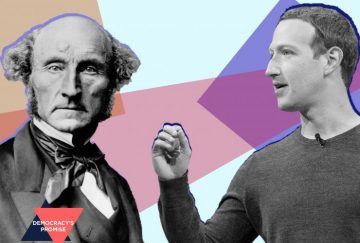
To pursue this project of repair, we need a better understanding of democracy’s resiliency in the face of information attacks. Building that understanding is harder than it might seem. Our theories have mostly assumed that democracies are better off when there is less control over information. The central assumption, which owes much to John Stuart Mill and Louis Brandeis, is that the answer to bad speech is more and better speech.

We need new frameworks to understand the limits of this optimistic view.

More here.

Why the Clash Matter

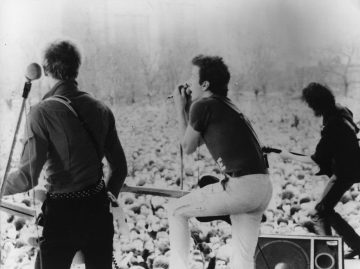
1980: The Clash play live at one of the open-air concerts of a British road-tour featured in the film ‘Rude Boy’. The film, directed by Jack Hazan and David Mingay, records the rise to fame of The Clash and the British social scene of the era. (Photo by Hulton Archive/Getty Images)

Alexander Billet in Jacobin:

 Since the death of front-man Joe Strummer in 2002, the Clash have ascended into rock-and-roll mythos. No fewer than thirty books have been released on the band or on Strummer. Some of them are wonderful. Others are shallow and sloppy hagiographies. Their music has been used to hawk everything from boots to smartphones. Centrists in progressive clothing like Beto O’Rourke receive high praise for quoting “The Clampdown”to Ted Cruz. Separating what’s commodity and spectacle from the band’s actual contribution is getting harder.

The latest in the growing list of biographical material is “Stay Free: The Story of the Clash.” Produced by Spotify in collaboration with the BBC and narrated by Public Enemy’s Chuck D, it’s the first podcast dedicated to the band’s history. It is an excellent piece of work, both in terms of substance and style. Social and cultural context play a prominent role in telling the story of the band’s evolution. Strikes, riots, movements, political explosions and implosions clearly inform their philosophy and musical practices as global capitalism reconstitutes itself in the 1970s and 1980s.

All of which highlight the significance of the Clash’s musical experiments: the ever-expanding incorporation of reggae, hip-hop, and funk into their punk palette; their insistence on selling double and even triple albums at single album prices, much to the chagrin of their record label.

More here.

‘Orientalism,’ Then and Now

Adam Shatz in The New York Review of Books:
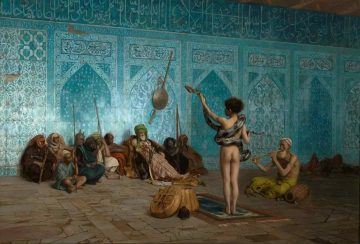
Orientalism in the age of Trump has no interest in promoting democracy or other “Western values” because these values are no longer believed, or they’re regarded as an inconvenient obstacle to the exercise of power. This new Orientalism speaks in the language of deals and, more often, that of force and repression. It keeps Arab despots in power and angry young men of Arab origin in prison.

Unlike the Orientalism that Said analyzed, it does not require experts like Bernard Lewis and the late Fouad Ajami, a Lebanese scholar who became Dick Cheney’s favorite “native informant.” Say what you will about Ajami and Lewis, they were writers and intellectuals. Today’s Orientalist is more likely to be a number-cruncher who studies police reports on terrorist suspects and calculates degrees of radicalization.

The older style of Orientalism—though it has not entirely died out—is less useful to those in power because it is based on deep historical and literary learning of a kind that is anathema to an American president who does not have the patience for books and who is ruled by his impulses. The Internet and social media have stripped those once regarded as experts of much of their authority, and has in turn empowered non-experts, those who parade anti-intellectualism as a virtue and even as a strength. The consequences of this critique of expertise have proved to be at best ambiguous, since it can lend itself to ignorance, intolerance, and irrationality, rather than provide a basis for the counter-hegemonic knowledge that Said envisioned.

More here.

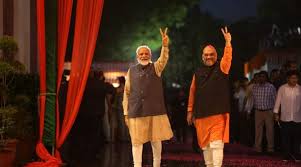
Staggering dominance: The only authentic analysis of this election is two words – Narendra Modi

Pratap Bhanu Mehta in Indian Express:

All our normal categories of political analysis and statistical jugglery come to nought when they are faced with Narendra Modi. This is because, he more than any politician in modern history, has grasped three things. First, he is the purest distillation of the idea of politics. For him political reality is not given, it is created; while other parties twiddle thumbs trying to get sociological arithmetic right, he goes about the task of producing a total identification with his persona. And he deploys undefeatable energy to do so. Second, he has fully grasped the potential of a dangerous idea in democracy: That even evil that has a whiff of a larger cause about it has the power to move more than civility that is tainted with pettiness. And third, and most importantly, he has crafted a way of being everywhere: He managed to colonise our imaginations, our fantasies, hopes and fears, to the point where even resistance to him seemed to be entirely in his thrall. Has there been any other figure in the annals of democratic politics who makes you think about him almost every second of your existence? He can literally make himself the object of attention every second of public discourse. Many leaders win because the public does not see an alternative. Modi won because he made an alternative unthinkable.

It is difficult to argue with the claim that the opposition did not, in any way merit victory. In these times, civility is a rare commodity and the Congress can be granted that. It is also easy to blame control of institutions, media and money for the BJP’s electoral firepower. Some of that is true, but to attribute the BJP’s victory to that would be to deny political reality. Even in a moment of grave national crisis, the Opposition’s inability to come together was above all, evidence of their pettiness and myopia. Even when the Congress knew that the battering ram Modi was using against the Congress was that Congress was dynastic and corrupt, Congress could not change the face of its leadership. Modi relentlessly campaigned that all of India’s other parties — from SP and BSP, to the Congress — are corrupt family enterprises. He was the scimitar, slashing away at the old order, which was still holding India back

Modi deserves his victory. But this is also a moment of dread for Indian democracy.

More here.

America’s Great Modern Justice

Lincoln Caplan in Harvard Magazine:

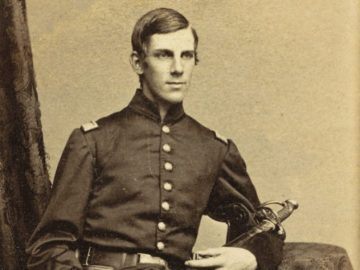
IN THE SPRING of 1864, Oliver Wendell Holmes Jr. was fighting in the Civil War as a Union Army captain. He had enlisted three years earlier, soon after the war began, when he was 20 and in his last term at Harvard College, in the class of 1861. As an infantry officer in Virginia, he had received a near-fatal wound at Ball’s Bluff in his first battle, where he was shot through the chest in a Union raid that backfired. He had proved his valor by rejoining his men after he was shot, defying an order to have his wound tended. At Antietam a year later, where he was briefly left for dead on the bloodiest day in U.S. Army history, a bullet ripped through his neck. At Chancellorsville, in another eight months, an iron ball from cannon shot badly wounded him in the heel. Near there in winter, “Holmes lay in the hospital tent too weak even to stand as he suffered the agonies of bloody diarrhea,” Stephen Budiansky, M.S. ’79, writes in a new biography of Holmes: “The disease killed more men than enemy bullets over the course of the Civil War.”

That spring, generals Ulysses S. Grant and Robert E. Lee met on the battlefield for the first time. Grant, the newly appointed commander of the Union Army, had shifted its main target from Richmond, the capital of the Confederacy, to Lee and his roving Army of Northern Virginia. The Battle of the Wilderness was the opening fight. In fierce encounters over two days, of 119,000 Union soldiers, one of seven died or was injured; one-sixth of Lee’s 65,000 troops were casualties. Holmes filled a new role as an officer on horseback in the Wilderness. As Budiansky recounts, he faced “the most intense and nightmarish episode of the entire war for him, nine weeks of nonstop moving, fighting, and killing that would often find him falling asleep in the saddle from sheer fatigue, escaping death by inches, and witnessing carnage on a close-up scale that eclipsed even his own previous experiences.”

It is impossible to imagine a current Supreme Court justice being forged in such circumstances—with the survival of the nation, as well as of the multitudes fighting, so uncertain.

More here.

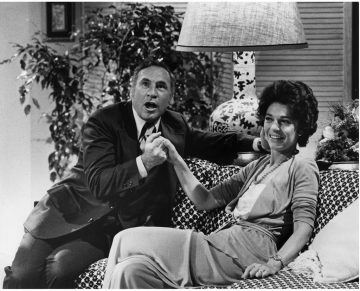
Mel Brooks, the Manic Comic

Dave Itzkoff in The New York Times:

There’s a revealing moment early in “Funny Man,” Patrick McGilligan’s comprehensive biography of Mel Brooks, the relentless, redoubtable comedian and filmmaker. It’s not so much an anecdote as a recitation of a musical number from Brooks’s formative days as an entertainer — an Al Jolson-esque ditty that he performed in the Army and later on the borscht belt circuit before it became an enduring part of his repertoire. Its lyrics run as follows:
Here I am, I’m Melvin Brooks!

I’ve come to stop the show.

Just a ham who’s minus looks

But in your heart I’ll grow!

I’ll tell you gags, I’ll sing you songs

(Just happy little snappy songs that roll along)

Out of my mind. Won’t you be kind?

And please love Melvin Brooks!

This isn’t enough to fill a book and yet it tells you almost everything you need to know about Brooks, whose singular career encompasses genuine classics like “The Producers,” “Blazing Saddles” and “Young Frankenstein,” as well as irresistible schlock like “Spaceballs” and “History of the World, Part I.”

To get where he has gotten — to have secured a place in the comedy pantheon and to have won the show-business quadruple crown known as the EGOT (Emmy, Grammy, Oscar, Tony) — Brooks, of course, had to be funny and inventive. He had to have a fierce conviction in his own abilities, an unwavering determination to be in front of a crowd and a caustic wit to wield against enemies, or turn on himself when necessary. But he had an obvious neediness, too, as most comedians do — a part of himself that craves approval and bristles at the mildest rejection. The end result is a dynamic that compelled Brooks, even in success, to keep throwing everything he had at his audiences, sometimes to his own detriment.

More here.

Saturday Poem

Elevator Music

A tune with no more substance than the air,
performed on underwater instruments,
is proper to this short lift from the earth.
It hovers as we draw into ourselves
and turn our reverent eyes toward the lights
that count us to our various destinies.
We’re all in this together, the song says,
and later we’ll descend. The melody
is like a name we don’t recall just now
that still keeps on insisting it is there.

by Henry Taylor
from
Poetry 180
Random House, 2003

Friday, May 24, 2019

Behind every conspiracy theory is a hidden political agenda

Quassim Cassam at the Institute of Art and Ideas:

Conspiracy theorists get a seriously bad press. Gullible, irresponsible, paranoid, stupid. These are some of the politer labels applied to them, usually by establishment figures who aren’t averse to promoting their own conspiracy theories when it suits them. President George W. Bush denounced outrageous conspiracy theories about 9/11 while his own administration was busy promoting the outrageous conspiracy theory that Iraq was behind 9/11.

If the abuse isn’t bad enough, conspiracy theorists now have the dubious honour of being studied by psychologists. The psychology of conspiracy theories is a thing, and the news for conspiracy theorists isn’t good. A recent study describes their theories as ‘corrosive to societal and individual well-being’. Conspiracy theorists, the study reveals, are more likely to be male, unmarried, less educated, have lower household incomes and see themselves as having low social standing. They have lower levels of physical and psychological well-being and are more likely to meet the criteria for having a psychiatric disorder.

In case you’re starting to feel a sorry for conspiracy theorists (or for yourself if you are one), perhaps it’s worth remembering that they aren’t exactly shrinking violets. They are vociferous defenders of their theories and scornful of their opponents. Anyone who has been on the receiving end of the wrath of conspiracy theorists will know that it can be a bruising experience.

More here.

RIP Murray Gell-Mann (1929 – 2019)

From Wikipedia:

Murray Gell-Mann (/ˈmʌri ˈɡɛl ˈmæn/; September 15, 1929 – May 24, 2019) was an American physicist who received the 1969 Nobel Prize in physics for his work on the theory of elementary particles. Until his death, he was the Robert Andrews Millikan Professor of Theoretical Physics Emeritus at the California Institute of Technology, a distinguished fellow and co-founder of the Santa Fe Institute, a professor of physics at the University of New Mexico, and the Presidential Professor of Physics and Medicine at the University of Southern California.

More here.

Trump Was Right Not to Sign the Christchurch Call

Graeme Wood in The Atlantic:

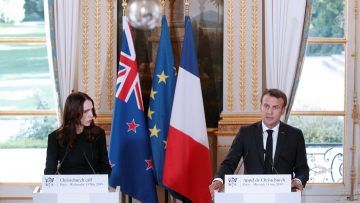
French President Emmanuel Macron and New Zealand’s Prime Minister Jacinda Ardern hold a news conference during the ‘Christchurch Call Meeting’ at the Elysee Palace in Paris.

Last week, the prime minister of New Zealand and president of France presented the Christchurch Call—a pledge to “eliminate terrorist and violent extremist content online.” Eighteen countries and all major tech companies signed up, but Donald Trump’s administration issued a statement declining to join them. Critics of the administration imputed the darkest of motives: It must oppose the pledge because it wants to make the world safe for violent extremists, perhaps especially the right-wing zealots who applauded the massacre of 51 people in Christchurch, New Zealand, itself two months ago.

You can read the Christchurch Call here. I defy you to find anything objectionable about it. It does not vilify particular religious or political beliefs; it mentions freedom of expression multiple times; it recognizes that terrorists will not disappear just because their Facebook accounts do or because their parents find out that they’ve been up to no good. Even the White House noted that “we support [its] overall goals,” and declined to say why the United States did not sign on. The office that issued the statement, the Office of Science and Technology Policy, referred me to the National Security Council, which did not offer any defense either.

So let me offer a defense for them.

More here.