
Bennett McIntosh in Harvard Magazine:
 AS A MEDICAL STUDENT in the 1980s, Isaac “Zak” Kohane heard stories—from patients, mentors, and colleagues—of nearly miraculous recoveries from cancer. A patient given weeks to live instead survives for years. An experimental drug works exceptionally well—in only one patient. Or, most controversially, a patient rejects chemotherapy, radiation, and surgery, and somehow lives. As a trainee, Kohane found many such stories quite literally unbelievable. “Frankly,” he says, “I assumed that they didn’t really have a cancer.” Now Nelson professor of biomedical informatics at Harvard Medical School (see “Toward Precision Medicine,” May-June 2015, page 17), Kohane not only believes these stories, he’s seeking them out. A year ago, he began a project to find “exceptional responders” to cancer treatment—those who have beaten the cancer odds many times over—in order to figure out what makes them special.
He was inspired initially by a very different group of patients. Since 2014, Kohane has coordinated a nationwide program to study and aid patients whose affliction with rare, undiagnosed diseases mark them as statistical outliers. “Outliers, by definition, are interesting,” he explains, because they are different from everybody else, “so there are things to be learned. By finding these outliers, we have been able to make breakthroughs both for the patient but also scientifically,” diagnosing more than 300 patients suffering from newly discovered genetic diseases in five years.
More here.
 Ted Mann in Tablet:
 Elizabeth Chatterjee in the LRB:
 Clive Cookson in the FT:
 In the 20th century an unfortunate gulf opened up in philosophy between the “continental” and “analytic” schools. Even if you’ve never studied the subject, you might well have heard of this one split. But as the British moral philosopher Bernard Williams once pointed out, the very characterisation of this gulf is odd—one school being characterised by its qualities, the other geographically, like dividing cars between four-wheel drive models and those made in Japan.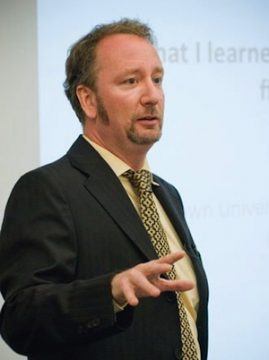

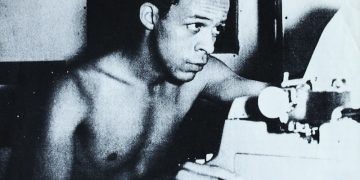 Charles Wright refused to audition as a hatchet man contestant in the Manhattan token wars in which only one Black writer is left standing during a given era. When I asked George Schuyler, author of the classic novel Black No More, why he, at the time, hadn’t received more recognition, he said he wasn’t a member of The Clique. Tokenism deprives readers of access to a variety of Black writers and smothers the efforts of individual geniuses like Elizabeth Nunez, J. J. Phillips, Charles Wright, and William Demby, whose final novel, King Comus, I published.
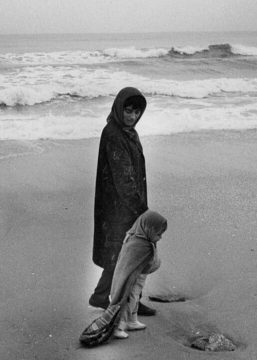 One of the most wonderful things about Varda and her camera was the way she circled back, again and again, to previous sites and subjects of her films. Among others, she maintained bonds with the fishermen of La pointe courte, in 2008 performing an anniversary tribute to honor their part in the film. She captured the scene in The Beaches of Agnès, and mutual gratitude hangs in the salt air. Around Demy’s 1990 death from AIDS, Varda not only filmed his childhood memories; she also returned to Rochefort with the cast of a film Demy shot there, making The Young Girls Turn 25 to honor The Young Girls of Rochefort. Through her returns, Varda gave these stories rich new layers. The reciprocal vulnerability between the artist and her subjects extends to viewers when, at the end of Faces Places, we see our bowl cut-rocking cat lady auteur weep in disappointment when Godard isn’t home to receive the pastries she brought him. When has a visionary drawn us in this close?
 Poems have reacquainted me with the spectacular spirit of the human, that which is fundamentally elusive to algorithms, artificial intelligence, behavioral science, and genetic research: “Sometimes I get up early and even my soul is wet” (Pablo Neruda, “Here I Love You”); “Earth’s the right place for love: / I don’t know where it’s likely to go better” (Robert Frost, “Birches”); “I wonder what death tastes like. / Sometimes I toss the butterflies / Back into the air” (Yusef Komunyakaa, “Venus’s Flytrap”); “The world / is flux, and light becomes what it touches” (Lisel Mueller, “Monet Refuses the Operation”); “We do not want them to have less. / But it is only natural that we should think we have not enough” (Gwendolyn Brooks, “Beverly Hills, Chicago”). Once, while in graduate school, reading Wordsworth’s “Ode: Intimations of Immortality from Recollections of Early Childhood” in the corner of a café, I was surprised to find myself with brimming eyes, filled with unspeakable wonder and sadness at the veracity of his words: “Our birth is but a sleep and a forgetting: / The Soul that rises with us, our life’s Star, / Hath had elsewhere its setting, / And cometh from afar.” Poetry, as the poet Edward Hirsch has written, “speaks out of a solitude to a solitude.”
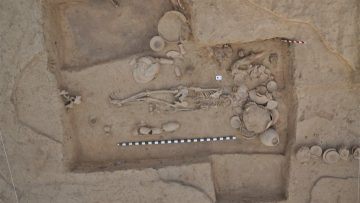 The climate of South Asia is not kind to ancient DNA. It is hot and it rains. In monsoon season, water seeps into ancient bones in the ground, degrading the old genetic material. So by the time archeologists and geneticists finally got DNA out of a tiny ear bone from a 4,000-plus-year-old skeleton, they had already tried dozens of samples—all from cemeteries of the mysterious Indus Valley civilization, all without any success. The Indus Valley civilization, also known as the Harappan civilization, flourished 4,000 years ago in what is now India and Pakistan. It surpassed its contemporaries, Mesopotamia and ancient Egypt, in size. Its trade routes stretched thousands of miles. It had agriculture and planned cities and sewage systems. And then, it disappeared. “The Indus Valley civilization has been an enigma for South Asians. We read about it in our textbooks,” says
  Over the past two centuries, millions of dedicated people – revolutionaries, activists, politicians, and theorists – have yet to curb the disastrous and increasingly globalised trajectory of economic polarisation and ecological degradation. Perhaps because we are utterly trapped in flawed ways of thinking about technology and economy – as the current discourse on climate change shows. Rising greenhouse gas emissions are not just generating climate change. They are giving more and more of us climate anxiety –
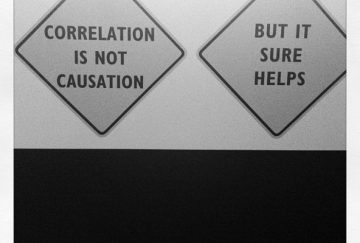 “Correlation is not causation.”
 In the early 1950s, a young economist named Paul Volcker worked as a human calculator in an office deep inside the Federal Reserve Bank of New York. He crunched numbers for the people who made decisions, and he told his wife that he saw little chance of ever moving up. The central bank’s leadership included bankers, lawyers and an Iowa hog farmer, but not a single economist. The Fed’s chairman, a former stockbroker named William McChesney Martin, once told a visitor that he kept a small staff of economists in the basement of the Fed’s Washington headquarters. They were in the building, he said, because they asked good questions. They were in the basement because “they don’t know their own limitations.”