
Manu S Pillai in Scroll.in:
 William Dalrymple’s latest book, The Anarchy: The East India Company, Corporate Violence, And The Pillage Of An Empire, covers a vast arc in tracing the Company’s life and times in India, uncovering in the process a narrative of corporate power and its relationship to the State that seems uncannily familiar in the 21st Century. It is, of course, only the latest in a line of distinguished – and highly popular – works on aspects of Indian history. Dalrymple spoke to Manu Pillai, whose own books on Indian history have gained great popularity. Excerpts from the conversation:
Your previous books are all much more focused – on shorter periods of time with a more taut canvas, for example. With The Anarchy, you seem to have produced a “big picture” book. Why now and why this larger history of the East India Company and, essentially, the eighteenth century?
You’ve put your finger exactly on it. I’ve written three micro-histories already of particular moments in the history of the Company: White Mughals is just ten years in the history of Hyderabad, 1795 to 1805. The Last Mughal is three years in the history of Delhi, 1856 to 58. And Return of a King is three years in the history of Afghanistan, 1839 to 42. The advantage there is that if you take a tiny time-slice like that, it allows you to really get into the character, really get to know the period, and present them for readers.
More here.

 Alyssa Battistoni in Dissent:
 Lea Ypi in The New Statesman:

 W
W
 When he’s doing his dance, Israil Ansari looks like a tornado. Keeping his feet pinned to the ground, he bends his elbows and knees and moves his arms and legs from side to side at such a high speed that his body and immediate surroundings dissolve into a blur. It’s a dance that divides opinion. His fans describe him as a “unique talent” and “the world’s eighth wonder”. He has more than 2m followers on TikTok, the video-sharing app that made his name. But his detractors don’t hold back: “I can’t bear to watch this”, “someone take this guy to a hospital”, “give us a break, bro”. Ansari says he is happy as long as people are watching. “Fifty percent of it is love, fifty percent of it is hate. I will take both.” Naturally, he prefers the love, although it can get a bit much. In Mumbai people stop him in the street. They ask for a selfie, then they ask him to do the dance. He always obliges, but when he’s in a hurry he wears a cap to avoid being ambushed. Without it, Ansari can be spotted a mile off because of his hair, which is almost as crazy as his dance. It’s currently green at the front and blond at the back, although it won’t be for long. He likes to dye it to match his clothes. “In one month I have changed my hair colour 27 times. No one else has done that in the world.”
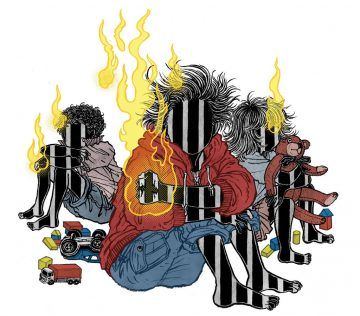 Stephen King’s protagonists have been hunted by all sorts of malevolent beings, from the demonic clown of “It” to the fiendish cowboy Randall Flagg in “
 HUMEYSHA: There’s a line from Grandmaster Flash about how hip-hop pioneers would “adopt” from the history of music by taking a few seconds of a groove, playing it on repeat, and finding a rhythm for audiences to dance to. Whether it’s with a few bars from a qawwali recording or my guitar experiments, I think I’ve always been in love with the sampling technique for how it embodies a very contemporary way we make our selves. To intimately know histories of music, dig through the archives, and identify passages that loop seamlessly, without clicks or pops where the endings match the beginning—it’s a tool of infinite possibility despite being constrained by a strict sense of time and bound up with material. People like you and I assert how we are similarly not fixed, static identities bound only by our inheritance or biology; what matters is what we do with it, by remixing past to remake ourselves anew. I am not just where I come from or where I reside, but also all I’ve invested in. And as a musician that’s why I draw on sounds from all the places I lived in to voice new ones that feel more like home.
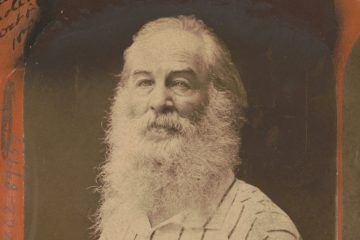 Fredson Bowers didn’t know what he would find when he began digging into the disordered stack of 230 loose pages—all from 19th-century Walt Whitman manuscripts—that landed on his desk in 1951.
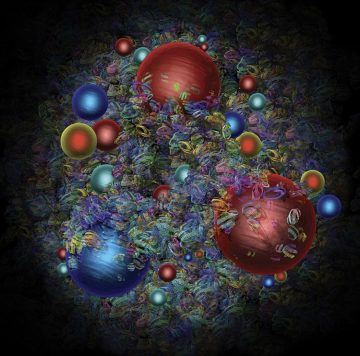 In 2010, physicists in Germany