Perhaps the World Ends Here
The world begins at a kitchen table. No matter what, we must eat
….. to live.
The gifts of earth are brought and prepared, set on the table. So it
….. has been since creation, and it will go on.
We chase chickens or dogs away from it. Babies teethe at the corners.
….. They scrape their knees under it.
It is here that children are given instructions on what it means to
….. be human. We make men at it, we make women.
At this table we gossip, recall enemies and the ghosts of lovers.
Our dreams drink coffee with us as they put their arms around
….. our children. They laugh with us at our poor falling-down
….. selves and as we put ourselves back together once again at the
….. table.
This table has been a house in the rain, an umbrella in the sun.
Wars have begun and ended at this table. It is a place to hide in
….. the shadow of terror. A place to celebrate the terrible victory.
We have given birth on this table, and have prepared our parents
….. for burial here.
At this table we sing with joy, with sorrow. We pray of suffering
….. and remorse. We give thanks.
Perhaps the world will end at the kitchen table, while we are
….. laughing and crying, eating of the last sweet bite.
by Joy Harjo
from The Woman Who Fell From the Sky
© 1994


 In 1969, Margaret Rossiter, then 24 years old, was one of the few women enrolled in a graduate program at Yale devoted to the history of science. Every Friday, Rossiter made a point of attending a regular informal gathering of her department’s professors and fellow students. Usually, at those late afternoon meetings, there was beer-drinking, which Rossiter did not mind, but also pipe-smoking, which she did, and joke-making, which she might have enjoyed except that the brand of humor generally escaped her. Even so, she kept showing up, fighting to feel accepted in a mostly male enclave, fearful of being written off in absentia.
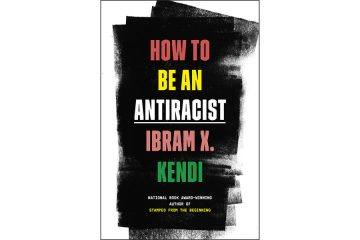 Kendi, like any good academic, is clear about his terms and definitions. He believes that a racist is someone who supports “a racist policy through their actions or inaction or expressing a racist idea,” while an antiracist is one who supports “an antiracist policy through their actions or expressing an antiracist idea.” Most of us, he concludes, hold both racist and antiracist views. But our beliefs are not necessarily fixed and immutable. “‘Racist’ and ‘antiracist’ are like peelable name tags that are placed and replaced based on what someone is doing … in each moment. These are not permanent tattoos.” In other words, our views and positions can change – as the evolution of his own thinking demonstrates. He calls policies that increase racial disparities “racist” while policies that reduce such disparities are “antiracist.” So affirmative action policies in college admissions designed to increase the enrollment of students of color are antiracist. (Presumably this means that legacy preferences in admissions, which do not reduce racial disparities and indeed may reinforce them, are racist.) Working to repeal the Affordable Care Act is racist because doing so would increase racial disparities in health care. “Do-nothing climate policy is racist policy, since the predominately non-White global south is being victimized by climate change more than the Whiter global north.”
 The first agreement we should make is: don’t call them soap operas,” Dr Arzu Ozturkmen, who teaches oral history at Boğaziçi University in Istanbul, scolds me. “We are very much against this.” What
  One of the most radical and important ideas in the history of physics came from an unknown graduate student who wrote only one paper, got into arguments with physicists across the Atlantic as well as his own advisor, and left academia after graduating without even applying for a job as a professor. Hugh Everett’s story is one of many fascinating tales that add up to the astonishing history of quantum mechanics, the most fundamental physical theory we know of.
 Understanding American politics has become increasingly confusing as the old party labels have lost much of their meaning. A simplistic Left vs. Right worldview no longer captures the complexity of what’s going on. As the authors of the October 2017 “Pew Survey of American Political Typologies”
 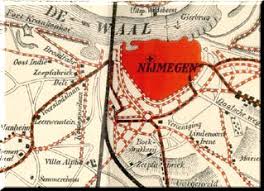 Afval is not offal, but garbage.
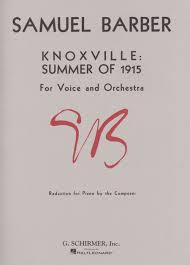 “That was exactly my childhood!” said Eleanor Steber of Barber’s work and Agee’s text, remembering her upbringing in Wheeling, West Virginia. Another superb interpreter of Knoxville: Summer of 1915, Leontyne Price, born in Laurel, Mississippi, had a similar response: “it expresses everything I know about my roots and about my mama and father … my home town. … You can smell the South in it.” Why has Barber’s piece appealed to so many people from such different backgrounds—irrespective of race, wealth, or region? The text, a poetic hymn to both nostalgia and existential insecurity, does address questions of universal appeal, but I suspect that the music’s subtle bluesy streaks increases its familiarity and allure. Barber may have been the consummate continental Romantic, but he never sounded so idiomatically American as he does in Knoxville: Summer of 1915. The work speaks to us all. In its journey from innocence to experience, it deals profoundly with our loneliness in the world, with how we reckon with growing up, a business made all the harder when the last thing we come to learn is exactly who we are.
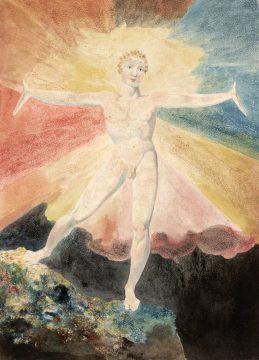 On February 1818, Samuel Taylor Cole-ridge was sent a copy of Songs of Innocence, William Blake’s first illustrated book of poems, which had been published some 30 years earlier. He was both impressed and discomfited by what he read. “You may smile at my calling another Poet a Mystic,” Coleridge, by then a fully fledged opium addict, wrote to a friend, “but verily I am in the very mire of commonplace common sense compared with Mr Blake.” Coleridge was not, of course, the first or last person to be mired.
 Nearly one-third of the wild birds in the United States and Canada have vanished since 1970, a staggering loss that suggests the very fabric of North America’s ecosystem is unraveling. The disappearance of 2.9 billion birds over the past nearly 50 years
 Back in 1996, a quantum physicist at Bell Labs in New Jersey published a new recipe for searching through a database of N entries. Computer scientists have long known that this process takes around N steps because in the worst case, the last item on the list could be the one of interest.
 Six hours’ drive north of Disneyland, a building in downtown Oakland houses a kind of computer scientist’s version of the storied children’s amusement park. Its digital magic is of a less spectacular flavor, though; while Hollywood dreams of technofuturia in the style of vapory holograms, and Elon Musk promises to launch us skyward in
  ‘Many who encountered the actual woman were disappointed to discover a reality far short of the glorious myth,’ Moser writes in his introduction. ‘Disappointment with her, indeed, is a prominent theme in memoirs of Sontag, not to mention in her own private writings.’ It is a salutary warning to readers who have bought into the notion of the dazzling, supremely confident intellectual. Eight hundred exhausting pages later, Sontag emerges as one of those irredeemably unhappy people, endlessly lurching between narcissism and self-hatred, who leave a string of uncomprehending friends, relatives and lovers in their wake. She wasn’t even interested in personal hygiene or health, forgetting to wash, wearing the same clothes for days at a time, smoking heavily and gorging herself on food at other people’s expense. A friend once arrived late for dinner with her at Petrossian on 58th Street, only to find that Sontag had already gone home, leaving him with the bill for the ‘sumptuous, multi-course caviar dinner’ she had consumed.
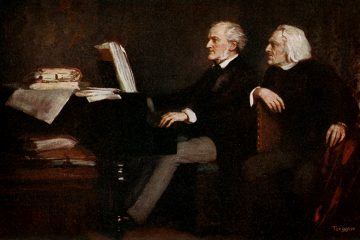 This focus on drama was fostered by Wagner’s upbringing, which included relatively little musical education. A painter and actor, his step-father Ludwig Geyer had taken young Richard to the theatre. Wagner did for a short while study composition in his home town of Leipzig. But he was never a proficient instrumentalist, which narrowed his path to a musical career. With what became his typical mixture of determination and cunning, he made a virtue out of necessity and simply declared the orchestra the grandest of instruments. (Indeed, he later wrote one of the first modern conducting manuals.) Above all, though, he learned on the job. In early 1833, at the age of nineteen, he began a series of seasonal engagements as chorus master and music director at various minor theatres as well as a touring company. These gave him valuable insights into the state of provincial opera performances, introduced him to the actress Minna Planer (soon to become his first wife), and opened the opportunity to mount a first operatic attempt. But he could not support the comfortable, silk-bedecked lifestyle he craved. Escaping his creditors, he spent two poverty-stricken but formative years in Paris, then the centre of the operatic world.