
Wise and Lawrence in Nature:
 The major cause of cancer-related deaths is the spread of cancer cells from their primary site to other parts of the body1. This spreading process, known as metastasis, typically involves cellular stressors and environmental shocks that induce dramatic changes in cancer cells. One such change is a fierce resistance to current therapies, which means that new ways to combat metastatic disease are urgently needed. Writing in Nature, Priestley et al.2 use whole-genome sequencing (WGS) to illuminate the genomic changes that underpin metastasis in 22 types of solid tumour. Although previous studies3,4 have unearthed some hints of such changes, this is perhaps the first pan-cancer metastasis study of its size to exploit the power of WGS.
Priestley et al. characterized 2,520 samples of metastatic tumours from people with cancer (Fig. 1). In each case, they also analysed a sample of non-cancerous blood cells from the same person. Using WGS, the authors produced a rich catalogue of the genetic mutations found in each metastasis. This catalogue complements existing inventories from both metastasis-sequencing studies and genomic databases of primary tumours, and offers several interesting insights. For example, the authors reveal frequent mutations in the gene MLK4; this is consistent with a previous study that connected an increased number of copies of MLK4 with metastasis5.
More here.
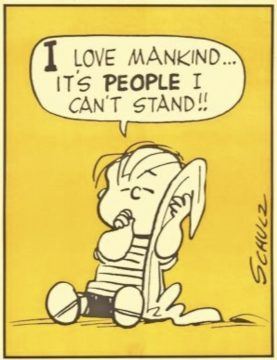 Here’s where it begins for me: a four-panel strip, Lucy and Linus, simplest narrative in the universe. As the sequence starts, we see Lucy skipping rope and, like an older sister, giving Linus a hard time. “You a doctor! Ha! That’s a big laugh!” she mocks. “You could never be a doctor! You know why?” Before he can respond, she turns away, as if to say she knows him better than he knows himself. “Because you don’t love mankind, that’s why!” she answers, seeking (as usual) the final word. Linus, however, he defies her, standing alone in the last frame, shouting his rejoinder out into the distance: “I love mankind . . . it’s people I can’t stand!!”
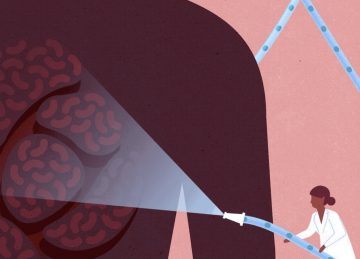 As a doctor who treats cancer, I think a lot about how to frame new treatments to my patients. I never want to give false hope. But the uncertainty inherent to my field also cautions me against closing the door on optimism prematurely. We take it as a point of pride that no field of medicine evolves as rapidly as cancer — the FDA approves dozens of new treatments a year. One of my biggest challenges is staying up to date on every development and teasing apart what should — and shouldn’t — change my practice. I am often a mediator for my patients, tempering theoretical promises with everyday realism. To accept a research finding into medical practice, I prefer slow steps showing me proof of concept, safety, and efficacy.
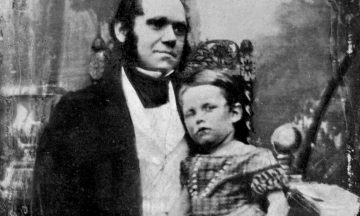 I was raised as a Quaker, but around the age of 20 my faith faded. It would be easiest to say that this was because I took up philosophy – my lifelong occupation as a teacher and scholar. This is not true. More accurately, I joke that having had one headmaster in this life, I’ll be damned if I want another in the next. I was convinced back then that, by the age of 70, I would be getting back onside with the Powers That Be. But faith did not then return and, as I approach 80, is nowhere on the horizon. I feel more at peace with myself than ever before. It’s not that I don’t care about the meaning or purpose of life – I am a philosopher! Nor does my sense of peace mean that I am complacent or that I have delusions about my achievements and successes. Rather, I feel that deep contentment that religious people tell us is the gift or reward for proper living.
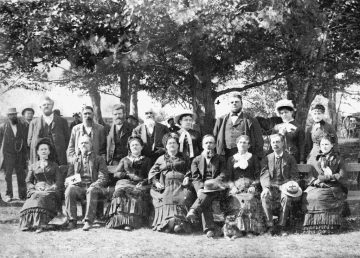 Ptacin, the author of the memoir “Poor Your Soul,” herself hovers somewhere between curiosity and the edge of belief. As she tells us, she wants to believe, wishes she could see the ghosts that float so readily around the Maine mediums in this “enchanted hamlet.” But the hovering serves a purpose. She is on a quest to understand the peculiar nature of belief, the power of faith — pure, unquestioning and even unreasoning — to shape the way we see the world around us.
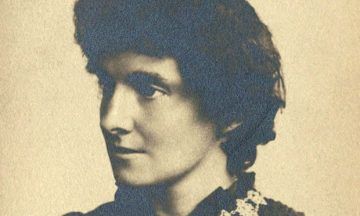 It’s not just that Nesbit’s books are brilliant: her life is also brilliant material for one. She was in person at once quite awe-inspiring and a bit of a nightmare, able to weather tragedy and yet a queen of melodrama, a self-supporting writer who opposed women’s suffrage. Vibrantly attractive and adored by her many proteges and readers, she was what they called in those days “advanced” – a committed socialist (she and her husband Hubert Bland were among the earliest members of
 Dimitrina Petrova in Dissent:
 Over at the Next System Project’s
  Steven Wishnia in The Indypendent:
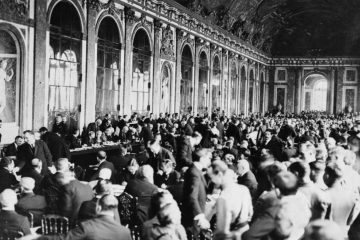 Robert Zaretsky in Foreign Affairs:
 This wonderful book might be read as a long meditation on WH Auden’s notorious throwaway comment in his elegy for WB Yeats: “Poetry makes nothing happen.” John Burnside’s first chapter engages directly with this maxim, patiently showing us what it does and does not mean in its context. Auden is not shrugging his shoulders and accepting a place for poetry at the neglected margins of social life. Rather he is making a stark distinction between the ways in which human beings try to “make things happen” – the feverish efforts at political and technological control – and the tough imperative to find ways of echoing “the music of what is” in word and gesture.
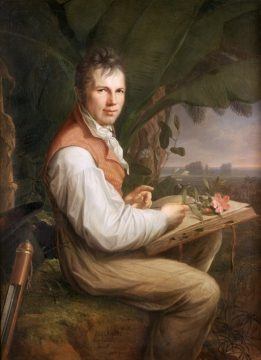 Who’s the “father” of environmentalism? Now that the human impact on nature is getting more attention than ever, it’s a question worth asking. Is it, for example, the Prussian naturalist, Alexander von Humboldt, as his biographer thinks?
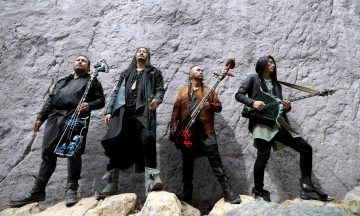 “HU!! HU!! HU!!,” yelled the crowd, at escalating volume, for a full 20 minutes before the Hu kicked off their recent concert at the Brooklyn venue, Warsaw. The fans who packed the place, many of whom were decked out in de rigueur heavy metal gear of black T-shirts and leather, thrust their fists into the air in rhythm to their chants, which grew to a roar the moment the band appeared.
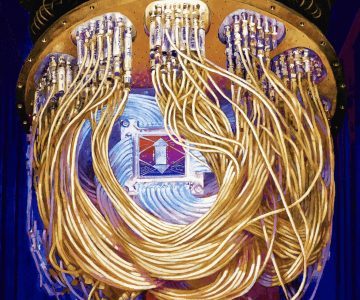 Scientists at Google on Wednesday declared,
 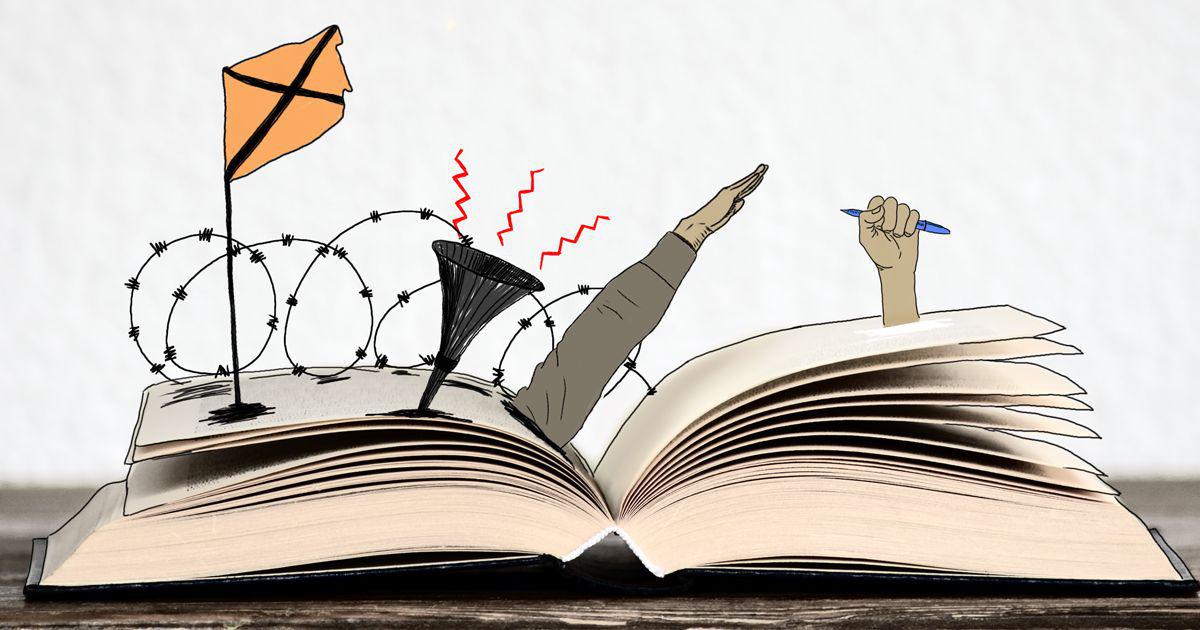 These days, a great many people in the rich countries complain loudly about migration from the poor ones. But the game was rigged: First, the rich countries colonised us and stole our treasure and prevented us from building our industries. After plundering us for centuries, they left, having drawn up maps in ways that ensured permanent strife between our communities. Then they brought us to their countries as “guest workers” – as if they knew what the word “guest” meant in our cultures – but discouraged us from bringing our families.