
Michael Prodger at The New Statesman:
 Stubbs was, however, an interpreter as well as an observer. His pictures reveal his fascination with relationships; between owners and their horses and hounds, between servants and masters, between animals themselves. And they show his very modern conviction that animals have emotions similar to and every bit as potent as our own. The eyes of his creatures are full of feeling and frequently stare back at the viewer with disconcerting intensity. You need only to look at the eye of his horse being devoured by a lion, a motif he returned to again and again, to be made uncomfortable as a witness to its agony. In a remarkable late work of 1800 showing the Earl of Clarendon’s gamekeeper with his dog about to dispatch a doe, man and doomed animal look out of the painting, making the viewer complicit in the coup de grâce. Other near contemporaries such as James Ward and Théodore Géricault gave their animals emotions, but without the same fellow feeling.
more here.
 Krasznahorkai is a perplexing figure in today’s literary landscape: he is, in internet parlance, committed to his bit. The Hungarian author cultivates an air of mystery (he “lives in reclusiveness,” according to one
 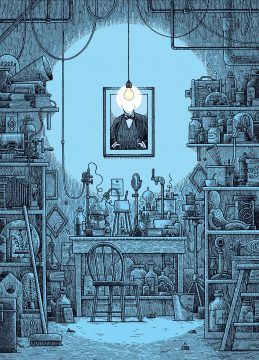 There were ideas long before there were light bulbs. But, of all the ideas that have ever turned into inventions, only the light bulb became a symbol of ideas. Earlier innovations had literalized the experience of “seeing the light,” but no one went around talking about torchlight moments or sketching candles into cartoon thought bubbles. What made the light bulb such an irresistible image for ideas was not just the invention but its inventor.
 In 2014, when Ian Miller and Tyler Lyson first visited Corral Bluffs, a fossil site 100 kilometers south of the Denver Museum of Nature & Science where they work, Lyson was not impressed by the few vertebrate fossils he saw. But on a return trip later that year, he split open small boulders called concretions—and found dozens of skulls. Now, he, Miller, and their colleagues have combined the site’s trove of plant and animal fossils with a detailed chronology of the rock layers to tell a momentous story: how life recovered from the asteroid impact that killed off the dinosaurs 66 million years ago.
 Last April, Princeton University economists and married partners
 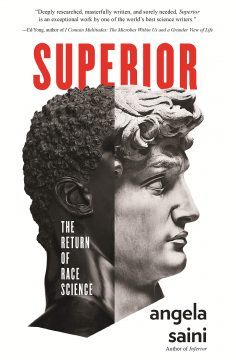 A dozen years ago I flew to Europe to speak at a conference on science’s limits. The meeting’s organizer greeted me with a tirade about James Watson, co-discoverer of the double helix, who had just stated publicly that blacks are less intelligent than whites. “All our social policies are based on the fact that their intelligence is the same as ours,”
 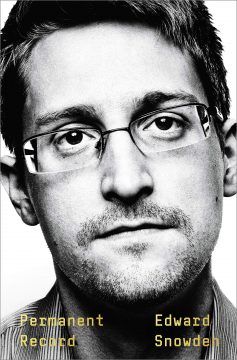 Edward Snowden, late in the pages of his memoir, Permanent Record, describes his sensation at being personally introduced to XKEYSCORE, the NSA’s ultimate tool of intimate, individual electronic surveillance. Among the NSA’s technological tools (some of which Snowden aided in perfecting), XKEYSCORE was, according to Snowden, “the most invasive…if only because [the NSA agents are] closest to the user—that is, the closest to the person being surveilled.” For nearly three hundred pages, the memoir has built to this scene, foreshadowed in the preface, in which the whistleblower-in-the-making sees behind the curtain:
 What is smoking for? People who don’t smoke think it’s for feeding an addiction, and they’re right. Once you’ve started smoking, it’s hard to stop. But that’s a narrow definition. There’s a physical addiction and there’s also a spiritual addiction. Perhaps you could call it a metaphysical addiction.
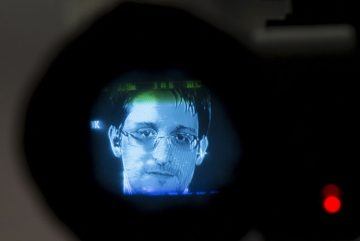 Apart from his short video outing himself in 2013, Snowden has tended to keep himself out of the public eye, preferring that the material speak for itself. He is, in many respects, the opposite of Julian Assange – a figure with whom he is often bracketed. The founder of WikiLeaks wanted to be a player: impresario, editor, publisher, activist, leaker, information anarchist and troublemaker. Snowden, by contrast, simply wanted to get his documents into the hands of journalists, and to leave them to make the choices about what to publish.
 Around
 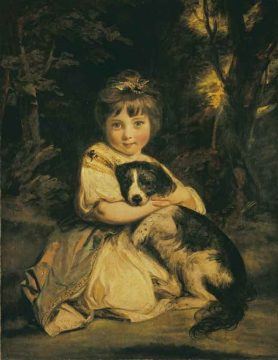 Simon draws attention to “the extreme ambivalence we now feel towards beauty both within and outside art,” and continues: “We distrust it; we fear its power; we associate it with compulsion and uncontrollable desire of a sexual fetish. Embarrassed by our yearning for beauty, we demean it as something tawdry, self-indulgent, or sentimental.”
 It all began with a book review. Last year, I read
  A
A  The
The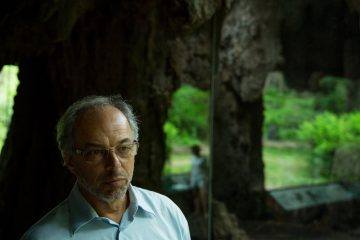 Among things, that they are capable of anticipation. For instance, they show much excitement when I simply touch my car keys, which might well signal that they are going to some place interesting, like the beach. That proves that they have imagination and even memory.
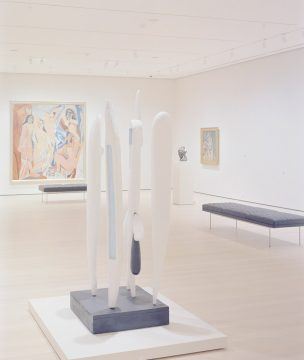 The Vatican, Kremlin, and Valhalla of modernism—home of the faith, the sway, and the glamour—that is the Museum of Modern Art is reopening, after an expansion that adds forty-seven thousand square feet and many new galleries, inserted into an apartment tower next door and built on neighboring land gobbled from the late, by some of us lamented, digs of the American Folk Art Museum. Far more, though still a fraction, of moma’s nonpareil collection is now on display, arranged roughly chronologically but studded with such mutually provoking juxtapositions as a 1967 painting that fantasizes a race riot, by the African-American artist Faith Ringgold, with Picasso’s gospel “Les Demoiselles d’Avignon” (1907). The renovation is a big deal for the global art world, and certainly for New York. It runs up against problems old and new. Generously enlarged quarters will only marginally relieve a chronic crush of visitors, the museum victimized by its own charisma. Enhanced representations of art by women, African-Americans, Africans, Latin-Americans, and Asians can feel tentative, pitched between self-evident justice and noblesse oblige. But such efforts are important and must continue. We will have a diverse cosmopolitan culture or none worth bothering about.
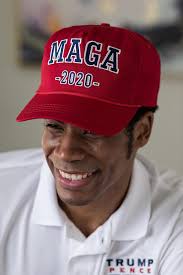 The economic appeal of the Trump campaign, and his success in parts of the Midwestern industrial heartland has provoked a rash of explanations and invective centered on the “white working class.” But the “angry white worker” line misses too much. Trump did not grow the GOP base substantially, though he outperformed McCain in 2008 and Romney in 2012 by over 2 million votes. More importantly, Trump did not secure a larger share of the white vote than Romney did. Trump performed well among blue collar voters, former Obama voters, wealthy whites, non-unionized workers in coal country, the steel-producing belt and Right to Work states, building trades and contractors, proto-entrepreneurs, and minorities. One-third of Latino voters supported Trump, as did 13% of African American men.