
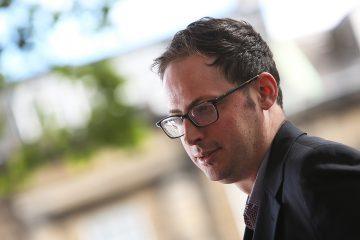
 Aaron Timms in The New Republic:
Did he change, or did we? For weeks now, Nate Silver has been morphing before our eyes into exactly the kind of bloviator he made his name mocking. Tired perhaps of the slow and predictable business of prognostication—the elections so far apart from each other, the long months of waiting and lousy web traffic in between—the founder of data journalism outlet FiveThirtyEight has transformed his Twitter account into a font of provocatively bad opinions. Some of Nate’s Takes have touched on his speciality in data-based political forecasting: He has told us, for instance, not to get too excited about Democratic candidates’ (read: Bernie’s) fundraising numbers because polls, rather than cash, are the best predictor of electoral success, whereas a year ago he was saying just the opposite. But he has also wandered into more exotic territory, offering up a mix of bad policy ideas (elite colleges should admit as many legacy students and children of rich donors as they want) and sanctimonious tone policing (liberals should feel ashamed of themselves for not allowing the president to revel in the murder of ISIS’s chief lieutenant) with the unyielding, over-the-spectacles glare of an imaginary Concerned of Brooklyn Heights.
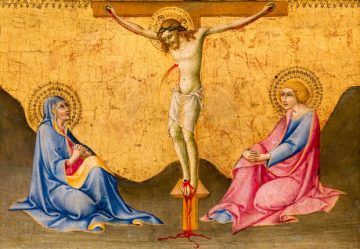 Other intriguing details abound. When Notre Dame was being built in medieval Paris, a collective of prostitutes offered to pay for one of its windows and dedicate it to the Virgin Mary. Followers of Satan around the same time were obliged to suck on the tongue of a giant toad and lick the anus of a black cat. Galileo had a craving for celebrity and was an inveterate social climber. Yet, though the book is full of such titbits, there is a seriousness at its heart. Holland argues that all “western” moral and social norms are the product of the Christian revolution. He is haunted by St Paul’s claim that God chose the weak and foolish things of the world to shame the strong, and to drive the point home he might have looked at the beginning of Luke’s gospel. We encounter there an obscure young Jewish woman called Mary who is pregnant with Jesus, and Luke puts into her mouth a cry of praise that some scholars believe is a Zealot chant. It speaks of how you will know who God is when you see the poor coming to power and the rich sent empty away. It is this which must be weighed in the balance against the killing fields of Christendom.
 Adorno was known for his skill at anticipating apparent contradictions, gymnastically reframing objections to his theses as their necessary conclusions, and he would not have been shocked by the cultural capital afforded his byline any more than the
  A
A Hala, the new film from the writer-director Minhal Baig, is a study in contrasts. The coming-of-age story follows its titular protagonist, a Pakistani American teenager played by Geraldine Viswanathan, as she navigates the confusion of adolescence in the United States. The divides she encounters are apparent almost immediately: parents versus classmates; Pakistan versus America; Islamic tenets versus romantic freedom. Hala skateboards to school and writes poetry. She also clashes with her strict mother and father, who chide her relentlessly for any number of activities her white friends speak about with casual disregard.
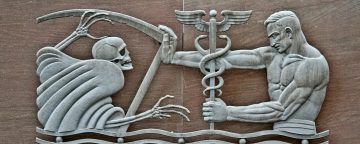 On June 9, 2016, a law permitting physician-assisted suicide went into effect in California. The same day, Dr. Lonny Shavelson, an emergency medicine physician, opened the Bay Area End of Life Options clinic to provide the newly legal service. A longtime activist for the cause, Shavelson’s interest began in adolescence. In
  I have recently been informed that I am “outside of the sociology” of academic philosophy. (The person who said this of me is someone I like and admire, and whose presence on the scene I value, very much.) I think this means, for one thing, that I do not display a number of the shibboleths that are commonly used by members of the clan to identify other members, like Vikings with their brooches. Sometimes this is because I refuse to display them, and sometimes this is because I am unaware that they exist.
 The technique, officially called emergency preservation and resuscitation (EPR), is being carried out on people who arrive at the University of Maryland Medical Centre in Baltimore with an acute trauma – such as a gunshot or stab wound – and have had a cardiac arrest. Their heart will have stopped beating and they will have lost more than half their blood. There are only minutes to operate, with a less than 5 per cent chance that they would normally survive.
 In India today, a shadow world is creeping up on us in broad daylight. It is becoming more and more difficult to communicate the scale of the crisis even to ourselves. An accurate description runs the risk of sounding like hyperbole. And so, for the sake of credibility and good manners, we groom the creature that has sunk its teeth into us—we comb out its hair and wipe its dripping jaw to make it more personable in polite company. India isn’t by any means the worst, or most dangerous, place in the world—at least not yet—but perhaps the divergence between what it could have been and what it has become makes it the most tragic.
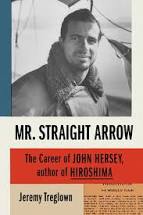 Hiroshima ran to 31,000 words. The original article filled the entire edition of the New Yorker on 31 August 1946, the first time in the magazine’s history that this had ever happened. It was serialised in full in eighty other publications around the world and eventually even in Japan. Subsequently republished in book form, it has been in print ever since and has sold more than three million copies. And yet, unusually for a work of journalism, it appeared more than a year after the events it described. There were reasons for the delay. One was the difficulty of accessing Hiroshima and the severity of postwar censorship. Another was the effect of the demonisation of the Japanese people in the American media after the attack on Pearl Harbor. It took an original mind and an eloquent pen to portray them as victims as well as aggressors. Hersey possessed both. Among his peers, in my view, he was rivalled only by the late and great James Cameron of the equally late and great News Chronicle.
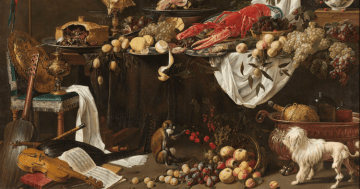 Few composers—in his time and in the centuries since—have been as deft as Purcell at marrying text and sound. His opera Dido and Aeneas is a seminal work, the most important of his compositions for the stage, and his songs, of which he wrote more than 100, are exemplary (such 20th-century English composers as Benjamin Britten and Michael Tippett would pay brilliant homage to them in their own ways). Between 1692 and 1695, Purcell composed three settings of Colonel Heveningham’s poem, all of them beautiful. The first two are more or less similar, but the third is a different work altogether, more florid, more darkly evocative.
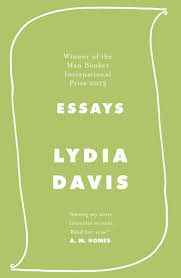 Revising One Sentence” is the title of one of the essays in Lydia Davis’s masterful, lucid collection. No single piece could capture the essence of this extraordinary writer, but a new reader might wish to start here. This is the sentence in question, in its final version: “She walks around the house balancing on the balls of her feet, sometimes whistling and singing, sometimes talking to herself, sometimes stopping dead in a fencing position.” Nothing to see here, you might think. But think again.
 In 1940, Ernest Hemingway wrote of the Spanish Civil War and the Guadarrama Mountains of Spain: “The Guadarrama Mountains of Spain run from northeast to southwest across the central plains of Castille. They are ancient mountains, formed of pale granite and gneiss, their slopes densely wooded with pines of several species: black pines, maritime pines, sentry pines, Scots pines. To visit them is to be able to recall the scents of those days and nights, even years on: ‘the piney smell of … crushed needles’, as Ernest Hemingway puts it in for Whom the Bell Tolls, ‘and the sharper odour of … resinous sap’.
 Scientists have come up with a drug, injected once a day, that appears to make children’s bones grow. To many, it’s a wondrous invention that could improve the lives of thousands of people with dwarfism. To others, it’s a profit-driven solution in search of a problem, one that could unravel decades of hard-won respect for an entire community. In the middle are families, doctors, and a pharmaceutical company, all dealing with a philosophically fraught question: Is it ethical to make a little person taller? The most common cause of dwarfism is known as achondroplasia. People with the condition, caused by a rare genetic mutation, have shorter limbs and shorter stature than those without it, and they deal with a lifetime of skeletal issues that often require a battery of corrective surgeries.
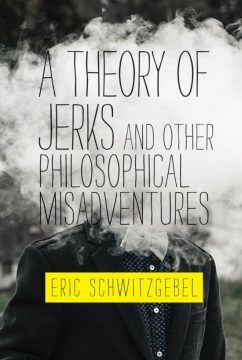 The opposite of the jerk is the sweetheart. The sweetheart sees others around him, even strangers, as individually distinctive people with valuable perspectives, whose desires and opinions, interests and goals, are worthy of attention and respect. The sweetheart yields his place in line to the hurried shopper, stops to help the person who has dropped her papers, calls an acquaintance with an embarrassed apology after having been unintentionally rude. In a debate, the sweetheart sees how he might be wrong and the other person right.
 Like cosmic hard drives, black holes pack troves of data into compact spaces. But ever since Stephen Hawking