Andrea Long Chu’s ‘Females’

Thora Siemsen and Andrea Long Chu at The Nation:
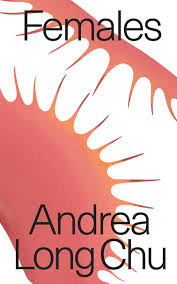
TS: Lines from Valerie Solanas’s play Up Your Ass open each chapter of Females. How did this choice help determine the book’s structure?

ALC: Verso had initially approached me about doing an introduction to Up Your Ass, which they were thinking about publishing. Eventually that idea morphed, and we decided I would just write a short book—but I still wanted Up Your Ass to be essential to it. I also wanted the book to be more experimental in form. I was thinking brief, numbered axioms, like Guy Debord’s Society of the Spectacle. That [idea] was a disaster. While it was freeing to be able to jump around from idea to idea, it was also painful and exhausting. I ended up with all these fragments and no coherent book, and I still hadn’t worked Up Your Ass into it. So I turned in the draft, came back to revise it after my surgery, and realized that the play could serve as the spine of the book. I more or less follow the whole play from start to finish. That transformed the book from this bad archipelago of thoughts into a single whole. The play was the answer.

more here.
The Louvre Abu Dhabi

George Blaustein at n+1:

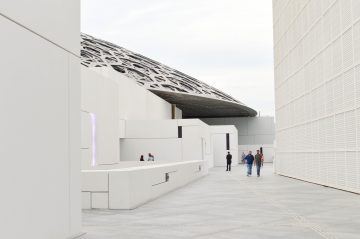
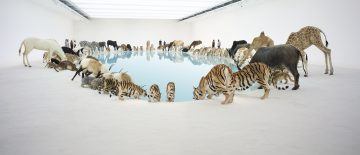
THE MOST PLEASANT WAY to experience the Louvre Abu Dhabi is the same as with any monied museum: in total ignorance of the real circumstances of its creation. A broad steel dome of 7500 tons (the Eiffel Tower weighs about as much, in iron) rests on an archipelago of galleries and buildings. As you approach, it floats like a giant alien saucer from Independence Day. But from below the sunlight streaks through its delicate lattice of layered octagonal forms. This “rain of light,” both stunning and calm, evokes sun through palm leaves. The floors are gray, the walls are white, and all around is the blue of water and sky. The Louvre is on the island of Saadiyat, which means “happiness,” and Abu Dhabi’s gridded phalanx of skyscrapers stands at a relaxing distance across the water, like a shinier Chicago of the Middle East.

The circumstances of creation have not been harmonious for the first encyclopedic museum of art and civilization in the Middle East, nor has its western reception. “See humanity in a new light” is the Louvre Abu Dhabi’s slogan, but new light isn’t necessarily best light.

more here.

On Marianne Moore and Grace Schulman

John McIntyre at Poetry Magazine:

If you place their bodies of work end to end chronologically, Marianne Moore and Grace Schulman together created more than a century’s worth of American poetry. Moore’s first published poems appeared in Poetry in 1915; the 84-year-old Schulman’s most recent collection is Without a Claim (2013), although she’s published poems and a memoir since, and this year edited Mourning Songs, a compilation of poems about death and grief. Both women were poetry editors at major magazines, Moore during the latter years of Dial and Schulman at the Nation from 1971 to 2006. That tenure overlapped with a dozen years—1973 to 1985—during which Schulman helmed the Poetry Center at the 92nd Street Y. She has also taught at Baruch College for decades, extending her knowledge and influence, and perhaps a bit of Moore’s influence by proxy, to generations of young poets.
Schulman has been candid about her connection to Moore, whom she met in 1949. Schulman was 14 at the time. “They said she was a great poet,” Schulman writes in her memoir, Strange Paradise: Portrait of a Marriage (2018). “I was struck by the combination of her humility and gorgeous vocabulary. I liked her humor, ranging from deadpan to high comedy.”

more here.

To Be or Not to Be a Jewish State, That is the Question

Sheldon Richman in Counterpunch:

Israel’s champions owe us an explanation. First, they insist that Israel is and always must be a Jewish state, by which most of them mean not religiously Jewish but of the “Jewish People” everywhere, including Jews who are citizens of other states and not looking for a new country. To be Jewish, according to the prevailing view, it is enough to have a Jewish mother (or to have been converted by an approved Orthodox rabbi). Belief in one supreme creator of the universe, in the Torah as the word of God, and in Jewish ritual need have nothing whatever to do with Jewishness. (We ignore here the many problems with this conception, such as: how can there be a secular Judaism?) The definition of Jew has been bitterly controversial inside and outside of Israel since its founding. The point is, as anthropologist Roselle Tekiner wrote, “When the central task of a state is to import persons of a select religious/ethnic group — and to develop the country for their benefit alone — it is crucially important to be officially recognized as a bona fide member of that group.” (This is from the anthology Anti-Zionism: Analytical Reflections, which is not online and is apparently out of print. But see Tekiner’s article, “Israel’s Two-Tiered Citizenship Law Bars Non-Jews From 93 Percent of Its Lands.”)
Second, Israel’s champions insist that Israel is a democracy — indeed, the only democracy in the Middle East. They vehemently object whenever someone demonstrates how Israel-as-the-state-of-the-Jewish-People must harm the 25 percent of Israeli citizens who are not Jewish, most of whom are Arabs. Israeli law uniquely distinguishes citizenship from nationality. The nationality of an Israeli Arab citizen is “Arab” not Israeli, while the nationality of a Jewish citizen is “Jewish” not Israeli. Are citizens of any other country distinguished in law like that? The prohibition on marriage between Jews and non-Jews is not the result of political bargaining with religious parties but of a desire to protect the Jewish people from impurity. These contortions are required by Israel’s self-declared status as something other than the land of all its citizens. Early Zionists said they wanted Palestine to be as Jewish as Britain is British and France is French — a flagrant category mistake that has had horrific consequences for the Palestinians.

The insistence by Israel’s supporters — that Israel can be both Jewish and democratic — thus is puzzling. What does it mean for Israel to be a Jewish state if that status has no real consequences for non-Jews?

More here.

When Mental Illness Is Severe

Jane Brody in The New York Times:

There‌ are‌ ‌some‌ ‌crimes‌ ‌that‌ ‌are‌ almost‌ ‌impossible‌ ‌to‌ ‌forget. ‌For‌ me, ‌they‌ ‌include‌ ‌the‌ ‌death‌ ‌in‌ ‌1999‌ ‌of‌ ‌Kendra‌ ‌Webdale, ‌an‌ ‌aspiring‌ ‌young‌ ‌journalist‌ ‌who‌ ‌was‌ ‌pushed‌ ‌in‌ ‌front‌ ‌of‌ ‌a‌ ‌New‌ ‌York‌ ‌subway‌ ‌train‌ ‌by‌ ‌a‌ ‌29-year-old‌ ‌man‌ ‌with‌ ‌schizophrenia‌ ‌who‌ ‌had‌ ‌stopped‌ ‌taking‌ ‌his‌ ‌medication. ‌That‌ ‌same‌ ‌year, ‌two‌ ‌mentally‌ ‌ill‌ ‌teenage‌‌‌ ‌boys‌ ‌massacred‌ ‌12‌ ‌students‌ ‌and‌ ‌one‌ ‌teacher‌ ‌at‌ ‌Columbine‌ ‌High‌ ‌School‌ ‌in‌ ‌Colorado. ‌Thirteen‌ ‌years‌ ‌later, ‌a‌ ‌seriously‌ ‌emotionally‌ ‌disturbed‌ ‌20-year-old‌ ‌man‌ ‌murdered‌ ‌20‌ ‌young‌ ‌children‌ ‌and‌ ‌six‌ ‌adults‌ ‌at‌ ‌Sandy‌ ‌Hook‌ ‌Elementary‌ ‌School‌ ‌in‌ ‌Connecticut. ‌This‌ ‌year, ‌a‌ ‌homeless‌ ‌24-year-old‌ ‌man‌ ‌bludgeoned‌ ‌four‌ ‌men‌ ‌to‌ ‌death‌ ‌while‌ ‌they‌ ‌slept‌ ‌on‌ ‌the‌ ‌streets‌ ‌of‌ ‌my‌ ‌city. ‌Although‌ ‌New York is now far‌ ‌safer‌ ‌than‌ ‌when‌ ‌I‌ ‌was‌ ‌a‌ ‌child‌ ‌in‌ ‌the‌ ‌1940s‌ ‌and‌ ‌’50s‌ ‌who‌ ‌walked‌ ‌to‌ ‌and‌ ‌from‌ ‌school‌ ‌unescorted, ‌like‌ ‌most‌ ‌big‌ ‌cities, ‌it still‌ ‌harbors‌ ‌untold‌ ‌numbers‌ ‌of‌ ‌men‌ ‌and‌ ‌women‌ ‌with‌ ‌known‌ ‌or‌ ‌undiagnosed‌ ‌severe‌ ‌mental‌ ‌illness‌ ‌that‌ ‌can‌ ‌and‌ ‌should‌ ‌be‌ ‌treated‌ ‌before‌ ‌yet‌ ‌another‌ ‌personal‌ ‌or‌ ‌societal‌ ‌tragedy‌ ‌occurs. ‌ ‌

What, ‌I‌ ‌wondered, ‌is‌ ‌or‌ ‌can‌ ‌be‌ ‌done‌ ‌to‌ ‌help‌ ‌them‌ ‌and‌ ‌avert‌ ‌further‌ ‌disasters? ‌ ‌

Contrary‌ ‌to‌ ‌politically‌ ‌motivated‌ ‌claims, ‌I‌ ‌learned‌ ‌that‌ ‌people‌ ‌with‌ ‌serious‌ ‌mental‌ ‌ills‌ ‌are‌ ‌not‌ ‌necessarily‌ ‌prone‌ ‌to‌ ‌commit‌ ‌violent‌ acts‌ ‌ — ‌they‌ ‌are‌ ‌far‌ ‌more‌ ‌likely‌ ‌to‌ ‌become‌ ‌‌victims‌‌ ‌of‌ ‌crime. ‌Rather, ‌the‌ ‌issue‌ ‌is‌ ‌that‌ ‌treatments‌ ‌known‌ ‌to‌ ‌be‌ ‌effective‌ ‌are‌ ‌underfunded‌ ‌or‌ ‌wrongly‌ ‌dismissed‌ ‌as‌ ‌ineffective‌ ‌or‌ ‌too‌ ‌dangerous; ‌basic‌ ‌research‌ ‌in‌ ‌university‌ ‌and‌ ‌government‌ ‌laboratories‌ ‌into‌ ‌new‌ ‌and‌ ‌better‌ ‌drugs‌ ‌is‌ ‌limited‌ ‌and‌ ‌also‌ ‌underfunded; ‌and‌ ‌pharmaceutical‌ ‌companies‌ ‌have‌ ‌shown‌ ‌little‌ ‌interest‌ ‌in‌ ‌developing‌ ‌and‌ ‌testing‌ ‌treatments‌ ‌for‌ ‌severe‌ ‌mental‌ ‌illness. ‌ Also‌ ‌at‌ ‌issue‌ ‌is‌ ‌that, ‌as‌ ‌was‌ true‌ for‌ ‌cancer‌ ‌until‌ ‌recently, ‌acknowledgment‌ ‌of‌ ‌mental‌ ‌illness‌ ‌carries‌ ‌a‌ ‌stigma‌ ‌that‌ ‌impedes‌ ‌its‌ ‌early‌ ‌recognition, ‌when‌ ‌it‌ ‌can‌ ‌be‌ ‌most‌ ‌effectively‌ ‌treated‌ ‌or‌ ‌reversed.

More here.

Tuesday Poem

The Times

it is hard to remain human on a day
when birds perch weeping
in the trees and the squirrel eyes
do not look away but the dog ones do
in pity.
another child has killed a child
and i catch myself relieved that they are
white and i might understand except
that i am tired of understanding.
if this
alphabet could speak its own tongue
it would be all symbol surely;
the cat would hunch across the long table
and that would mean time is catching up,
and the spindle fish would run to ground
and that would mean the end is coming
and the grains of dust would gather themselves
along the streets and spell out:
these too are your children this too is your child

by Lucille Clifton
from
Blessing the Boats: New and Selected Poems
BOA Editions, 2000


Sunday, November 17, 2019

Philosophy, Maths, Logic and Computers: Richard Marshall interviews Jeremy Avigad

Richard Marshall in 3:16 AM:

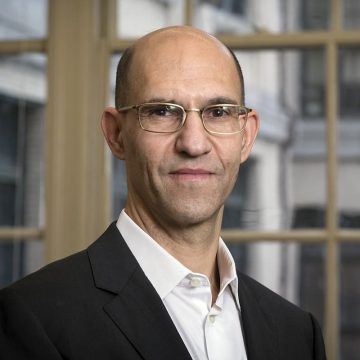
Jeremy Avigad

Jeremy Avigad  is a professor in the Department of Philosophy and the Department of Mathematical Sciences and associated with Carnegie Mellon’s interdisciplinary program in Pure and Applied Logic. He is interested in mathematical logic and proof theory,  formal verification and automated reasoning and the history and philosophy of mathematics. Here he discusses the relationship between philosophy and mathematics, philosophy of mathematics and analytic philosophy, early  twentieth century mathematical innovation, Hilbert and Henri Poincare, mathematical logic, the distinction between syntax and semantics, about not being dogmatic about foundations, change in mathematics, the role of computers in mathematical enquiry, the modularity of mathematics, whether mathematics is discovered or designed,  why David Hilbert is important, and formal verification, automated reasoning and AI.

3:16:  What made you become a philosopher?

Jeremy Avigad: My graduate degree is in mathematics, specifically in logic, but I have been thinking about mathematics for almost as long as I have been doing it. It was Carnegie Mellon that turned philosophy into a profession for me. I am eternally grateful to my department for recognizing that the foundational work I was trained to do is philosophically important, and for giving me room to use that background to explore the history and philosophy of mathematics.

More here.

The Unparalleled Genius of John von Neumann

Jørgen Veisdal in Cantor’s Paradise:

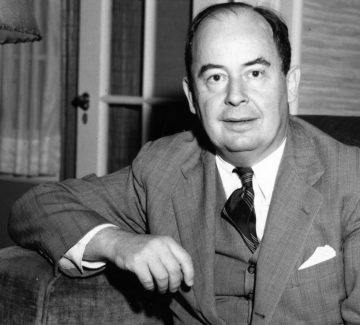
It is indeed supremely difficult to effectively refute the claim that John von Neumann is likely the most intelligent person who has ever lived. By the time of his death in 1957 at the modest age of 53, the Hungarian polymath had not only revolutionized several subfields of mathematics and physics but also made foundational contributions to pure economics and statistics and taken key parts in the invention of the atomic bomb, nuclear energy and digital computing.
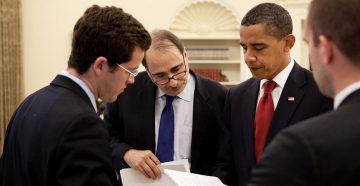
Known now as “the last representative of the great mathematicians”, von Neumann’s genius was legendary even in his own lifetime. The sheer breadth of stories and anecdotes about his brilliance, from Nobel Prize-winning physicists to world-class mathematicians abound:

”You know, Herb, Johnny can do calculations in his head ten times as fast as I can. And I can do them ten times as fast as you can, so you can see how impressive Johnny is” — Enrico Fermi (Nobel Prize in Physics, 1938)

“One had the impression of a perfect instrument whose gears were machined to mesh accurately to a thousandth of an inch.” — Eugene Wigner (Nobel Prize in Physics, 1963)

“I have sometimes wondered whether a brain like von Neumann’s does not indicate a species superior to that of man” — Hans Bethe (Nobel Prize in Physics, 1967)

And indeed, von Neumann both worked alongside and collaborated with some of the foremost figures of twentieth century science.

More here.

What Was It Like to Be Edited by Barack Obama?

Adam Frankel in Literary Hub:

After the 2008 election, the New Yorker’s Ryan Lizza reported that Obama had told his incoming political director, Patrick Gaspard, “I think that I’m a better speechwriter than my speechwriters. I know more about policies on any particular issue than my policy directors. And I’ll tell you right now that I’m going to think I’m a better political director than my political director.”
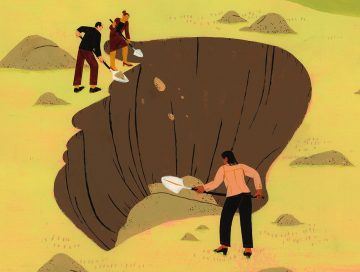
For all the eye-rolling that quotation induced on the speechwriting team—and it induced quite a lot, both at the time and later—I never felt Obama was being unfair or inaccurate. He was a better speechwriter than any of us.

I got a closer look at Obama’s writing in the White House, where he was a short walk away, than I’d had on the campaign, where edits usually came in a quick call or email.

“Something about this draft just doesn’t feel right.” That, or something like it, is probably the most frequent feedback a speechwriter ever receives, and it is typically accompanied by precisely zero suggestions on what to do about it.

I never heard Obama utter those words. In fact, I was always struck by the precision of his edits.

More here.

Watergate led to sweeping reforms, here’s what we’ll need after Trump

Kathryn Olmsted in the Washington Post:

President Trump has far surpassed Nixon in his zeal to ignore, jettison or rewrite the nation’s norms. Even his allies in the Republican Party, in which Trump still has 89 percent support, according to Gallup, have denounced his efforts to recruitforeign help in winning elections and to profit from his family business while holding office.
Eventually, when Trump is gone, Congress and his successor may have a chance to pass reforms that stop a future president from repeating his sins. What might the post-Trump legislation look like?

More here.

Classics for the people

Nigel Warburton in Aeon:

The hero of Thomas Hardy’s tragic novel Jude the Obscure (1895) is a poor stonemason living in a Victorian village who is desperate to study Latin and Greek at university. He gazes, from the top of a ladder leaning against a rural barn, on the spires of the University of Christminster (a fictional substitute for Oxford). The spires, vanes and domes ‘like the topaz gleamed’ in the distance. The lustrous topaz shares its golden colour with the stone used to build Oxbridge colleges, but it is also one of the hardest minerals in nature. Jude’s fragile psyche and health inevitably collapse when he discovers just how unbreakable are the social barriers that exclude him from elite culture and perpetuate his class position, however lovely the buildings seem that concretely represent them, shimmering on the horizon. By Hardy’s time, the trope of the exclusion of the working class from the classical cultural realm, especially from access to the ancient languages, had become a standard feature of British fiction. Charles Dickens probes the class system with a tragicomic scalpel in David Copperfield (1850). The envious Uriah sees David as a privileged young snob, but he refuses to accept the offer of Latin lessons because he is ‘far too umble. There are people enough to tread upon me in my lowly state, without my doing outrage to their feelings by possessing learning.’
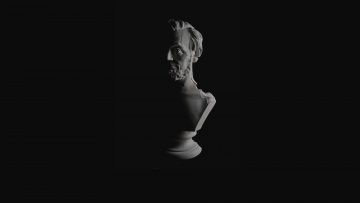
It is with good reason that education in Classics was and still is associated in the British mind with the upper classes. Since the late 17th century, when the discipline of ‘Classics’ as we know it emerged, only parents of substantial means have been able to buy their teenaged children (and, until the late-19th century, only their male children) the leisure and lengthy tuition that a thorough knowledge of the Latin and Greek languages requires. Classics emerged to provide a curriculum that could bestow a shared concept of gentlemanliness on the new ruling order after the Glorious Revolution.

More here.

Sunday Poem

Genealogy

Outside, it’s cold like the day
my father’s grandpa drowned
while Sigrid salted cod on walls
of stacked antlers. Their sons
and daughter fled to Eden
Prairie. One, my father’s uncle, lost
a claim in Manitoba, another crashed
a Hupmobile. One died ice-fishing.

My father’s mother, pink and vicious, made
him cover the bidet with plywood
when we lived in Tehran. Made me drive
all over Fairfax County in search
of Carnival glass. Told me “Never
marry a woman for her looks.” My mother’s
dad lost his lungs to mustard gas. Her mom

never gambled. Betty lived in Hollywood
working at the studios, roller-skating
with a man who would later play
Tonto. She rented a room
in a house with a victory garden until
the Tamuras were shipped
to Utah, then married Dad, who left
to kill Koreans. On the ship

to Japan to join him in Kobe, my sister
scared me with stories of dwarves. My children’s
mom is small and pale, like the pages
of an appointment book, except when speaking
Spanish. Then, her hands become larakeets, her eyes
marcasite. Her grandfather knew the Franks
before they moved to Holland, and he
to Pasadena, where he never met

my mother who skis like she’s waltzing,
or my father, who came home and built
a barbeque of brick, or my sister the shrink,
or my brother who sells drugs, or my other sister
for that matter. They all live
in California and no one
ever dies. There’s a boy

at the bus stop who dances
in place: knit cap, heavy coat, an extra
chromosome, perhaps. Sometimes he raises
his arms and spins. The world starts with him.

by Jeffrey Bahr
from Rattle #16, Winter 2001

How America Ends

Yoni Appelbaum in The Atlantic:

Democracy depends on the consent of the losers. For most of the 20th century, parties and candidates in the United States have competed in elections with the understanding that electoral defeats are neither permanent nor intolerable. The losers could accept the result, adjust their ideas and coalitions, and move on to fight in the next election. Ideas and policies would be contested, sometimes viciously, but however heated the rhetoric got, defeat was not generally equated with political annihilation. The stakes could feel high, but rarely existential. In recent years, however, beginning before the election of Donald Trump and accelerating since, that has changed. “Our radical Democrat opponents are driven by hatred, prejudice, and rage,” Trump told the crowd at his reelection kickoff event in Orlando in June. “They want to destroy you and they want to destroy our country as we know it.” This is the core of the president’s pitch to his supporters: He is all that stands between them and the abyss.

In October, with the specter of impeachment looming, he fumed on Twitter, “What is taking place is not an impeachment, it is a COUP, intended to take away the Power of the People, their VOTE, their Freedoms, their Second Amendment, Religion, Military, Border Wall, and their God-given rights as a Citizen of The United States of America!” For good measure, he also quoted a supporter’s dark prediction that impeachment “will cause a Civil War like fracture in this Nation from which our Country will never heal.” Trump’s apocalyptic rhetoric matches the tenor of the times. The body politic is more fractious than at any time in recent memory. Over the past 25 years, both red and blue areas have become more deeply hued, with Democrats clustering in cities and suburbs and Republicans filling in rural areas and exurbs. In Congress, where the two caucuses once overlapped ideologically, the dividing aisle has turned into a chasm.

More here.

Saturday, November 16, 2019

What John Rawls Missed

Jedediah Britton-Purdy in New Republic:
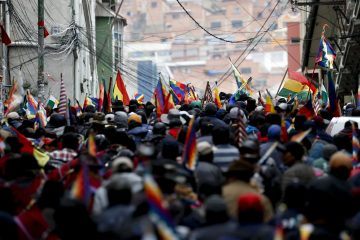
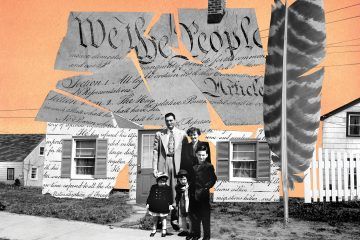
A Theory of Justice was both radical and conservative. Yes, it proposed a sweeping reconstruction of “the basic structure” of American life—Rawls’s term for the key institutions of public life, such as government and the economy. At the same time, it described the principles of reconstruction as ones that Americans already held. This strategy of squaring the circle might seem odd: How can a country be committed to principles it routinely and pervasively defies and ignores? Yet it’s also peculiarly American. The American political myth (meaning not a simple fiction but a kind of shared master-story) is “constitutional redemption,” the idea that moral truths are woven deep into the country’s character, imperfectly expressed in the Constitution and existing institutions, but awaiting realization in “a more perfect union.” This was how Frederick Douglass and Abraham Lincoln talked about freedom and equality in the 1860s, and how Martin Luther King and Lyndon Baines Johnson talked about the same values in the mid-1960s. Constitutional redemption was the defining ideal of Cold War liberal patriotism. Its strategies became, by subtle philosophical transformation, the strategy of A Theory of Justice: to say that Americans already are what they have never yet been—and that this ideal is also incipiently universal, if other peoples can make their way to it.

More here.


This may be the largest wave of nonviolent mass movements in world history. What comes next?

Erica Chenoweth, Sirianne Dahlum, Sooyeon Kang, Zoe Marks, Christopher Wiley Shay and Tore Wig in The Washington Post:
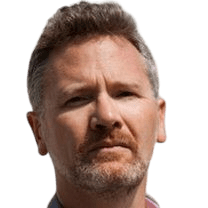
Around the globe, mass nonviolent protests are demanding that national leaders step down. Evo Morales, Bolivia’s three-term leftist president, is the latest casualty of mass demonstrations, after being abandoned by the military. Beyond Bolivia, people are rising up against their governments in places as varied as Chile, Lebanon, Ecuador, Argentina, Hong Kong, Iraq and Britain. This follows remarkable protests in Sudan and Algeria in the spring, in which protest movements effectively toppled entrenched dictators, and in Puerto Rico, where a mass movement deposed an unpopular governor. Beyond Puerto Rico, the United States has also hosted a steady stream of protest since January 2017 against the Trump administration and its policies.

We may be in the midst of the largest wave of nonviolent mass movements in world history. Social media has made mass protests easier to organize — but, perhaps paradoxically, harder to resolve. As these movements escalate more rapidly around the world, some common challenges may make it harder for them to succeed beyond winning short-term concessions. That’s especially true when they are leaderless or unorganized. Let’s look at why.

1. Disciplined nonviolence is contending with ‘violent flanks.’

While most of these are peaceful, nonviolent protests, some have “violent flanks.” Some research suggests that intermittent street fighting and violent distractions — like molotov cocktails or rock-throwing — can make such movements harder for people and the government to ignore, keeping pressure on elites to resolve the crisis, so long as the movement as a whole is well-organized.

More here.

The German impasse

Adam Tooze in Social Europe:

The unceasing debate on issues of principle points to the unresolved and profoundly political nature of Europe’s monetary union. The set of difficulties is familiar. How to ensure the stability of the system? How to achieve convergence? How to pool risk without encouraging moral hazard? How to avoid a one-way ‘transfer union’?

In part the arguments are defined by structural differences which run along national lines—divisions between creditors and debtors. But they are also a matter of political interpretation. Divisions between left and right and differing visions of Europe are tied up with the representation of interests in a cruder sense.

Seismic shocks

The party-political system within which the crisis was managed has, in the process, suffered a series of seismic shocks. This was true first for the countries worst hit: Portugal, Ireland, Spain, Italy and Greece, not to mention Hungary and Romania. But political upheaval eventually came to France and to Germany too.

Following the shock election of 2017, which saw the Alternative für Deutschland catapulted into the Bundestag, the effort to form a German government left the French president, Emmanuel Macron—himself a product of the disintegration of the French party system—waiting in vain for an answer to his proposals on European reform. Two years later, the Grosse Koalition in Berlin is again hanging by a thread. And this has implications for the debate about the eurozone.

More here.

Noel Ignatiev’s Long Fight Against Whiteness

Jay Caspian Kang in The New Yorker:

The question of what Ignatiev accomplished is especially hard to answer because his radicalism took so many forms. He was born in 1940, in Philadelphia, into a family of working-class Russian Jews. By seventeen, he had joined the Communist Party; after dropping out of the University of Pennsylvania, he moved to Chicago to work in the steel mills. He would be a factory laborer for more than two decades, always with an eye toward provoking his fellow-workers into looking at their struggle in new ways. In 1967, he composed a letter to the Progressive Labor Party that outlined his views. “The greatest ideological barrier to the achievement of proletarian class consciousness, solidarity and political action is now, and has been historically, white chauvinism,” Ignatiev wrote. “White chauvinism is the ideological bulwark of the practice of white supremacy, the general oppression of blacks by whites.” He argued that it would be impossible to build true solidarity among the working class without addressing the question of race, because white workers could always be placated by whatever privileges, however meaningless, management dangled in front of them. The only way to change this was for white working-class people to reject whiteness altogether. “In the struggle for socialism,” Ignatiev wrote, white workers “have more to lose than their chains; they have also to ‘lose’ their white-skin privileges, the perquisites that separate them from the rest of the working class, that act as the material base for the split in the ranks of labor.”

Many scholars have cited Ignatiev’s letter as one of the first articulations of the modern idea of “white privilege.” But Ignatiev’s version differs from the one we often use today. In his conception, white privilege wasn’t an accounting tool used to compile inequalities; it was a shunt hammered into the minds of the white working class to make its members side with their masters instead of rising up with their black comrades.

More here.

How Britain was sold

David Edgerton in New Statesman:

How did the most successful conservative party of the 20th century become the agent for a national humiliation? How could a political party so firmly tied to power, not least economic power, come to disregard its own particular view of the national interest? The Conservative-born Brexit crisis that has tormented the nation since 2016 has multiple causes, the most crucial and under-explored of which is economic. The great financial crisis of 2008 certainly had an impact on the referendum result: it led to economic stagnation, not least in productivity and wages, as well as disastrous cuts to many public services. Local authorities, responsible for social care, were hit especially hard, as were the working poor. But the really significant economic transformations behind the decision to leave the EU have deeper roots. Over the past 40 years the nature of capitalism in the UK has changed in ways that concepts such as “neoliberalism” and “post-industrialism” have failed to grasp. The relationship between capitalism and politics has also changed radically.
Before 1945 the UK operated in a global economy. Imperialists viewed Britain as the political and commercial centre of an empire; liberals saw it as the world’s largest importer. After 1945, however, the UK turned in on itself, transforming both materially and ideologically. It was a country with a national industry. All the main users of coal, as well as the producers of coal, became publicly owned industries, such as the National Coal Board, the British Transport Commission (which included British Railways) and the British Electricity Authority. There was also something resembling a British national capitalism, one closely allied to the Conservative Party and made up of large private firms, including Imperial Chemical Industries and Associated Electrical Industries. This national capitalism produced a radically different economy from anything that had existed before it. In the 1950s and 1960s, the UK was more industrial than ever before. Manufacturing output formed a higher proportion of GDP and manufacturing employment had a greater share of employment than when the UK was considered the “workshop of the world” in the 19th century.

More here.

Paying the Piper

Lewis Lapham in Lapham’s Quarterly:

The warming of the planet currently spread across seven continents, four oceans, and twenty-four time zones is the product of a fossil-fueled capitalist economy that over the past two hundred years has stuffed the world with riches beyond the wit of man to marvel at or measure. The wealth of nations comes at a steep price—typhoons in the Philippine Sea, Category 5 hurricanes in the Caribbean, massive flooding in Kansas and Uttar Pradesh, forests disappearing in Sumatra and Brazil, unbearable heat in Paris, uncontrollable wildfires in California, unbreathable air in Mexico City and Beijing. The capitalist dynamic is both cause of our prosperous good fortune and means of our probable destruction, the damage in large part the work of Adam Smith’s invisible hand, guided by the belief that money buys the future. Nature doesn’t take checks. Who then pays the piper—does capitalism survive climate change, or does a changed climate put an end to capitalism?

The question informs this issue of Lapham’s Quarterly, and in place of an answer, it offers observations that follow along the line of my learning to ask it. Eighty-five percent of the carbon now present in the atmosphere is the value added during the course of my lifetime, 2.5 trillion tons, roughly equivalent to one thousand times the total weight of all the fish in the sea. I was fifty years old before I knew it was there, much less understood it to be a problem. Born and baptized in Rachel Carson’s Neanderthal age of biology and philosophy, I grew up in the city of San Francisco in the 1940s, so far apart from nature I assumed most of it located in Africa, picturesque specimens to be seen in Golden Gate Park and the San Francisco Zoo. The streets in my neighborhood bore the names of trees—Walnut and Cherry, Laurel, Chestnut, and Spruce. I didn’t wonder what the trees themselves might look like; nor was I familiar with the birds, plants, insects, and animals living on the far side of the Presidio wall, half a block from my boyhood home. Like most city-bred children of my generation (especially those among us brought up under the protection of money and machines), I thought bread came from the baker, light from a bulb, milk from a bottle. At grammar school during the Second World War, I devoted the free study periods to sketching the silhouette of every fighter plane and bomber in the American, German, and Japanese air forces.

More here.