
László F. Földényi at The Paris Review:
 As I fall asleep, I leave my body and my soul behind, all the while palpably returning back to my body and my soul. But what is actually going on here? It is not my body that has changed, or my soul, but rather my relation to both. By day, when I’m awake, I usually observe my body from without, and although I am only capable of imagining myself as a physical body, I don’t identify myself with it. In a similar way, I don’t fully identify with my soul either. If I’m awake, for the most part I think of it, as it were, as someone (or something), which cannot exist without me, and yet is not completely identical to me. I would almost speak of it in the third-person singular. This is Descartes’s final inheritance; not even I can avoid his influence. In the moment when I began to speak about the body or about the soul, I unwittingly behave as if it were possible to distinguish between them. And in doing so I imperceptibly differentiate myself from them. I create a differentiation between the soul and the body.
more here.
 Rape, writes Christina Lamb at the start of this deeply traumatic and important book, is “the cheapest weapon known to man”. It is also one of the oldest, with the Book of Deuteronomy giving its blessing to soldiers who find “a beautiful woman” among the captives taken in battle. If “you desire to take her”, it says, “you may”. As the American writer
  The many companies developing liquid biopsies to try to detect cancer early have so far largely mined the blood in search of things like mutations and epigenetic changes in human DNA shed by tumor cells. Now, new research raises the possibility that liquid biopsies could be used to spot cancer in a totally different way: by hunting for the DNA of bacteria and viruses released from tumors into the bloodstream. It’s a hypothesis that, if validated with more study, could usher in an entirely new class of diagnostics for cancer. In a
  A New Jersey physician assistant who was the state’s first COVID-19 patient is speaking out from his hospital bed, calling his illness “severe” and raising concerns about his treatment. James Cai, a 32-year-old non-smoker with no other health conditions, has been at Hackensack University Medical Center for about a week and says his illness has worsened significantly over that time. “In the beginning, they just treat me like normal flu. They say I’m young, I’m not going to die, but they don’t know the truth about corona[virus],” Cai said during an
  I’ve learned a lot since the release of
  Ashutosh Varshney, a Brown University professor and
  Researchers are calling on citizen scientists to play a free online game called
 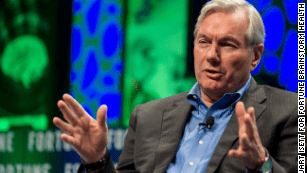 Michael Osterholm, the infectious disease expert who has been warning for a decade and a half that the world will face a pandemic, says the US is ill-prepared to combat the coronavirus due to a shortage of equipment and supplies.
 David Cutler: Yeah, one of the continual vexing points about U.S. healthcare is why it’s so expensive. There are a few reasons why the U.S. spends more than other rich countries. Obviously, in poor countries, there’s an enormous difference in the nature of medical care. Relative to other rich countries, I would say there are three principle reasons why the U.S. spends more. The first is that it’s administratively much more costly. So we have lots of people involved in submitting bills, and adjudicating claims and figuring out what services someone is allowed to receive and not allowed to receive and what you need to do in order to receive those services. And all of that involves people, and people are very expensive. And so probably the biggest contributor to the higher spending in the U.S. is that.
 If you tell me that one of the world’s leading neuroscientists has developed a theory of how the brain works that also has implications for the origin and nature of life more broadly, and uses concepts of entropy and information in a central way — well, you know I’m going to be all over that. So it’s my great pleasure to present this conversation with Karl Friston, who has done exactly that. One of the most highly-cited neuroscientists now living, Friston has proposed that we understand the brain in terms of a
  We tend to think of civility as maintaining a courteous and calm demeanor in political debate. But that can’t be correct. Keeping your cool is good, but courtesy and calmness can also be patronizing. Moreover, fervor is sometimes called for in politics. So civility is better understood as the avoidance of gratuitous escalation and excessive hostility. This allows for political antagonism but recognizes its limits.
 B
B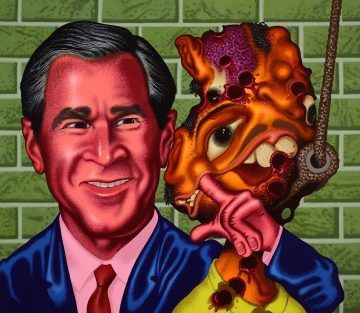 One of the earliest mature works in the exhibition, Sex Deviate Being Executed (1964), is also one of Saul’s best. Completed around the same time that Andy Warhol was obsessing over similar material, it shows a gay man smoking a cigarette as he sits in an electric chair. Simple moralistic interpretations get lost in the scene’s queasy virtuosity: the man’s stark profile; his thick, almost monumental arm, which resembles the haunch of an Egyptian sphinx; the decaying blue of his skin against the chair’s lilac. Here and throughout the galleries, the wall texts insist on simple moralistic interpretations anyway—apparently, this painting is about how homophobia, nationalism, and capital punishment are bad, and how a victim “maintains his dignity” in the face of death. The choice of words is unintentionally hilarious, since they appear just a few paces away from a decidedly undignified painting by the name of Human Dignity (1966), in which the title is scrawled on a pair of heaving, planetary breasts. Trust the show’s didactics and you could see Saul as a rough-around-the-edges liberal crusader—but you’d have to ignore the actual works.
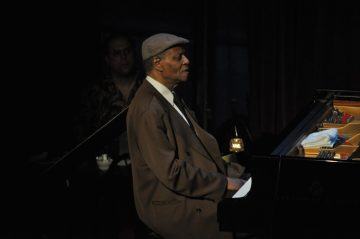 There are many ways to understand the passage of time—it’s not just one thing after the next, the pinhead of the present gnarling the flesh of your foot as you try, impossibly, to balance upon it. Not just peering through the mist of memory. Not just cutting through the ice ahead. Time moves back and forth, slows down, speeds up, it eddies—it does a lot of eddying. It concentrates itself in one moment and becomes diffuse and vague in another. We’re always in the present, though we can never quite get there, nor can we leave. All of this is what the music of McCoy Tyner, who died on Friday at the age of eighty-one, teaches, though as soon as one tries to paraphrase music in anything other than other music, it’s robbed of some of its magic and much of its meaning.