
Hannah Brooks-Motl at Poetry Magazine:
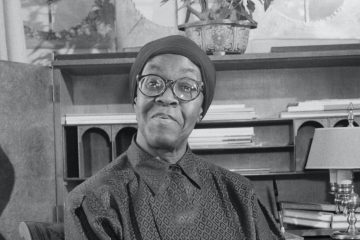 Gwendolyn Brooks grew up on Chicago’s South Side in a house her father bought shortly after the poet and her younger brother were born. Located at 4332 South Champlain, it was a comfortable home with a large front porch and backyard. The Brooks family was only the second black family on the block, but as the 1920s slid into the 1930s, African Americans began to move to the area in increasing numbers. Once a “Black Belt” was recognized, a series of discriminatory housing practices started: Chicago’s growing African American population was soon unofficially segregated. The narrow corridor of apartment buildings and houses along State Street could not hope to hold the explosion of skilled and unskilled workers who moved to the city during World War II; one solution was to chop existing houses and apartments into ever smaller units, called “kitchenettes.” These single rooms or series of small rooms, often rented at high profit by predatory landlords, housed entire families who shared kitchens, bathrooms, and much else. They were cramped microcosms of the circumscribed lives endured by most African Americans at the time.
more here.
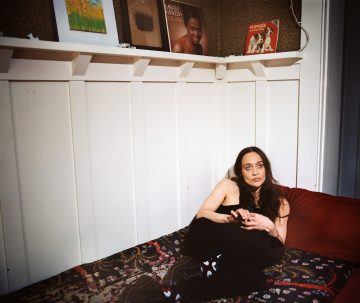 These days, the singer-songwriter, who is forty-two, rarely leaves her tranquil house, in Venice Beach, other than to take early-morning walks on the beach with Mercy. Five years ago, Apple stopped going to Largo, the Los Angeles venue where, since the late nineties, she’d regularly performed her thorny, emotionally revelatory songs. (Her song “Largo” still plays on the club’s Web site.) She’d cancelled her most recent tour, in 2012, when Janet, a pit bull she had adopted when she was twenty-two, was dying. Still, a lot can go on without leaving home. Apple’s new album, whose completion she’d been inching toward for years, was a tricky topic, and so, during the week that I visited, we cycled in and out of other subjects, among them her decision, a year earlier, to stop drinking; estrangements from old friends; and her memories of growing up, in Manhattan, as the youngest child in the “second family” of a married Broadway actor. Near the front door of Apple’s house stood a chalkboard on wheels, which was scrawled with the title of the upcoming album: “Fetch the Bolt Cutters.”
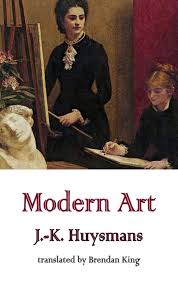 Huysmans reviewed the Salons of 1879-82 and the Independent Exhibitions of 1880-82 at considerable length. His articles, collected as L’Art moderne (1883), have never before been translated into English, probably because he is the least known of the writer-critics, and his French is often not straightforward. Robert Baldick, biographer of Huysmans (1955) and translator of his most famous novel, À Rebours, described his style as ‘one of the strangest literary idioms in existence’. Léon Bloy, a fellow writer and fellow Catholic, described it as ‘continually dragging Mother Image by the hair or the feet down the wormeaten staircase of terrified Syntax’. Brendan King, who has already translated most of Huysmans’s fiction, has produced an excellent version. Rarely can it have been such fun to read translated denunciations of so many forgotten French pictures. The edition also includes scores of small black and white illustrations, which can easily be Googled into colour.
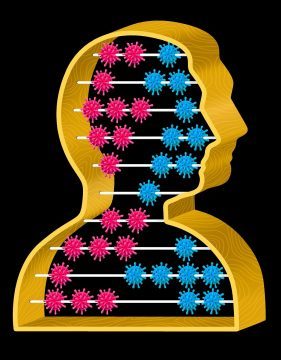
 Chances are, you’re hunkered down at home right now, as I am, worried about COVID-19 and coping by means of Instacart deliveries, Zoom chats, and Netflix movies, while avoiding others and the outside world. As shown by the experience in China1 and recent
 In the third week of February, as the
  A global pandemic of this scale was inevitable. In recent years, hundreds of health experts have written books, white papers, and op-eds warning of the possibility. Bill Gates has been telling anyone who would listen, including the
  As the coronavirus outbreak in the US follows the same grim exponential growth path first displayed in Wuhan, China, before herculean measures were put in place to slow its spread there, America is waking up to the fact that it has almost no public capacity to deal with it.
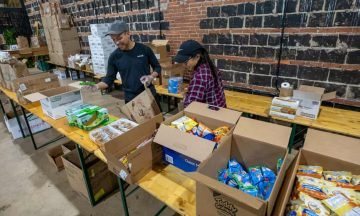 The first big need is medical supplies, facilities and personnel. That is why we need to finance immediate domestic production of masks, oxygen tanks, ventilators and the construction and staffing of field hospitals, including the conversion of existing structures such as hotels, dormitories and stadiums, and the hiring and upgrading of staff.
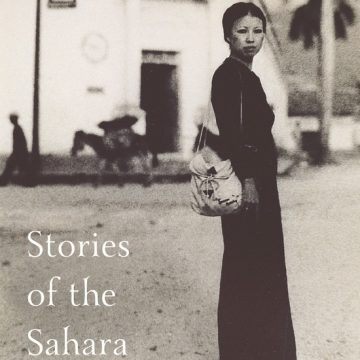 As I read, I kept wondering why Sanmao’s persona was so magnetic. Is it simply because she was so unusual, out there in the vast and largely unpeopled desert, likely the only Taiwanese woman for miles around? Part of the draw of Stories of the Sahara is that it promises to satisfy our curiosity—what was she even doing there? But I couldn’t shake a sense of vertigo. I learned of Sanmao’s existence recently, through a teacher who had in turn learned about her from an article in the New York Times. And yet: “Of course we know who Sanmao is,” my parents told me over the phone. They grew up in Taiwan in the 1970s; they were in college when Sanmao began publishing her Saharan dispatches. One of my mom’s go-to karaoke songs is “The Olive Tree”—Sanmao wrote the lyrics. (“Don’t ask from where I have come / My home is far, far away.”) Who was this person, whose stories had traveled—across far-flung borders and multiple language barriers—from my parents’ lives into my own?
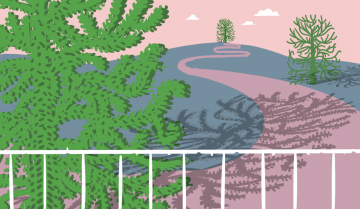 The Telegraph has branded the monkey-puzzle a “love-it-or-loathe-it tree.” Tony Kirkham, Head of the Arboretum, Gardens, and Horticultural Services at the Royal Botanic Gardens, Kew confirmed as much by phone: “Mhm. We call it the Marmite Tree.” Whether you go for the monkey-puzzle depends on how you feel about a Tim Burton cover of Dr. Seuss’s Truffula. Its spiraling leaves are as sharp as shivs, and some people effuse that the species is a “fantastic product.” “It’s one of those few trees that you can’t climb,” Kirkham noted. (You certainly cannot hug it.) He thinks the tree is grand, and when I mentioned monkey-puzzles to my friend Mitch Owens, AD’s decorative arts editor, Owens told me, “I adore them.” Others report back on the boughs as “savage curlicues,” “a nightmare to work in and around.” On a plant that can reach 160 feet and live 2,000 years, those branches hold forth like topiarian antenna, sending/receiving who knows what to/from who knows what galaxy.
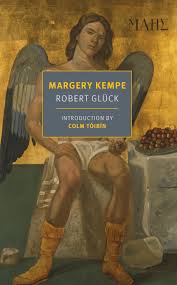 The cumulative strength of the New Narrative, which consisted of a core group of writers who took government-funded workshops run by Glück and the similarly under-sung Bruce Boone as well as some kindred, famous spirits far from Northern California—Kathy Acker, Dennis Cooper, Gary Indiana, and Chris Kraus—ensured that Glück’s name has remained in certain corners of the American literary edifice over the past few decades. Yet time and a shifting sensibility has relegated his own fiction to creaky personal libraries such as my own. I crack open original editions of Jack the Modernist and Margery Kempe and see the names of lost, idealistic imprints, SeaHorse and High Risk Books, which went down with the sinking ship of American publishing while larger houses bought space on the lifeboats. The paper trail of gay literature—put out by presses little and big—is inherently splotchy: so many people who had reason to remember died of AIDS.
 It is not surprising to find Rusty Reno, editor of First Things,
 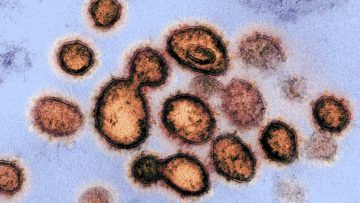 Drugs that slow or kill the novel coronavirus, called severe acute respiratory syndrome coronavirus 2 (SARS-CoV-2), could save the lives of severely ill patients, but might also be given prophylactically to protect health care workers and others at high risk of infection. Treatments may also reduce the time patients spend in intensive care units, freeing critical hospital beds. Scientists have suggested dozens of existing compounds for testing, but WHO is focusing on what it says are the four most promising therapies: an experimental antiviral compound called remdesivir; the malaria medications chloroquine and hydroxychloroquine; a combination of two HIV drugs, lopinavir and ritonavir; and that same combination plus interferon-beta, an immune system messenger that can help cripple viruses. Some data on their use in COVID-19 patients have already emerged—the HIV combo failed in a small study in China—but WHO believes a large trial with a greater variety of patients is warranted.
 Though mild, I have what I am fairly sure are the symptoms of coronavirus. Three weeks ago I was in extended and close contact with someone who has since tested positive. When I learned this, I spent some time trying to figure out how to get tested myself, but now the last thing I want to do is to go stand in a line in front of a Brooklyn hospital along with others who also have symptoms. My wife and I have not been outside our apartment since March 10th. We have opened the door just three times since then, to receive groceries that had been left for us by an unseen deliveryman, as per our instructions, on the other side. We read of others going on walks, but that seems like a selfish extravagance when you have a dry cough and a sore throat. This is the smallest apartment I’ve ever lived in. I am noticing features of it, and of the trees, the sky and the light outside our windows, that escaped my attention—shamefully, it now seems—over the first several months since we arrived here in August. I know when we finally get out I will be like the protagonist of Halldór Laxness’s stunning novel, World Light, who, after years of bedridden illness, weeps when he bids farewell to all the knots and grooves in the wood beams of his attic ceiling.
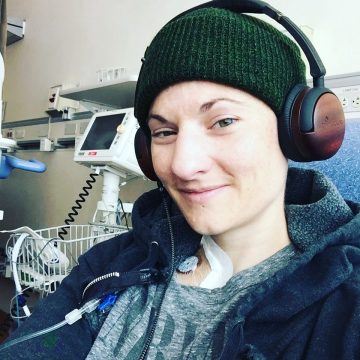 I had a bone marrow transplant in 2017. Most people don’t really know what that is. In the simplest possible terms, it means that my doctors gave me a new immune system, by replacing my sick bone marrow with healthy bone marrow from my sister.
 Bill Gates rebuked proposals, floated over the last two days by leaders like Donald Trump, to reopen the global economy despite