
Leanne Ogasawara in The Hedgehog Review:
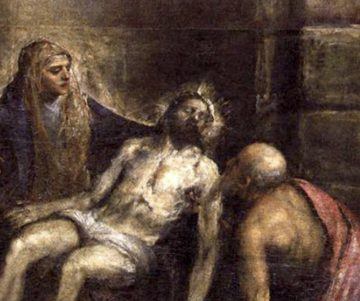 Given the terrifying nature of the Black Death, it’s hard to understand why Titian didn’t leave Venice in 1576 when he had the chance. He certainly had the means. Fabulously wealthy, he was the most famous artist of his day. Friend of kings and aristocrats, Titian could do whatever Titian wanted. And yet he stayed in his house in the Cannaregio, watching as the skies filled with the acrid smoke of the dead being burned across the lagoon on the dreaded island, Lazzaretto Vecchio, where plague victims were brought to die.
Sixteenth-century Venice was like a petri dish. Swampy and unsanitary, conditions in the overcrowded city had always been an invitation to disease. But this was no ordinary sickness. The Black Death struck like lightening, wiping out entire families in days. Bringing agonizing pain, it was often followed by an ignoble death, as disfigured bodies were stripped of their clothing and carted off to be disposed of in mass graves. People prayed and prayed. And those who could, fled to the hills.
The 1576 outbreak in Venice was particularly virulent.
More here.
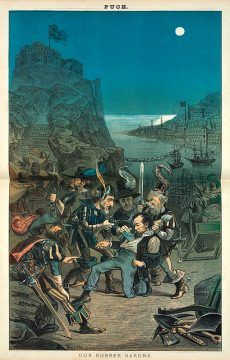 “Populism” is the word that comes to the lips of the respectable and the highly educated when they perceive the global system going haywire. Populism is the name they give to the avalanche crashing down on the Alpine wonderland of Davos. Populism is what they call the mutiny that may well turn the supercarrier America into a foundering wreck. Populism, for them, is a one-word evocation of the logic of the mob: it is the people as a great rampaging beast.
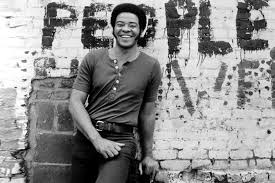 The “I know” is a stutter. It is a stutter that couldn’t be steadier. And the obsessive circularity it winds into the song produces new layers of meaning. In the romantic reading, which is the one on the surface, it only feels like she’s “always gone too long” because that is the nature of love. But it is also possible that the woman really stays away for long stretches at a time—maybe because, like the woman in “Use Me,” she just doesn’t love him that much. Or maybe, thinking ahead to the abusive control Withers expresses on “Who is He (And What is He to You)?”—and, biographically, to the domestic violence that marked his relationship with his first wife, Denise Nicholas—he keeps driving her away. Maybe she leaves to take refuge from him, and the “darkness” he feels in her absence is not only loneliness but guilt. The repeated “I know” opens up alternate meanings, because it is a spiral of knowing that is also not-knowing, or denial. In short, if this is a stutter, it makes the song more articulate; makes it say more, not less.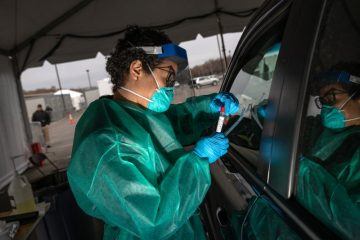
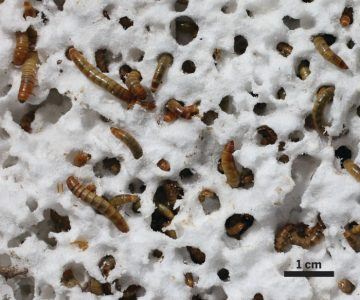 “Every minute enough plastic is dumped into the world’s oceans to fill an entire dump truck. At least as much again ends up in landfill sites, and the amounts are constantly increasing. Because we love plastic. It’s handy and cheap. We produce and use twenty times as much plastic every year now as we did fifty years ago, and less than 10 percent of it is recycled. The rest of the plastic waste ends up in landfills, in roadside ditches, or in the sea. A report issued by the Ellen MacArthur Foundation estimated that if this continues the sea will contain more plastic than fish by 2050. This is because plastic biodegrades extremely slowly in the natural environment. So the discovery that a number of insects can digest and break down plastic is something of a sensation.
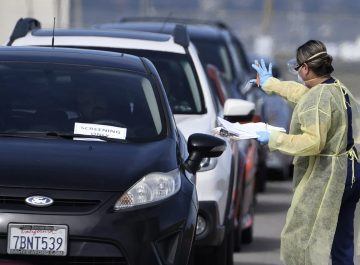 Over the past few days, I’ve been reading the major plans for what comes after social distancing. You can read them, too. There’s one from the right-leaning
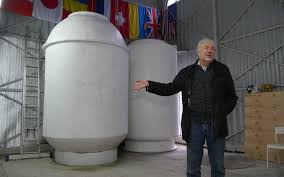 Fedorov’s ambition was not limited to those still living. He imagined resurrecting every person who had ever lived. Inverting the idea of the duty of the living to future generations, he argued that we owe a “resurrectory debt” to our parents, and he insisted that as technology advanced, we would pay off this debt by piecing our families back together from bones and even specks of dust. (A crackpot visionary rather than a scientist, he was short on specifics about how we might do this.) To solve the problem of housing the vast resurrected population, he looked to space, proposing the colonization of the galaxy—a hope shared by people like Thiel and Elon Musk today. But Fedorov imagined the work and benefits of immortality as collective and universal. He accumulated a number of followers during his lifetime and after his death, and his reputation as an eccentric visionary endures in Russia.
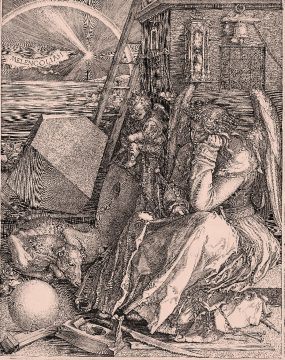 ACCORDING TO AN ANCIENT TEXT attributed to Aristotle, black bile “can induce paralysis or torpor or depression or anxiety when it prevails in the body; but if it is overheated it produces cheerfulness, bursting into song, and ecstasies and the eruption of sores and the like.” Such “fits of exaltation” were believed to be conducive to creative achievement. “Maracus, the Syracusan,” the text tells us, “was actually a better poet when he was out of his mind.” The aesthetes of the Renaissance and the Romantic era were equally convinced of the natural link between melancholy and creativity. In As You Like It, Shakespeare’s philosophical idler Jaques, savoring his own moodiness, boasts, “I can suck melancholy out of a song as a weasel sucks eggs.” To this day, the notion persists that spleen, ennui, depression, and even madness might be correlated with genius—or, at the very least, with an artistic sensibility.
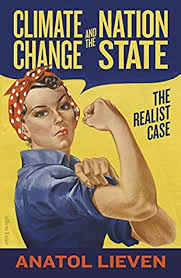 For Anatol Lieven, one battle has been won but now begins the hundred years’ war. In Climate Change and the Nation State, he presumes that the climate change deniers have been vanquished and have largely fled the field. So he dismisses their case. He starts from the proposition that this debate has been won. Lieven is impatient to engage in the real struggle, the civilisational war for survival. And indeed, on cue, floods in the UK and bushfires in Australia and California appear to confirm the urgency of the situation. The weather and the waters are moving. We face extraordinary challenges.
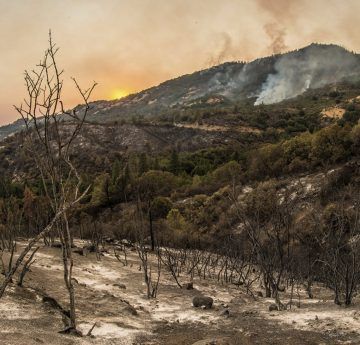 We’re doomed’: a common refrain in casual conversation about climate change. It signals an awareness that we cannot, strictly speaking, avert climate change. It is already here. All we can hope for is to minimise climate change by keeping global average temperature changes to less than 1.5°C above pre-industrial levels in order to avoid rending consequences to global civilisation. It is still physically possible, says the Intergovernmental Panel on Climate Change in a 2018 special
 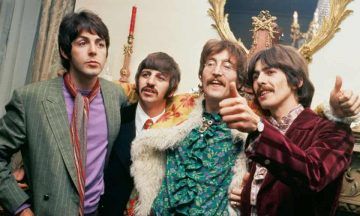 Fifty years since their dissolution in April 1970 the Beatles live on. The band’s music, their significance and their individual personalities exert a hold on the cultural consciousness that seems to tighten as their heyday recedes. But is there anything new to say? Craig Brown’s
 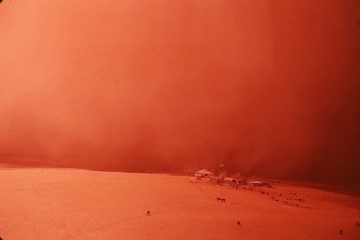 Saving the world’s agricultural soils is perhaps the most overlooked environmental challenge of this century. Driving through freshly tilled fields in rural Indiana a few years back, I was struck by how low points retained rich, black earth, yet on the hilltops, the khaki subsoil was completely exposed. I could see the land being shorn of fertility. We urgently need to pay attention to practices that can help to regenerate it. To that end, former columnist for The New York Times Stephen Heyman resurrects an obscure figure from US agricultural history in this engaging biography, The Planter of Modern Life. Heyman’s subject, Louis Bromfield, was a Pulitzer-prizewinning novelist before he became a prominent critic of industrialized farming. Today, Bromfield’s journey of discovery reinforces growing calls to rebuild healthy, fertile soil around the world.
 In the third week of March, while most of our minds were fixed on surging coronavirus death rates and the apocalyptic scenes in hospital wards, global financial markets came as close to a collapse as they have since September 2008. The price of shares in the world’s major corporations plunged. The value of the dollar surged against every currency in the world, squeezing debtors everywhere from Indonesia to Mexico. Trillion-dollar markets for government debt, the basic foundation of the financial system, lurched up and down in terror-stricken cycles.
 What books are on your nightstand?