
Anthony Gottlieb in The New Yorker:
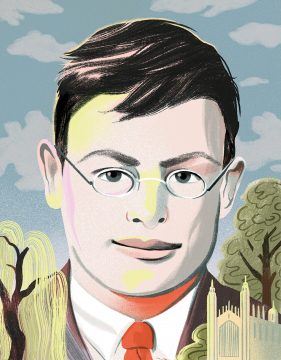 The world will never know what has happened—what a light has gone out,” the belletrist Lytton Strachey, a member of London’s Bloomsbury literary set, wrote to a friend on January 19, 1930. Frank Ramsey, a lecturer in mathematics at Cambridge University, had died that day at the age of twenty-six, probably from a liver infection that he may have picked up during a swim in the River Cam. “There was something of Newton about him,” Strachey continued. “The ease and majesty of the thought—the gentleness of the temperament.”
Dons at Cambridge had known for a while that there was a sort of marvel in their midst: Ramsey made his mark soon after his arrival as an undergraduate at Newton’s old college, Trinity, in 1920. He was picked at the age of eighteen to produce the English translation of Ludwig Wittgenstein’s “Tractatus Logico-Philosophicus,” the most talked-about philosophy book of the time; two years later, he published a critique of it in the leading philosophy journal in English, Mind. G. E. Moore, the journal’s editor, who had been lecturing at Cambridge for a decade before Ramsey turned up, confessed that he was “distinctly nervous” when this first-year student was in the audience, because he was “very much cleverer than I was.” John Maynard Keynes was one of several Cambridge economists who deferred to the undergraduate Ramsey’s judgment and intellectual prowess.
When Ramsey later published a paper about rates of saving, Keynes called it “one of the most remarkable contributions to mathematical economics ever made.”
More here.
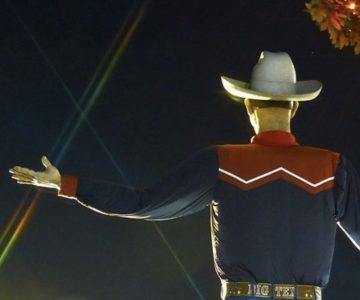 Last week,
 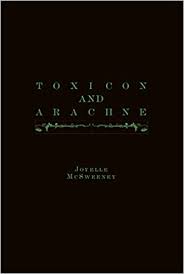 In 2011, McSweeney coined the term
 Toward the end of his life, the humanistic psychologist Abraham Maslow was developing
  Why do some people
  The virus has punctured the dream that any built item in our world just wondrously appears, in our stores or on our screens. Instead, like the casing coming off an enormous clock, we see how our way of life relies on millions of people, working together. Like cogs in that clock, tipping over the edge of a cliff.
 When major decisions must be made amid high scientific uncertainty, as is the case with
 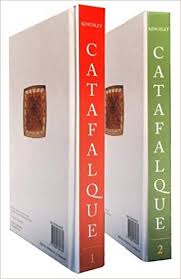 It reveals Jung’s certainty about the going down of the West: a culture and a civilization which even in 1961 had profoundly run out of any gyring or generative energy and was already quite still, poised at the point of stasis before the inevitable unwinding begins. From this, a vision unfolds of western culture as seen from the perspective of the dead: of the joining from past to future that an unbroken chain of linkages ensures, followed by the horrifying awareness of how we have lost our linkage to the primordial past—leaving us an age adrift, nowhere, bereft. The only possible response to such seeing is to lament; to turn to face our ancestors; to bury optimism as a kind of dereliction of our duty; and to learn to dance for the dead. I cannot stress starkly enough the sheer physicality of reading this book, the pain it draws forth, and not only from enduring for eight hundred pages what is unbearable to consider. There is a deeper mystery afoot and it would appear that, in the presence of words truly uttered and written, one virtually has to die to keep up one’s end of the arrangement.
 Most faculty, students, and administrators don’t actually think of colleges as hedge funds or hoteliers; they think, rather, that colleges charge students for teaching them. Before the coronavirus pandemic, professors would grouse that their students acted like customers who expected faculty to provide services. But it’s impossible to argue that online instruction, even when exceptionally well-executed, delivers the same quality of education as in-person teaching. I’ve been lucky: all of my students have high-speed Internet access, I have relatively small classes, and my students had a chance to get to know one another during the first six weeks of the semester. (Some of my friends who teach on different timetables met their students for the first time online.) I have done my best to compensate for what students have lost: learning by discussion, by engaging with one another and with me in ways that simply cannot be replicated online. Still, they are certainly not learning as much as they would be in person.
 Some analysts are cynical about the apparent mismatch between spending and outcomes in what’s disparagingly called ‘the cancer industry’. How can cancer be the second leading cause of death globally, responsible for an estimated 9.6 million deaths in 2018, when a single institution (the US National Institutes of Health, NIH) spent US$24.4 billion on
  Last Thursday, Nobel-winning economist Paul Krugman issued a
  Artificial intelligence has made great strides of late, in areas as diverse as playing Go and recognizing pictures of dogs. We still seem to be a ways away from AI that is intelligent in the human sense, but it might not be too long before we have to start thinking seriously about the “motivations” and “purposes” of artificial agents. Stuart Russell is a longtime expert in AI, and he takes extremely seriously the worry that these motivations and purposes may be dramatically at odds with our own. In his book Human Compatible, Russell suggests that the secret is to give up on building our own goals into computers, and rather programming them to figure out our goals by actually observing how humans behave.