
Pledge
Now we are here at home, in the little nation
of our marriage, swearing allegiance to the table
we set for lunch or the windchime on the porch,
its easy dissonance. Even in our shared country,
the afternoon allots its golden lines
so that we’re seated, both in shadow, on opposite
ends of a couch and two gray dogs between us.
There are acres of opinions in this house.
I make two cups of tea, two bowls of soup,
divide an apple equally. If I were a patriot,
I would call the blanket we spread across our bed
the only flag—some nights we’ve burned it
with our anger at each other. Some nights
we’ve welcomed the weight, a woolen scratch
on both our skins. My love, I am pledging
to this republic, for however long we stand,
I’ll watch with you the rain’s arrival in our yard.
We’ll lift our faces, together, toward the glistening.
by Jehanne Dubrow
from The Poetry Foundation
 Beginning thousands of years before the first dairy restaurant appeared, Katchor’s book attempts to explicate the laws of kashruth—the separation of milk and meat—and other dietary notions and origin myths. (The mixture of causal logic and total irrationality recalls Katchor’s musical-theater piece The Slug Bearers of Kayrol Island, in which exploited workers transport tiny lead weights to place inside and give heft to small appliances.) Coffeehouse culture stimulates the Enlightenment. Radical puritans imagine a prelapsarian Hebrew vegetarian diet while, having internalized certain liberal values advanced by the French Revolution, eighteenth-century Parisians invent the “restaurant” and the “menu,” consecrated to individual rights and freedom of choice.
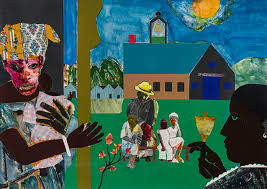 What is it you see, asks Rachael Z. DeLue, in Romare Bearden’s artwork? Why is it you just can’t stop looking? How is it they remain, decades after his death, sources of what Wallace Stevens calls “imperishable bliss”?
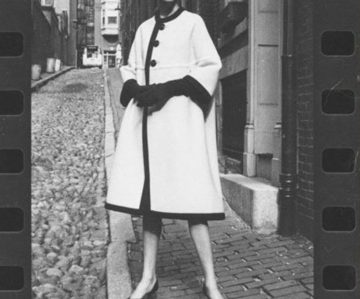 When I was a kid, I adored going over to my grandmother’s house and exploring her art room. To reach it, I wound past my grandmother’s collections of things in the living room and hall, most in service of her
  That John von Neumann was one of the supreme intellects humanity has produced should be a statement beyond dispute. Both the lightning fast speed of his mind and the astonishing range of fields he made seminal contributions to made him a legend in his own lifetime. When he died in 1957 at the young age of 56 it was a huge loss; the loss of a great mathematician, a great polymath and to many, a great patriotic American who had done much to improve his country’s advantage in cutting-edge weaponry.
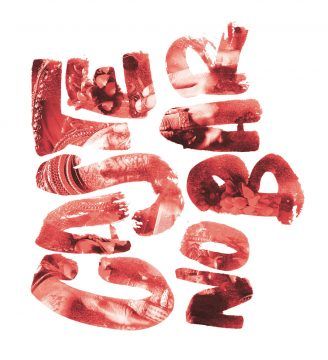 INDIAN CINEMA LOVES LOVE.
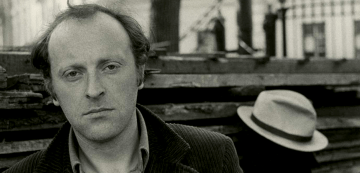 If anybody profited from the war, it was us: its children. Apart from having survived it, we were richly provided with stuff to romanticize or to fantasize about. In addition to the usual childhood diet of Dumas and Jules Verne, we had military paraphernalia, which always goes well with boys. With us, it went exceptionally well, since it was our country that won the war.
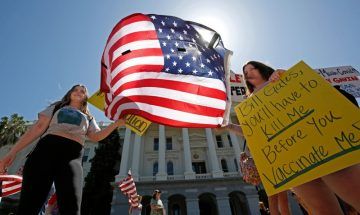 As scientists work to create a vaccine against COVID-19, a small but fervent anti-vaccination movement is marshalling against it. Campaigners are seeding outlandish narratives: they falsely say that coronavirus vaccines will be used to implant microchips into people, for instance, and falsely claim that a woman who took part in a UK vaccine trial died. In April, some carried placards with anti-vaccine slogans at rallies in California to protest against the lockdown. Last week, a now-deleted YouTube video promoting wild conspiracy theories about the pandemic and asserting (without evidence) that vaccines would “kill millions” received more than 8 million views.
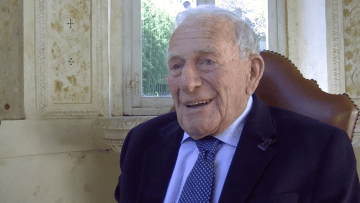 When Dwight D. Eisenhower was planning the invasion of Normandy, he made sure to check with Walter Munk and his colleagues first. Munk had come to the United States from Austria-Hungary to work as a banker before switching to oceanography, eventually making major advances in the science of tidal and wave forecasting. He was a defense researcher at the Scripps Institution of Oceanography in 1944 when his team calculated that the seas on June 5 of that year would be so rough that a delay was in order. The invasion would happen on the following day.
 Hutchins was coming off of an epic, exhausting week at Defcon, one of the world’s largest hacker conferences, where he had been celebrated as a hero. Less than three months earlier, Hutchins had saved the internet from what was, at the time, the worst cyberattack in history: a piece of
  If you go to Wendy’s this week, there’s a good chance you
  It’s not often that a paper attempts to take down an entire field. Yet, this past January, that’s precisely what University of New Hampshire assistant philosophy professor Subrena Smith’s
 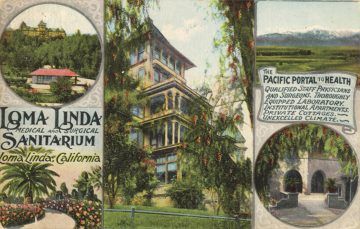 In Southern California, early health seekers embraced the sunshine, fresh air, and opportunity to sleep outdoors. To reap the benefits of particular microclimates, they often lived somewhat nomadically, circulating between various hotels, boarding houses, or crudely erected tent cities. Some traveled by horse-drawn house wagon, wandering the desert to take air and sun baths. A family in Pasadena pitched a carpet over tree branches and lived beneath the peaked shelter for six weeks. An ill Massachusetts man roamed the bucolic Ojai Valley with a cow, subsisting only on its raw milk until he claimed a miraculous recovery.