
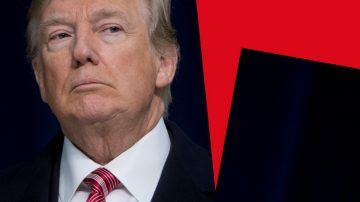
 Edward Luce in the FT:
When the history is written of how America handled the global era’s first real pandemic, March 6 will leap out of the timeline. That was the day Donald Trump visited the US Centers for Disease Control and Prevention in Atlanta. His foray to the world’s best disease research body was meant to showcase that America had everything under control. It came midway between the time he was still denying the coronavirus posed a threat and the moment he said he had always known it could ravage America.
Shortly before the CDC visit, Trump said “within a couple of days, [infections are] going to be down to close to zero”. The US then had 15 cases. “One day, it’s like a miracle, it will disappear.” A few days afterwards, he claimed: “I’ve felt it was a pandemic long before it was called a pandemic.” That afternoon at the CDC provides an X-ray into Trump’s mind at the halfway point between denial and acceptance.
We now know that Covid-19 had already passed the breakout point in the US. The contagion had been spreading for weeks in New York, Washington state and other clusters. The curve was pointing sharply upwards. Trump’s goal in Atlanta was to assert the opposite.
More here.
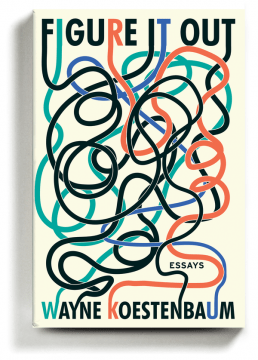 Our most ecstatic modern practitioner might be Wayne Koestenbaum, the polymathic poet and essayist. (He’s also a painter and pianist.) His work — rueful, cerebral, gloriously smutty — includes trance poetry and automatic writing. He has published sections of his notebooks, trippy discursions into his obsessions with opera (“The Queen’s Throat”) and Jacqueline Onassis (“Jackie Under My Skin”), a novel about a hotel where the guest services include having your certainties shredded (“Hotel Theory”). Whatever his subject — favorites include porn, punctuation and the poetry of Frank O’Hara — the goal is always to jigger logic and language free of its moorings. “The writer’s obligation,” he states in his new essay collection, “Figure It Out,” “is to play with words and to keep playing with them, not to deracinate or deplete them, but to use them as vehicles for discovering history, recovering wounds, reciting damage and awakening conscience.”
 Kevin Hartnett in Quanta Magazine:
 Thomas Meaney in The New Yorker:
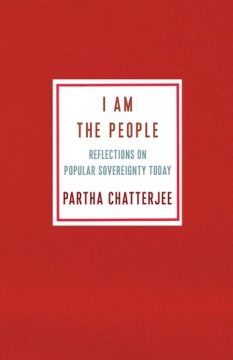 Rudrangshu Mukherjee reviews Partha K. Chatterjee’s I Am The People, in The India Forum:
 Alex Gourevitch and Corey Robin in Polity:
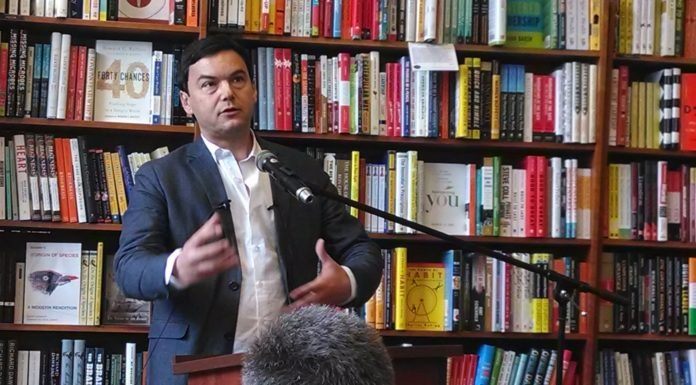 Inequality is neither economic nor technological; it is ideological and political.” Thomas Piketty’s latest book,
  How will we live, or be forced to live, after the pandemic? “I don’t know” is—
 Recently, the Federal Reserve announced that it would be loosening its lending guidelines so that more corporations, even those with massive pre-existing debts, could take part in the bailout feeding frenzy.
 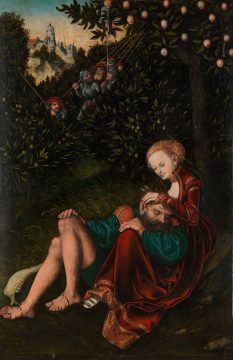 On a freezing December day in 1386, at an old priory in Paris that today is a museum of science and technology—a temple of human reason—an eager crowd of thousands gathered to watch two knights fight a duel to the death with lance and sword and dagger. A beautiful young noblewoman, dressed all in black and exposed to the crowd’s stares, anxiously awaited the outcome. The trial by combat would decide whether she had told the truth—and thus whether she would live or die. Like today, sexual assault and rape often went unpunished and even unreported in the Middle Ages. But a public accusation of rape, at the time a capital offense and often a cause for scandalous rumors endangering the honor of those involved, could have grave consequences for both accuser and accused, especially among the nobility.
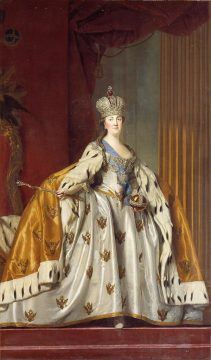 Catherine the Great is a monarch mired in misconception. Derided both in her day and in modern times as a hypocritical warmonger with an unnatural sexual appetite, Catherine was a woman of contradictions whose brazen exploits have long overshadowed the accomplishments that won her “the Great” moniker in the first place.
 Beginning thousands of years before the first dairy restaurant appeared, Katchor’s book attempts to explicate the laws of kashruth—the separation of milk and meat—and other dietary notions and origin myths. (The mixture of causal logic and total irrationality recalls Katchor’s musical-theater piece The Slug Bearers of Kayrol Island, in which exploited workers transport tiny lead weights to place inside and give heft to small appliances.) Coffeehouse culture stimulates the Enlightenment. Radical puritans imagine a prelapsarian Hebrew vegetarian diet while, having internalized certain liberal values advanced by the French Revolution, eighteenth-century Parisians invent the “restaurant” and the “menu,” consecrated to individual rights and freedom of choice.
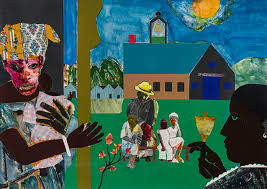 What is it you see, asks Rachael Z. DeLue, in Romare Bearden’s artwork? Why is it you just can’t stop looking? How is it they remain, decades after his death, sources of what Wallace Stevens calls “imperishable bliss”?
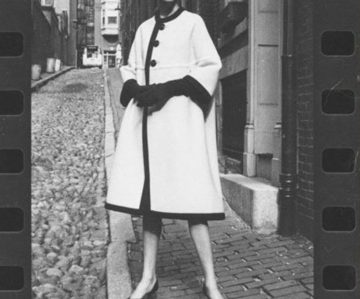 When I was a kid, I adored going over to my grandmother’s house and exploring her art room. To reach it, I wound past my grandmother’s collections of things in the living room and hall, most in service of her
 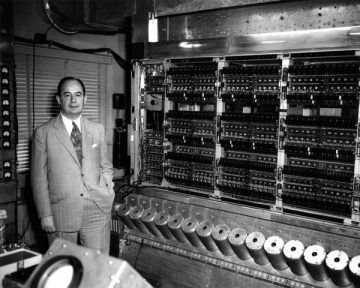 That John von Neumann was one of the supreme intellects humanity has produced should be a statement beyond dispute. Both the lightning fast speed of his mind and the astonishing range of fields he made seminal contributions to made him a legend in his own lifetime. When he died in 1957 at the young age of 56 it was a huge loss; the loss of a great mathematician, a great polymath and to many, a great patriotic American who had done much to improve his country’s advantage in cutting-edge weaponry.