
Enjoying the content on 3QD? Help keep us going by donating now.
Category: Recommended Reading
The Frontiers of Green Capitalism
Ashley Dawson at the Los Angeles Review of Books:
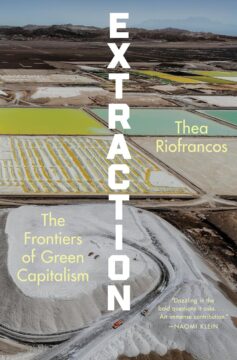 ENERGY-RELATED CARBON EMISSIONS hit an all-time high in 2024, contributing to record atmospheric concentrations of CO2. As a result, last year was the warmest year on record, the first that was more than 1.5°C above preindustrial levels. But how is this possible given the record levels of global investment in and deployment of renewables, which reached an all-time high with 536 gigawatts of renewable capacity added in 2023?
The answer is that fossil fuels are not being replaced by renewables, as the term energy transition suggests. Instead, they are being added to the total energy supply. What we are witnessing, in other words, is energy addition rather than transition. Or, to put it another way, we are living through a green transition; it’s just that it’s not the one that climate activists, scientists, or, indeed, anyone concerned about life on this planet actually wants. This green transition is likely to blow us through 2.0°C of global warming by the end of the 2030s, with all the environmental and social disruption that this implies.
To win a decline in global emissions, we must shut down the ongoing fossil-fuel production that is driving energy addition.
More here.
Enjoying the content on 3QD? Help keep us going by donating now.
Some worker ants don’t work
Nicole Meeker in Interesting Facts:
 While ants can be annoying (see: showing up at your picnic table), humans generally regard them as good workers, which is how they’ve often been portrayed in folklore and fables such as Aesop’s “The Ants & the Grasshopper.” So it may come as a surprise that not all worker ants are performing at peak productivity; in fact, some research shows that up to 40% of worker ants in a colony may remain idle while other ants trudge on with their duties.
Biologists with the University of Arizona observing ant colonies in 2015 found that many of the ants seemed to slack while other ants performed chores. And in research published two years later by some of the same scientists, the team examined 20 ant colonies, marking some of the creatures with tiny paint drops and observing their movements. When the “lazy” ants were removed from their nest, life and work continued on more or less as before. But scientists discovered a major shift when actively working ants were whisked away; the once-idle ants stepped into their missing counterparts’ roles, assuming tasks that were going uncompleted. That encouraged scientists to view them not as lazy, but as part of a reserve force.
One theory for the behavior change is that keeping a team of workers on standby allows ant colonies to remain productive. A similar study in 2018 found that only 30% of workers in fire ant colonies dug tunnels, while other members of the nest waited nearby in a move that actually sped up work by preventing traffic jams in the narrow spaces.
More here.
Enjoying the content on 3QD? Help keep us going by donating now.
‘Astonishing’ AI Predicts Over 1,000 Diseases Decades in Advance
Shelly Fan in Singularity Hub:
 Remember the last time you visited the doctor? They likely asked you about your medical history.
For many conditions, this information isn’t just relevant for diagnosis and treatment, it’s also valuable for prevention. Thanks to AI, a range of algorithms can now predict the risk of single medical conditions, such as cardiovascular disease and cancer, based on medical records.
But diseases don’t exist in a vacuum. Some conditions may increase the risk of others. A full picture of a person’s health trajectory would predict risk across a range of diseases. This could not only inform early treatment, but also surface vulnerable groups of people for screening and other preventative measures. And it could identify people at risk for a condition—say, high blood pressure or breast cancer—that don’t necessarily fit the usual criteria. Recently, a team from the German Cancer Research Center and collaborators released an AI “oracle” that predicts a person’s risk of getting over 1,000 common diseases decades in the future. Dubbed Delphi-2M, the AI is a type of large language model, like the algorithms powering popular chatbots.
More here.
Enjoying the content on 3QD? Help keep us going by donating now.
Sam Altman and David Deutsch Discuss AGI
Enjoying the content on 3QD? Help keep us going by donating now.
Doughnut Economics
Noah Smith at Noahpinion:
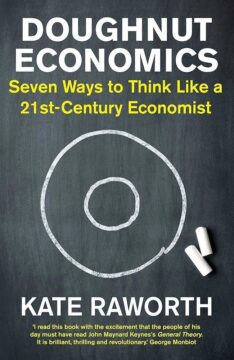 Here’s a very short, oversimplified history of modern economics. In the 1960s and 1970s, a particular way of thinking about economics crystallized in academic departments, and basically took over the top journals. It was very math-heavy, and it modeled the economy as the sum of a bunch of rational human agents buying and selling things in a market. Although the people who invented these methods (Paul Samuelson, Ken Arrow, etc.) were not very libertarian, in the 70s and 80s a bunch of conservative-leaning economists used the models to claim that free markets were great. The models turned out to be pretty useful for saying “free markets are great”, simply because math is hard — it’s a lot easier to mathematically model a simple, well-functioning market than it is to model a complex world where markets are only part of the story, and where markets themselves have lots of pieces that break down and don’t work.1 So the intellectual hegemony of this type of mathematical model sort of dovetailed with the rise of libertarian ideology, neoliberal policy, and so on.
A lot of people sensed that something was amiss, and set out to find problems with the story that the libertarian economists were telling. These generally fell into two camps.
More here.
Enjoying the content on 3QD? Help keep us going by donating now.
Tuesday Poem
The Call to Pour
“Number nine crew; number nine to pour.
number nine crew: number nine to pour.”
Our melt shop muezzin’s call drones out
thrice daily over the plant P.A. system.
The melters,
men, sometimes a woman, varied races and ages,
dressed in the Liberty green union jumpsuits,
turn in the direction of furnace number nine
to begin their prayers.
Working the knobs, the dials, the cranes, their devotions
manifest as a golden stream, a waterfall of liquid metal
slowly pouring out into four tall molds.
This time, yield is high—no spills, no blockages.
The ritual is successful, the plant runs smoothly,
the melters return to other tasks,
the giant flatbed freight trucks continue
to arrive and to leave.
The front-office managers, spreadsheet maestros,
see only ticks on a trendline, an
incremental increase
in the tribute submitted to their chieftains—to them,
the glimmer of the waterfall, the liquid light
diving from the crucible in half a perfect parabola,
runs out unnoticed.
by Ryan Thier
from Rattle Magazine
Monday, September 29, 2025
On Loving Worlds Where We Don’t Belong
Abdi Nazemian at Literary Hub:
 Before moving to the United States at ten, I grew up surrounded by other Iranians. Aunts, uncles, cousins, and family friends who spoke my language and understood the nuances of my life. Then, in the suburbs of America, I suddenly understood isolation and loneliness. I was the new, dark kid from the country who took Americans hostage, the kid whose name, tastes and mannerisms were easy to mock, who didn’t know the rules to American sports or culture. My refuge from alienation came through stories. I came home from school every day and buried myself in fiction because it felt like the real world had no space for me. But the irony is that the fictional worlds I was most obsessed with had no place for me either.
My twin obsessions were Old Hollywood and Archie Comics. Both ignited my fantasies of what America could be, though my own American life bore no resemblance to either. I dreamed of being as popular as Archie Andrews, fantasized about being transformed from a dull kid into a magnetic force like Rita Hayworth or Marilyn Monroe or any of the stars Madonna sang about in “Vogue” (except Joe DiMaggio, because that would’ve required playing sports).
More here.
Enjoying the content on 3QD? Help keep us going by donating now.
Human Drivers Will Kill 11 People While You Read This
Steve Newman at Second Thoughts:
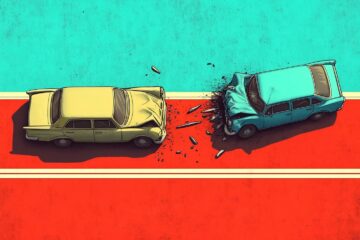 Senator Josh Hawley is calling for a ban on autonomous vehicles. So are labor organizations. They have valid concerns about job loss.
I lost a friend to a drunk driver. My wife and children were nearly propelled into a head-on collision after being rear-ended by a speeding, texting teenager. With safer robot drivers that exist today, none of this would have happened. I have concerns about not deploying autonomous vehicles.
Road safety is a personal issue for me. There’s a good chance it’s personal for you, too. That’s due to a fact that would be shocking if we hadn’t grown inured to it: each year, well over one million people are killed in vehicle crashes worldwide1.
We’ve been hearing promises about self-driving cars for decades…
More here.
Enjoying the content on 3QD? Help keep us going by donating now.
Stephen Asma on The Adult Tantrum Epidemic
Enjoying the content on 3QD? Help keep us going by donating now.
How Can We Live Together? Ezra Klein is wrong: shame is essential
Olúfẹ́mi O. Táíwò at the Boston Review:
 Following the shooting of Turning Point USA founder Charlie Kirk, Vox cofounder and podcast commentator Ezra Klein wrote in the New York Times that Kirk was “practicing politics the right way” because he was willing to show up and argue with college students. (Apparently this is what passes for “moxie and fearlessness” among some of my fellow members of the chattering class.) Amid backlash, Klein doubled down, insisting that “we are going to have to live here with one another”—as an introduction to an interview with far-right former Breitbart editor Ben Shapiro.
Much about what Klein offers here is objectionable: the appeal to debate as “persuasion,” which confuses the mere appearance of giving and responding to reasons with the substance of good-faith rational inquiry; the silence about the fact that the watchlist Kirk spearheaded generated death threats, along with other evidence that would complicate the narrative that Kirk did politics the “right way”; the breathtaking carelessness or outright dishonesty in deflecting objections to the specific accuracy of this portrayal of Kirk with claims about the general appropriateness of political violence.
More here.
Enjoying the content on 3QD? Help keep us going by donating now.
The Secret Diary of Laura Palmer
Enjoying the content on 3QD? Help keep us going by donating now.
The Philosopher-Naturalist John Burroughs
Maria Popova at The Marginalian:
 A person is a perpetual ongoingness perpetually mistaking itself for a still point. We call this figment personality or identity or self, and yet we are constantly making and remaking ourselves. Composing a life as the pages of time keep turning is the great creative act we are here for. Like evolution, like Leaves of Grass, it is the work of continual revision, not toward greater perfection but toward greater authenticity, which is at bottom the adaptation of the self to the soul and the soul to the world.
In one of the essays found in his exquisite 1877 collection Birds and Poets (public library | public domain), the philosopher-naturalist John Burroughs (April 3, 1837–March 29, 1921) explores the nature of that creative act through a parallel between poetry and personhood anchored in a brilliant metaphor for the two different approaches to creation. He writes:
There are in nature two types or forms, the cell and the crystal. One means the organic, the other inorganic; one means growth, development, life; the other means reaction, solidification, rest. The hint and model of all creative works is the cell; critical, reflective, and philosophical works are nearer akin to the crystal; while there is much good literature that is neither the one nor the other distinctively, but which in a measure touches and includes both.
more here.
Enjoying the content on 3QD? Help keep us going by donating now.
Zohran Mamdani on Eric Adams Dropping Out of NYC Mayoral Race
Enjoying the content on 3QD? Help keep us going by donating now.
Mitochondria expel tainted DNA — spurring age-related inflammation
Gemma Conroy in Nature:
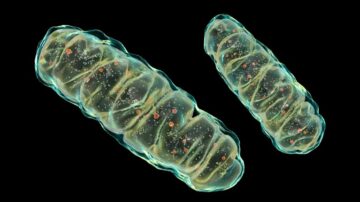 The cellular batteries known as mitochondria sometimes dump DNA into their surroundings, which can contribute to inflammation during ageing. Now a study in mice reveals why this dumping occurs: mitochondria are expelling ‘tainted’ DNA1. Scientists found that, in the cells of ageing mice with kidney inflammation, strands of mitochondrial DNA (mtDNA) contained an excess of certain types of nucleotides — molecular building blocks — that can harm DNA. This excess prompted the mitochondria to eject the abnormal fragments of genetic code into the cytosol, a fluid that fills the cell, in which the free-roaming mtDNA kick-started key inflammatory pathways associated with ageing.
The study is exciting because it helps to explain why and how mitochondria throw away their DNA, says Timothy Shutt, a medical geneticist at the University of Calgary in Canada, who focuses on mitochondria. This insight could help researchers to better understand mitochondria’s contribution to inflammageing — the chronic inflammation that occurs as people get older, adds Shutt.
More here.
Enjoying the content on 3QD? Help keep us going by donating now.
On Eileen Chang’s Little Reunions
Zhang Yueran at the Paris Review:
 “Little Reunions ought to be burned,” Eileen Chang wrote to her friend and literary executor, Stephen Soong, in 1976, the year she finished what would be her last novel. When it was finally published, in 2009, fourteen years after her death, Little Reunions seemed to carry this curse with it; the book received widespread criticism for its cryptic narrative and for not sounding like Eileen Chang.
At the time she was writing Little Reunions, Chang had been living in Los Angeles for two decades. She was born in Shanghai in 1920, to an aristocratic family in decline; shortly after her birth, her father grew addicted to opium and her mother emigrated to Britain. Chang harbored literary ambitions from a young age, and studied English while attending an all-girls Christian school in Shanghai. At the age of twenty-four, she published the short story collection Chuanqi (Romances), whose astonishing assuredness and glamorous portrayal of Shanghai’s cosmopolitan milieu quickly made her the most prominent female author in China of her time.
more here.
Enjoying the content on 3QD? Help keep us going by donating now.
Sunday, September 28, 2025
Popular Justice
Geoff Shullenberger in The Point:
In February of 1972, Michel Foucault sat down with a group of young Maoist militants to discuss the subject of “popular justice.” The occasion for the dialogue was an ongoing effort by some on the radical French left to convene “popular tribunals” that would put the ruling class and its representatives on trial for crimes against the people that went unprosecuted. In 1970, Jean-Paul Sartre himself had presided over one such tribunal in the town of Lens, where the owners of a mine were symbolically tried in absentia for the death of sixteen workers.
Left-wing terrorism was on the rise in Europe, and the arguments for “people’s justice” then in vogue had started to alarm some in the militant milieu. The prospect that the same logic might be used to justify the tactics embraced by groups like the Baader-Meinhof gang and the Italian Red Brigades hovered in the background of the dialogue with Foucault. The most radical subset of Maoists was led by Benny Lévy, who then went by the nom de guerre Pierre Victor. A firebrand leader of the 1968 revolt who later became Sartre’s personal secretary, Lévy was perhaps the most fervent advocate of violent direct action in the group. Some of his increasingly uneasy compatriots, such as André Glucksmann, seemed to regard the dialogue with Foucault as an opportunity to scrutinize the arguments being marshaled to justify such tactics. This proved to be the case, but not quite in the way they expected.
More here.
Enjoying the content on 3QD? Help keep us going by donating now.
A Theory of the List
Shiri Pasternak in Boston Review:
I learned my name was on the list from a Jewish colleague at my university, a woman I hardly know. “I need to tell you something,” she wrote in an email to me. “Do you have a minute for a call today?” A local Facebook group with 47,000 followers, I learned, had posted a list of “Self Hating Jews that are seeking the destruction of our community.” They called it the “kapo list,” a term for Nazi collaborators in the concentration camps that, as of late, has been repurposed to censure Jewish critics of Israel. A few weeks later, I was on a new list: “[trash can icon] Jews.” It was populated with the names of Jewish people who had deputed at the local school board on a report that conflated antisemitism with anti-Zionism. The lister bragged that they had reported us to the Israeli Embassy. This time, several people awkwardly reached out to me: “I saw the list.” It must have gotten around.
The lists I was put on were aimed at anti-Zionist Jews, seeking to police the internal party line by defining them as traitors for speaking out on Israel. But they are long predated by other lists—namely, lists of Palestinians, Arabs, and Muslims that target the right to tell their histories, organize, and share analysis of Palestine. And though these lists vary in their targets and tactics, they all share a common end: to intimidate the movement for Palestinian rights into silence by denigrating its advocates to the point where their livelihoods and mobility are threatened.
More here.
Enjoying the content on 3QD? Help keep us going by donating now.
How Democracies Fall Apart
Patrick Iber interviews Adam Przeworski in Dissent:
Patrick Iber: Over the course of your career, you have studied how democracies fall apart and get put back together. Classically, these events happen in sequence: first a coup, then a dictatorship, then a democratic restoration. But reading your daily reactions to what’s happening in the United States, the current situation doesn’t seem so clear cut. What makes it challenging to fit what is happening today into frameworks used to study previous democratic failures?
Adam Przeworski: Until about twenty-five years ago, breakdowns of democratic regimes were discrete events to which one could attach specific dates. The Weimar Republic fell when Hitler assumed dictatorial powers on March 23, 1933; Chilean democracy was overthrown by a military coup on September 11, 1973. Such events have declined dramatically in frequency in the twenty-first century. We have witnessed several governments maintain the trappings of democracy while taking incremental steps to ensure that they remain in office and remove institutional barriers to the discretion of the executive. The common label for such steps is backsliding, or sometimes deconsolidation, erosion, or retrogression. As this process advances, the opposition becomes unable to win elections or assume office if it wins, established institutions lose the capacity to restrain the executive, and popular protest is repressed by force.
This phenomenon took political scientists by surprise. Many of us thought that if a government were to conspicuously violate the constitution or cross another red line, citizens would coordinate against it, and, anticipating this reaction, the government would not commit such a violation. Other political scientists argued that the same would occur if a government were to refuse to hold an election or commit flagrant election fraud. A combination of separation of powers and popular reaction would make democratic institutions impregnable to the “encroaching spirit of power,” in James Madison’s phrase—that is, the desire of politicians for enduring and unlimited power. That was what we thought.
More here.
Enjoying the content on 3QD? Help keep us going by donating now.
Claudia Cardinale (1938 – 2025) Actor
Enjoying the content on 3QD? Help keep us going by donating now.