
Category: Recommended Reading
A Taxonomy of Fear
Emily Yoffe in Persuasion:
 We live in a time of personal timorousness and collective mercilessness.
There might seem to be a contradiction between being fearful and fearless, between weighing every word you say and attacking others with abandon. But as more and more topics become too risky to discuss outside of the prevailing orthodoxies, it makes sense to constantly self-censor, feeling unbound only when part of a denunciatory pack.
Institutions that are supposed to be guardians of free expression—academia and journalism in particular—are becoming enforcers of conformity. Campuses have bureaucracies that routinely undermine free speech and due process. Now, these practices are breaching the ivy wall. They are coming to a high school or corporate HR office near you.
The cultural rules around hot button issues are ever-expanding. It’s as if a daily script went out describing what’s acceptable, and those who flub a line—or don’t even know a script exists—are rarely given the benefit of the doubt, no matter how benign their intent. Naturally, people are deciding the best course is to shut up. It makes sense to be part of the silenced majority when the price you pay for an errant tweet or remark can be the end of your livelihood.
More here.
Seamus Heaney ‘Digging’
Irish Bogs
William Atkins at Harper’s Magazine:
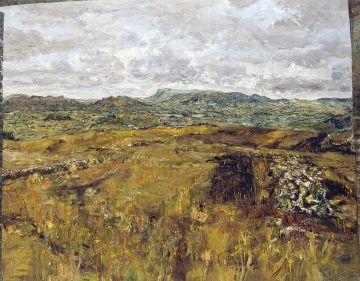 For the poet Seamus Heaney—a kind of laureate of the bog—the landscape always had a “strange assuaging effect . . . with associations reaching back into early childhood.” The bog was liberty and community, as well as labor. This ambiguous, borderless terrain—neither living nor dead, wet nor dry, public nor private—has never been politically neutral. Ireland’s bogs were often viewed by city dwellers as fundamentally moribund: economic and cultural voids, the refuge of brigands, outcasts, and hermits, synonymous with a semi-bestial peasantry—“miserable and half-starved specters,” according to one nineteenth-century account. In folklore, bogs are the lairs of the shape-shifting púca—an 1828 study of fairy mythology called them “wicked-minded, black-looking, bad things”—while in Edna O’Brien’s classic 1960 novel The Country Girls, the protagonists are contemptuously dismissed as “fresh from the bogs.”
more here.
Eva Hesse
Anne Wagner at the LRB:
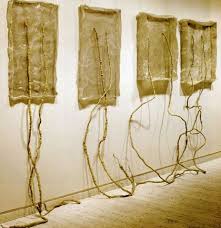 The idea of negation was central to the tensions Hesse created and mediated in her sculptures. One of her favourite descriptions of them was ‘chaos structured as non-chaos’: it captures the distinctive look of her work and its commitment to disruptive repetition. Her graph paper drawings put the contradiction to work, the essential orderliness of a grid providing her with a structure for her chaos. When she chose a green-ruled variety as the matrix for a tightly inked pattern, it was so that the opposition between line and circle, the harmony of repeated shapes and the freeform, would seem almost to hum on the page. This piece is one among hundreds of drawings included in Eva Hesse Oberlin, a travelling exhibition distilled from the enormous collection of Hesse’s works and papers (some 1500 items) housed at the Allen Memorial Art Museum at Oberlin College in Ohio. Hesse wasn’t educated at Oberlin, but at Yale: it was her elder sister, Helen, who chose Oberlin for reasons that, many years later, seem both savvy and poignant.
more here.
Wednesday Poem
Ode to a Can of Schaefer Beer
…. We would like to
…. express our sincere
…. thanks to our
…. Schaefer customers
…. for their loyalty
…. and support
It is brewed in Milwaukee Wisconsin.
It knows its place.
It wears its heart on its sleeve
like a poem,
laid out like a poem
with weak line endings and questionable
closure. Its idiom
would not be unfamiliar
to a Soviet film director,
its emblem a stylized stalk
of bronzed wheat,
circlets of flowering hops
as sketched by a WPA draftsman
for a post office mural in 1934.
It conjures a forgotten social contract
between consumers and producers,
a world of feudal fealty—
the corporation
is your friend, your loyalty
shall be rewarded—a vision
of benign paternalism
last seen in Father Knows Best
and agitprop depictions of Mao
sharing party wisdom with eager villagers,
bestowing avuncular unction.
It was, once, the one
beer to have
when you’re having more than one,
slogan and message
outdated as giant ground sloths roaming
the forests of Nebraska,
irrecoverable
as the ex-cheerleader
watching her toddler eating handfuls of sand
at the playground
considers that lost world of pom poms
and rah-rah-let’s-go-team
to be.
Surviving Autocracy
Suzanne Moore in The Guardian:
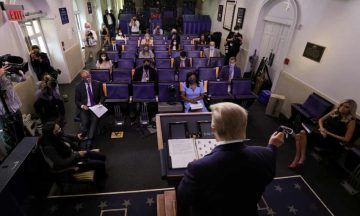 During the past few years of Donald Trump’s deranged presidency, if there is one writer I turn to it is Masha Gessen, whose piercing clarity is gemlike and refusal to equivocate precious. Their ability – Gessen is non–binary/trans and uses they/them pronouns – is surely to do with their Russian American background. As a journalist, Gessen has covered Russia, Hungary and Israel, so is not experiencing illiberalism for the first time. Instead of a weariness however, what is present in the book is a stunning capacity to connect the dots in a way that few can. Surviving Autocracy is about the Trump phenomenon and how it has transformed US society. It is about what he has learned from Vladimir Putin, among other autocrats he admires. It is also one of the few analytical books to suggest plausible ways he might be stopped. Anti-Trump polemics tend to rely on satire (which has proved useless) or putting the case for ignoring him (impossible), or relying on on some vague essence of American justice to suddenly come charging in. The cavalry never arrived and is not going to.
Wishy-washy Democrat opinion continues to believe that government institutions will somehow save the day, not understanding that the entire presidential apparatus has set out to destroy them. Early in the presidency, Gessen said: “Institutions will not save you.” How right this was. They had seen, after all, the way that Putin would use all catastrophes to his advantage, even atrocities such as the Beslan school siege, which was an excuse to cancel local elections and change federal structures. Putin also felt no need to be consistent, one day saying there were no troops in Crimea, the next month admitting there were. To trust one’s own perception in such a world is lonely. Russians are told their elections are free, but “when something cannot be described it does not become a fact of a shared reality”.
More here.
5 New and Emerging Wearable Medical Devices
Jack Carfagno in Doc Wire News:
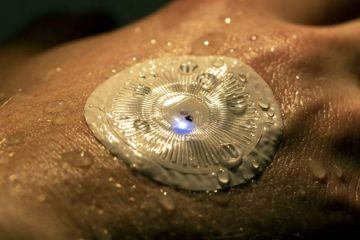 Wearable technologies offer a convenient means of monitoring many physiological features, presenting a multitude of medical solutions. Not only are these devices easy for the consumer to use, but they offer real-time data for physicians to analyze as well. From the Apple Watch’s EKG capabilities to new continuous glucose monitoring systems, wearable medical technologies have a wide range of potential applications in healthcare. Below, DocWire News has compiled five of the top innovations in wearable technologies this year plus a few new use cases for the Apple Watch.
Wearable Sweat-Sensor Informs Athletes of Water and Electrolyte Loss: A group of researchers have recently developed a waterproof, bandage-like sweat sensor that tells the wearer when to replenish electrolytes and fluids. This innovative patch collects and analyzes athlete’s perspiration as they exercise in any environment – even swimming. Described in Science Advances, the patch contains tiny pores on it’s underside that allow the sweat to penetrate the device. Each of these holes contains its own sweat analysis technology, each testing various metrics to analyze if the wearer needs hydration or electrolytes.
Walking Data from Wearables Predicting Alzheimer’s Disease: One area of impairment in patients with Alzheimer’s disease is walking mechanics, or gait. Gait speed, symmetry, and stride length are typically reduced in patients with the disease, and their walking speed is much more variable. This can be detected via clinical assessment, with the physician observing the patient walking for a certain distance or duration. Alternatively, patients can be monitored through portable equipment. Sensors within smartphones, watches, and other wearables provide accurate data regarding the patient’s gait, offering a way to continuously monitor one’s walking habits. This information could be enhanced even further with contact sensors in a shoe or sock that provide pressure readings.
More here.
Tuesday, July 28, 2020
In a world unraveled by COVID-19, the brutality of factory farming demands we rethink our relationship to animals
Troy Vettese in the Boston Review:
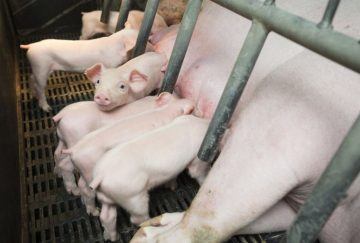 “Never look a hog in the eyes,” an experienced hand told anthropologist Alex Blanchette as they prepared to artificially inseminate sows. “If the animals think you are looking at them, they will freeze.” Like a living, inverted panopticon, hundreds of pigs would watch their handlers from their pens with a petrifying gaze. “They have almost 360 degrees vision,” a former worker recollected. “Sometimes they look like they are not looking at you. . . . but if you look at their eyes, you will see that they are always following you.”
Blanchette’s new ethnographic study of modern factory farming, Porkopolis: American Animality, Standardized Life, and the Factory Farm, is in many ways a meditation on seeing—or what we fail to see. Often we struggle to detect the meat industry’s traces, be they fecal particles suspended in the air or the porcine pathogens that suffuse the environs of “concentrated feeding animal operations” (CAFOs), where thousands of animals are kept indoors for long periods to speed up production. CAFOs made up only a small share of farms as late as the 1970s but now produce the vast majority of America’s meat, eggs, and milk. Blanchette stresses that the factory farm he studied didn’t just make pork; it also produced the ingredients for gel-covered pills, yellow fizzy drinks, cosmetics, and computers.
More here.
Sean Carroll’s Mindscape Podcast: Russ Shafer-Landau on the Reality of Morality
Sean Carroll in Preposterous Universe:
 Despite occasional and important disagreements, most people are in rough agreement about what it means to be moral, to do the right thing. There’s much less agreement about why we should be moral, or even what kind of answer to that question could be convincing. Philosopher Russ Shafer-Landau is one of the leading proponents of moral realism — the view that objective moral truths exist independently of human choices. That’s not my own view, but ethics and meta-ethics are areas in which I think it’s wise to keep an open mind and listen to smart people who disagree. This conversation offers food for thought for people on either side of this debate.
More here.
Screwing Up Is What We Do
Dave Mandl in the Los Angeles Review of Books:
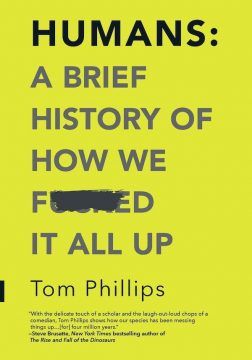 THE WORLD IS LITTERED with the consequences of monumental human screw-ups — environmental, economic, political, social, and now, as we deal with a pandemic, health-related. You might even claim, as Tom Phillips does in Humans: A Brief History of How We F*cked It All Up, that these screw-ups are a defining characteristic of humankind. There’s the everyday type that you and I commit — say, accidentally shattering your phone’s screen on the sidewalk — and then there’s the scaled-up kind — say, killing a river or triggering a famine that results in millions of deaths. In his book, Phillips walks us through tens of thousands of years of human-caused disasters, the results of systematic mistakes that people seem unwilling or unable to learn from.
Phillips’s vast Hall of Shame was assembled pre-coronavirus, but now the pandemic provides especially easy pickings, observable in real time.
More here.
“Politics” by William Butler Yeats, read by Stephen Conteagüero
The Beautiful Things inside Your Head
Kwon and Tormes in Scientific American:
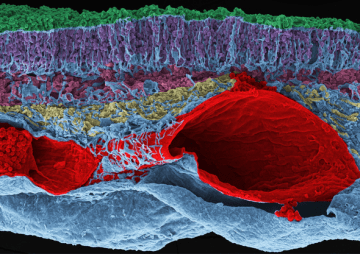 In 1968 an exhibit entitled Cybernetic Serendipity: The Computer and the Arts was held at the Institute of Contemporary Arts in London. The first major event of its kind, Cybernetic Serendipity’s aim was to “present an area of activity which manifests artists’ involvement with science, and the scientists’ involvement with the arts,” wrote British art critic Jasia Reichardt, who curated the exhibit. Even though it was an art show, “most of the participants in the exhibition were scientists,” Reichardt said in a 2014 video. “Artists didn’t have computers in the 1960s.” A lot has changed since then, however. Computers, no longer the commodity of a select few, help artists to deviate from more traditional mediums.
The changes since the 1960s are well-reflected in the entries for the 2020 Art of Neuroscience competition, held by the Netherlands Institute for Neuroscience. Now marking its 10th year, the contest features some highly technological pieces and others grounded in classical methods, such as drawing with pen on paper. The winning entries were created by independent artists, as well as working scientists, demonstrating that art and neuroscience can inspire both professions. A winner and four honorable mentions were selected from dozens of submitted works. And seven pieces were chosen by Scientific American as Editors’ Picks. (Photography editor Liz Tormes served on the panel of judges for the competition.)
More here.
Tuesday Poem
Poem That Needs No Introduction
…… -an excerpt
I.
Listen, I have endured so much bad art in my lifetime
that my brain actually throbs and pulses
in the manner of a 1960s comic-book supervillain
and my skull threatens to burst at the seams like a lychee nut
at the mere thought of those tuneless bands and lousy etchings
and the earnest readings in coffee houses
smelling of clove cigarettes,
pretentious photos of phallomorphic icebergs,
the opening at the gallery hung with stillborn elephants—
what could you say?—and one unforgettable night
a conceptual dance performance akin to ritual sacrifice
with the audience as victims—as if art
might prove the literal death of me—all this,
all this and so much more,
only to find myself here, in Bratislava,
at the Ars Poetica poetry festival,
yet again drinking red wine from a plastic cup
while the poets disclaim in languages
dense and indecipherable as knotted silk, thinking, well,
what could be better than this?
II.
Perhaps it would be better if the air-conditioning worked
and the keg of Zlatý Bažant had not run dry
but the local wine is unexpectedly delicious, hearty as a wild boar’s
…. blood,
and the very existence of such an exuberantly cacophonous conclave
in this diminutive and innocuous backwater of Mitteleuropa
makes me yearn to do something hearty and wine-soaked and
…. boarish—
no, not boorish—to shout spontaneous bebop musings
like the hipster Beatnik poet Fred from Paris
or crack wise like the balding Fran O’Hara imitator from Vienna
or sing like the yodeling, pop-eyed jokester from Prague
or simply intone with great seriousness like the well-mannered poets
from Warsaw and Wroclaw, Berlin and Budapest and Brno.
III.
o river sand,
sink deeper and fling yourself
into my whirlpool!
blue-flower gas-ring octopus—
what brings you
to the rain forest, amigo?
IV.
Well, that came out a bit like Basho imitating Corso
but the thought is what counts when it is 10:45 and you are drunk
enough to believe a poem scribbled on a festival program
could change the world
and when someone says time is an invisible marauder
I shout Fuck you! And everybody smiles.
V.
This poem will change the world!
. . .
.
by Campbell McGrath
from Nouns & Verbs
Harper Collins, 2019
taking a fresh look at CT scans
Benjamin Plackett in Nature:
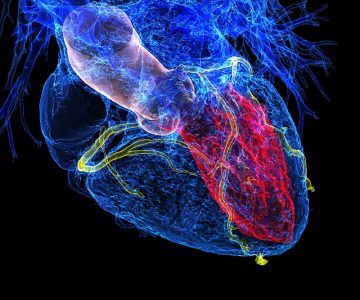 Current methods for predicting heart attacks are woefully outdated, says Cheerag Shirodaria, a cardiologist at the Oxford University Hospitals NHS Foundation Trust, UK. “We basically look at a patient’s age, obesity and whether they have diabetes. The most sophisticated we get is measuring their cholesterol,” he says. Heart attacks are often caused when fatty accumulations inside arteries, known as plaques, result in the narrowing of blood vessels. These plaques then rupture and form blood clots. Age, being overweight or obese and having diabetes are all risk factors, and people in at-risk groups are closely monitored. “But 50% of heart attacks are in people without narrowing, and they’re being missed by current tests,” he says. A desire to drag prognosis into the modern era is what pushed Shirodaria and a group of like-minded cardiologists to set up Caristo Diagnostics. Rather than blood-vessel narrowing, the team focuses on another driver of plaque ruptures — vascular inflammation. The company uses algorithms to analyse information that until now has been hidden in the noise of computed tomography (CT) scans. This enables it to assess inflammation and calculate the likelihood that a person will have a heart attack in a given time period.
…Fat tissue bordering blood vessels, known as perivascular fat, had long been thought to be a cause of inflamed arteries. “There was this perception that perivascular fat was the bad guy,” says Antoniades. That’s why his research started out as a hunt for any potential chemicals produced and sent by the fat to the blood vessels — the working theory used to be that such chemicals could have been behind the problem. “But the results always showed the opposite,” he explains. The signals were instead going the other way. Antoniades showed that when an artery is inflamed, it sends out SOS signals that are then picked up in the surrounding fat1. In response, the fat undergoes lipolysis — the lipids break down and the water content in the fat cells increases (see ‘Sensing a heart at risk’). That effectively means that diminished perivascular fat is an indicator of inflammation, and therefore also of an increased risk of heart attack. Other scientists have validated the link between perivascular fat abnormalities in CT scans and coronary inflammation2.
More here.
Jacques Coursil – Black Suite (part.2)
https://www.youtube.com/watch?v=JBqrlgZXZXk&feature=emb_logo
A Tribute To Jacques Coursil
Cam Scott at Music and Literature:
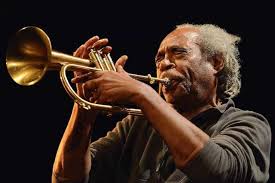 A certain mythology has gathered around the thirty-five year hiatus that followed Coursil’s incredibly fruitful period of musical cosmopolitanism. There is a romantic obscurity to the way in which jazz fans discuss the career interruptions of their favorite players, mistaking hard times and financial exigencies for semi-monastic trials of spirit. A prime example would be Sonny Rollins, who retreated into a prolonged rehearsal session at the height of his fame, practicing all hours on the Williamsburg bridge and bearing solitary witness to the city; or Dexter Gordon, whose incarceration in the fifties secured his reputation as the perennial ambassador of bebop, and an intercontinental comeback kid. Other disappearances are far more lacunar and prolonged, such as that of sought-after bassist Henry Grimes, who devoted himself to poetry and literature during a decades-long stint in the workaday world, only to emerge with startling vigor in the early twenty-first century.
Coursil’s willful abstention from recording was in service to a scholarly path.
more here.
The Story of The Caillaux Affair
Jack Beatty at Lapham’s Quarterly:
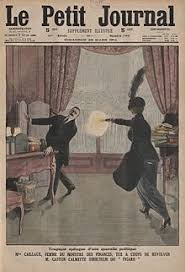 Of the millions of bullets fired in 1914, only two changed history: the bullet fired on June 28 in Sarajevo by Gavrilo Princip’s Browning automatic that killed Archduke Franz Ferdinand, and the bullet fired on March 16 in Paris by Henriette Caillaux that killed Gaston Calmette. As premier in 1911, her husband had by back-channel negotiations defused a war-charged crisis with Germany, grounds for believing he could have worked his magic again three years later, when he would have all but certainly been elected premier again—but for the bark of Henriette’s Browning. Months before the war, anticipating that Caillaux, then the finance minister, would soon be premier, Belgium’s ambassador to Paris assured Brussels: “Caillaux’s presence in power will lessen the acuteness of international jealousies and will constitute a better base for relations between France and Germany.” That was heresy in “official Paris,” where “everybody that you meet tells you that an early war with Germany is certain and inevitable.” Months into the war, the Kölnische Zeitung stated, “If Monsieur Caillaux had remained in office, if Madame Caillaux’s gesture had not been made, the plot against the peace of Europe would not have succeeded.”
more here.
Sunday, July 26, 2020
The Upanishads and the Bhagavad Gita: ancient Indian texts that challenge Western categories, yet influenced the course of modernity
Amit Chaudhuri in the TLS:
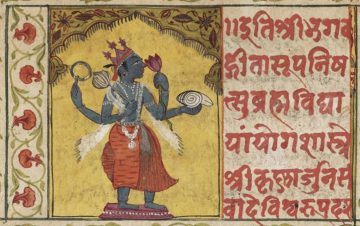 To include the Upanishads and the Bhagavad Gita in a series called “Footnotes to Plato” may seem odd for many reasons – some obvious, some less so. But to address the oddity is invigorating, and offers a way of considering the necessity of placing these works in the wider discussion, as well as the historical and conceptual impediments to doing so.
Among the impediments is a logistical one which reveals how, in the West, value and significance are attributed according to certain classificatory norms and not others. I don’t mean the “canon”; I’m referring to a more basic category: authorship. “Footnotes to Plato” (like Western philosophy), is, generally, as much about the philosophers as it is about the philosophy. In fact, the field of knowledge called “the history of Western philosophy” could just as easily be called “the history of Western philosophers”, inasmuch as Western philosophers are the sum total of their lives and works, and we often defer to both biography and thought when we interact with the philosophy. Each body of work has a personality, but so does its author; in almost every case, we can, literally, put a “face” to the work, whether that’s a photograph of Bertrand Russell or a fourth-century BC bust of Plato.
What do we do with a philosophy when there’s no philosopher in sight?
More here.