Between the spreadsheets

Alice Hines in More intelligent Life:

Once upon a time, there was a man who thought love was a maths problem.

“Love is a capricious spark, a miraculous whirlwind,” one of his blog posts began, sarcastically. “It is found by following ancient prophecies, embarking on dangerous quests…Something like that, who knows. Anyway, it sounds like finding a girlfriend was crazy hard before computers!” The man’s name was Jacob. He is currently 32 and works in finance, creating software that helps banks comply with regulations. He has dark curly hair and a beard, a left eyebrow that’s often raised and, in his own words, a “dad bod”. His self-deprecating streak is tempered by optimism. “Growth mindset” is one of his favourite phrases. As in “I’m still not bisexual, but, you know, growth mindset.” For most of his life Jacob dated only when he’d received clear signs of encouragement from one of the many women he found beautiful or fascinating. In 2013 he moved to New York from North Carolina. Thanks to the volume of people using dating apps, it was suddenly possible to spend each night of the week with a different woman who was already intrigued by his online persona. There was the cheesemaker. The fashion designer. Three different med-school students. Jacob liked them all. On each date, he holidayed in another person’s world and learned something new.

But cumulatively, the experience was overwhelming. Jacob knew he wanted to get serious with someone, but he found it hard to weigh the merits of each of these potential partners against each other. So he did what he knew best: he made a spreadsheet. He called it “How to Choose a Goddess”. When he described this to me, some of the calculations lay beyond my comprehension. But my more quantitatively minded friends seemed impressed when I rattled them off.

More here.

Sunday Poem

We’re Together Now

I longed for five years, and then
I got her, my tailfeathers more resplendent
then the other guy’s. Or I have bigger antlers.
So she’s mine. I can circle her
for hours, and she won’t chase me away.
We’ll make a home somewhere
with detritus from both our lairs, I love
the intimacy we share, the body sounds,
though sometimes sort of miss the longing,
which was always there, a scar.

It was like the Red Sox fans
felt the eighty-six years their team
didn’t win the World Series. Then they did,
and what kept those fans on edge
for decades was gone. Sure, winning
was great. But so was all that hope,
so close you could almost touch
the skittish thing, if only, if only.
When if only came true, they had
to learn to live without it.
………………………..It was not the same
after winning. I was better;
it was just not the same.

Michael Chrisman
from
Little Stories
Dyslexia Books, NY, NY;
Antigua Guatemala, 2013

Saturday, March 14, 2020

The Party Cannot Hold

Michael Tomasky in the NYRB:

At the moment, as the Democrats struggle over their future, one can legitimately wonder whether the poles of the Democratic tent are strong enough to hold. The divisions are stark. This historical moment is often compared to 1972, when a youth movement similar to the one Sanders leads today took over the party and nominated George McGovern. But if anything, today’s divisions run far deeper. Then, the party was split chiefly over the Vietnam War. There were other issues, to be sure, and the New Left—the 1960s movement of student radicals that spread from Madison to Berkeley to everywhere—pressed a broader critique of American society; but McGovern’s was fundamentally an antiwar candidacy. And while the Vietnam debate was shattering to the party for a few years, wars eventually end, as indeed that one did, not long after the 1972 election.

Once it ended, and once the Watergate scandal mushroomed, the party was able to stitch itself back together with surprising ease. In the 1974 midterms, both liberals and moderates were able to run aggressively against Richard Nixon, and the Democrats made historic gains that year. Then, with the country still agitated over Nixon and Gerald Ford’s pardon of him, and with a sunny southern moderate vaulting over several better-known and more liberal senators, they recaptured the White House in 1976.

The current divide is not about one war. It is about capitalism—whether it can be reformed and remade to create the kind of broad prosperity the country once knew, but without the sexism and racism of the postwar period, as liberals hope; or whether corporate power is now so great that we are simply beyond that, as the younger socialists would argue, and more radical surgery is called for.

More here.

Trump’s Culture Wars Come to Architecture

Anthony Paletta in The Boston Review:

Nearly everything is exasperating about the debate surrounding the Trump administration’s draft executive order, “Making Federal Buildings Beautiful Again.”

The foremost problem is the order itself. An intemperate jeremiad against modernist architecture, it proposes that “the classical architectural style shall be the preferred and default style” for government buildings in Washington and for federal courthouses; the subsequent fine print is designed to ensure that exceptions would be difficult and unlikely. The order first nails its list of grievances to the door of Marcel Breuer’s Brutalist Hubert Humphrey building. It then proceeds to derogate federal architecture over the last fifty-eight years in support of its argument that the government has “stopped building beautiful buildings that the American people want to look at or work in.”

The draft has provoked well-warranted opposition from a chorus of critics: every conceivable architectural professional organization, historic preservationists, architectural historians, and a wide range of others. Most of this response has been sound and reasonable; some has been intemperate and outlandish. The order’s exaggerated contempt for modernism as a willful and deliberate assault on beauty has provoked similarly overheated charges identifying neoclassicism as a vessel for fascismwhite supremacy, and genocide. In this, the Trump administration has displayed its typical incendiary skill at pouring accelerants onto any squabble, inflaming ground that has largely managed, until now, to escape the pitched battles of the ever-widening culture wars.

More here.

Coronavirus: can herd immunity really protect us?

Jeremy Rossman in The Conversation:

Our bodies fight infectious diseases through the actions of our immune systems. When we recover, we often retain an immunological memory of the disease that enables us to fight off that same disease in the future. This is how vaccines work, creating this immune memory without requiring getting sick with the disease.

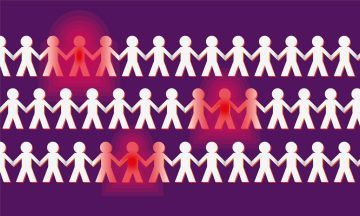
If you have a new disease, such as COVID-19, that we don’t have a vaccine for and no one in the country has ever been infected with, the disease will spread through the population. But if enough people develop an immune memory, then the disease will stop spreading, even if some of the population is not immune. This is herd immunity, and it is a very effective way to protect the whole of a population against infectious disease.

But herd immunity is typically only viewed as a preventive strategy in vaccination programmes. If we don’t have a vaccine – as we don’t for COVID-19 – achieving herd immunity would require a significant proportion of the population to be infected and recover from COVID-19. So what would this mean for the spread of the disease in the UK?

More here.

The Collapse of the Trump Administration

Greg Valliere of AGF Investments over at the firms’ website:

THE MARKETS HAVE COLLAPSED, the sports world has collapsed, and the Trump Administration has collapsed — abdicating to the steely Nancy Pelosi on policy, abdicating to health experts like Dr. Anthony Fauci, and potentially abdicating to Joe Biden in November.

WHEN THE HISTORY OF THIS SHOCKING COLLAPSE is written, its defining chapter may focus on Donald Trump’s appalling speech on Wednesday night — poorly delivered, filled with errors, insulting to European allies, and a disaster for the financial markets.

WE TALKED WITH INSIDERS YESTERDAY who are stunned by the speech and Trump’s improvised happy talk. One source said that within the White House, there’s dismay that policy is being crafted by Jared Kushner, who has no expertise on health issues.

THERE’S BEEN NO DIRECTION from the White House on policy responses, so Pelosi has filled the void, winning concession after concession, prevailing with 14 days of paid sick leave, more generous unemployment benefits, free virus testing, etc. Many of the concessions could be permanent.

More here.

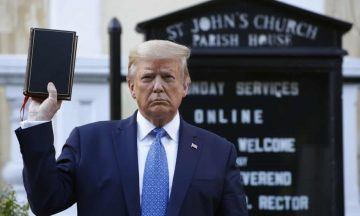
The Trump Presidency Is Over: Americans have now seen the con man behind the curtain

Peter Wehner in The Atlantic:

The president’s misinformation and mendacity about the coronavirus are head-snapping. He claimed that it was contained in America when it was actually spreading. He claimed that we had “shut it down” when we had not. He claimed that testing was available when it wasn’t. He claimed that the coronavirus will one day disappear “like a miracle”; it won’t. He claimed that a vaccine would be available in months; Fauci says it will not be available for a year or more. Trump falsely blamed the Obama administration for impeding coronavirus testing. He stated that the coronavirus first hit the United States later than it actually did. (He said that it was three weeks prior to the point at which he spoke; the actual figure was twice that.) The president claimed that the number of cases in Italy was getting “much better” when it was getting much worse. And in one of the more stunning statements an American president has ever made, Trump admitted that his preference was to keep a cruise ship off the California coast rather than allowing it to dock, because he wanted to keep the number of reported cases of the coronavirus artificially low. “I like the numbers,” Trump said. “I would rather have the numbers stay where they are. But if they want to take them off, they’ll take them off. But if that happens, all of a sudden your 240 [cases] is obviously going to be a much higher number, and probably the 11 [deaths] will be a higher number too.” (Cooler heads prevailed, and over the president’s objections, the Grand Princess was allowed to dock at the Port of Oakland.)

On and on it goes.

To make matters worse, the president delivered an Oval Office address that was meant to reassure the nation and the markets but instead shook both. The president’s delivery was awkward and stilted; worse, at several points, the president, who decided to ad-lib the teleprompter speech, misstated his administration’s own policies, which the administration had to correct. Stock futures plunged even as the president was still delivering his speech. In his address, the president called for Americans to “unify together as one nation and one family,” despite having referred to Washington Governor Jay Inslee as a “snake” days before the speech and attacking Democrats the morning after it. As The Washington Post’s Dan Balz put it, “Almost everything that could have gone wrong with the speech did go wrong.”

More here.

My Sister, My Daughter: Behind the Scenes of a Great American Film

Mark Horowitz in The New York Times:

Fifty years ago, the screenwriter Robert Towne said to his girlfriend, “I want to write a movie for Jack.” He meant Nicholson — in those days, and possibly even now, there is only one Jack — who had just had his breakout role in “Easy Rider.” “A detective movie,” Towne explained. “Maybe Jane Fonda for the blonde.” He knew he wanted to set it in Los Angeles before the war, like a Raymond Chandler novel. But that was about the extent of it. When he told Nicholson, the actor naturally asked, “What’s it about?”

“I don’t know,” Towne admitted. “Water.”

This exchange appears in “The Big Goodbye: ‘Chinatown’ and the Last Years of Hollywood,” by Sam Wasson. Not exactly the seminal Rosebud story one hopes to discover in a new history of a favorite film. Still, from that modest inception, great things did come. Four years later, Paramount Pictures released “Chinatown,” written by Towne, directed by Roman Polanski, produced by Robert “The Kid Stays in the Picture” Evans. (Faye Dunaway, not Jane Fonda, played “the blonde.”) And now, almost a half-century later, “Chinatown” routinely appears on the short lists of best Hollywood films, whether they’re generated by the American Film Institute or the BBC. One panel of British film critics even voted it the single best film of all time.

“Chinatown”’s murky and amoral plot — involving a corrupt web of stolen water rights and sleazy land development, behind which lurk the even darker sins of murder and incest — resonated with demoralized Watergate-era audiences. Nominated for 11 Academy Awards, the film lost for best picture of 1974 to “Godfather II,” but Towne won for best original screenplay.

“The Big Goodbye” is part of a welcome and newish publishing trend: deeply researched and elaborately subtitled books about a single movie, which explore and reframe the film as an inflection point within the broader culture. Three recent and admirable examples are “We’ll Always Have Casablanca: The Life, Legend, and Afterlife of Hollywood’s Most Beloved Movie,” by Noah Isenberg; “The Wild Bunch: Sam Peckinpah, a Revolution in Hollywood, and the Making of a Legendary Film,” by W. K. Stratton; and “High Noon: The Hollywood Blacklist and the Making of an American Classic,” by Glenn Frankel.

More here.

Saturday Poem

House of Cards

I miss you winter evenings
With your dim lights.
The shut lips of my mother
And our held breaths
As we sat at the dining room table.

Her long, thin fingers
Stacking the cards,
Then waiting for them to fall.
The sounds of boots in the street
Making us still for a moment.

There’s no more to tell.
The door is locked,
And in one red-tinted window,
A single tree in the yard,
leafless and misshapen.

by Charles Simic
from
Virginia Quarterly Review

Friday, March 13, 2020

America Is Broken

David Wallace-Wells in New York Magazine:

What we are seeing right now is the collapse of civic authority and public trust at what is only the beginning of a protracted crisis. In the face of an onrushing pandemic, the United States has exhibited a near-total evacuation of responsibility and political leadership — a sociopathic disinterest in performing the basic function of government, which is to protect its citizens.

Things will get worse from here. According to a survey of epidemiologists released yesterday, the coronavirus outbreak probably won’t peak before May. That doesn’t mean it will be over by May, of course, but that it will be getting worse and worse and worse over the next two months, and for much of that time, presumably, exponentially worse. And so the suspension of the NBA season and Tom Hanks and Rita Wilson’s announcement that they are sick with COVID-19 will seem, in relatively short order, like quite small potatoes. And for all of that time, the country’s response will be commanded and controlled by Donald Trump.

More here.

In Conversation with Elizabeth Kadetsky

Re’Lynn Hansen in Punctuate:

The Memory Eaters is told in the context of 1970s and 1980s New York City. The memoir moves from her parents’ divorce to her mother’s career as a Seventh Avenue fashion model and from her sister’s addiction and homelessness to her own experiences with therapy for post- traumatic stress disorder. The Memory Eaters is about  consciousness fractured by addiction and dementia, and a compulsion for the past salved by nostalgia. More can be found at  https://elizabethkadetsky.com/

Punctuate: In your opening chapters of your memoir you celebrate your mother as a great watcher: “We watched people. My mother was fascinated by the common place. That what you saw in Vogue happened first on the streets of New York.”  You connect watching with a learning style, stating how you and your mother deconstructed the “why” of the look. You write so well of these moments of watching. Can you speak to the connection of watching to memoir writing?

Elizabeth Kadetsky: Coming of age in the 1970s, I was exposed, through my mother, to a lot of what you might call groovy spirituality that enshrined this idea that you would find truth if you just relaxed your brain enough to let it come to you. This was the thinking behind the versions of so many of the trendy ideologies that we adopted: I Ching, astrology, Ouija Board, palm reading. I don’t think that we believed in the magic of any of these systems in the least. The idea was that these were all tools that helped you get more in tune with your subconscious. So, my mother’s ideas about “watching” definitely came out of that, that there was a sort of divine intelligence that you could tap into through paying close attention in both dream and waking life. It’s funny because when I think about it now I see the pitfalls of this mindset, especially for the writer.

More here.

Japan confirms first case of person re-infected with coronavirus

Joseph Guzman at The Hill:

Japan is reporting its first case of a person becoming reinfected with the coronavirus after showing signs they had fully recovered, according to Reuters.

Osaka’s prefectural government confirmed Wednesday a woman working as a tour bus guide tested positive for coronavirus for the second time after developing a sore throat and chest pain. The woman, who is said to be in her 40s, first tested positive in late January and was discharged from the hospital on Feb. 1 after showing signs of recovery.

Reuters reports Health Minister Katsunobu Kato said the government would need to monitor the condition of others who were infected and later discharged as health experts investigate testing positive for COVID-19 after an initial recovery.

As much remains unknown about the virus, cases of reinfection have health experts worried that the illness could remain dormant after an apparent recovery.

More here.

Friday Poem

After the Election: a father speaks to his son

He says, they will not take us.
They want the ones who love
another god, the ones whose
joy comes with five prayers and
songs to the sun in the mornings
and at night. He says, they will
not want us. They want the ones
whose tongues stumble over
silent e’s, whose voices creak
when a th suddenly appears
in the middle of a word. They want
the ones who cannot hide copper skin
like we can. He says, I am old. I lived
through one revolution. We can hide
our skin. We have read the books.
He says, we are the quiet kind, the ones
who stay late and do not speak,
the ones who do not bring trumpets
or trouble. He says we are safe in silence.
We must become ghosts.

I think, so many are already
dust, tried to stay thin, be small,
tried breaking their own bone and voice,
tried to be soft, like a heart in the middle
of the night. So many tried to be
nothing, to be only breath. Be still
enough to be left alone. Become
shadows, trying not to be bodies.

It never works. To become nothing.
They come for the shadows too.

by M. Soledad Caballero
from Split This Rock

Coping, Camaraderie, and Human Evolution Amid the Coronavirus Crisis

Robin Wright in The New Yorker:

Across the globe, a coronavirus culture is emerging, spontaneously and creatively, to deal with public fear, restrictions on daily life, and the tedious isolation of quarantine. “This is a bad science-fiction movie that is real,” Agustín Fuentes, an evolutionary anthropologist at the University of Notre Dame, told me, in a late-night discussion this week, about how covid-19 may alter the human journey. He envisions a profound evolutionary process to insure the survival of the species as pandemics become more common. It’s already visible.

…In these early days of the global pandemic, human creativity has centered largely on simple forms of relief and release. In China, the epicenter of the covid-19 outbreak and a nation where almost eight hundred million people have experienced some form of lockdown, night clubs that were forced to shut their doors have turned to virtual “cloud clubbing.” Viewers can watch d.j. sets on streaming platforms and send in messages to be read live, to create the illusion that they are connected. The new reality show “Home Karaoke Station” features famous singers taking requests, engaging with viewers, and performing—from self-quarantine in their own homes. Shuttered gyms have offered workout classes online or via the popular WeChat social-messaging app. Other Chinese people on WeChat created a group looking for love under lockdown. In one of the twenty-plus mass-quarantine centers in Wuhan, the megacity where this coronavirus first emerged, women have turned to karaoke to lift the spirits of sequestered groups. At night, echoes of “Wuhan Jiayou”—or “Stay Strong Wuhan”—have been heard as Chinese shout encouragement at each other from their windows.

In Iran, another of the covid-19 “red zones,” doctors and nurses—individually and in groups—have participated in a coronavirus dance challenge, posting videos of themselves dancing to lively music in hazmat suits.

More here.

Annual Report to the Nation: Cancer Death Rates Continue to Decline

From CDC Newsroom:

This year’s report showed that overall cancer death rates decreased 1.5% on average per year from 2001 to 2017, decreasing more rapidly among men (by 1.8% per year) than among women (1.4% per year). The report found that overall cancer death rates decreased in every racial and ethnic group during 2013–2017. “The United States continues to make significant progress in cancer prevention, early detection, and treatment,” said CDC Director Robert R. Redfield, M.D. “While we are encouraged that overall cancer death rates have decreased, there is still much more we can do to prevent new cancers and support communities, families, and cancer survivors in this ongoing battle.”

National Status of Cancer Report Findings

The data analyzed in the report combines cancer incidence data collected by CDC’s National Program of Cancer Registries (NPCR) and NCI’s Surveillance, Epidemiology, and End Results (SEER) Program, as well as mortality data from CDC’s National Center for Health Statistics.

The report found that from 2013 to 2017:

Among men, death rates decreased for 11 of the 19 most common cancers, were stable for four cancers (including prostate), and increased for four cancers (oral cavity and pharynx, soft tissue including heart, brain and other nervous system, and pancreas). Among women, death rates decreased for 14 of the 20 most common cancers, including the three most common cancers (lung and bronchus, breast, and colorectal), but increased for cancers of the uterus, liver, brain and other nervous system, soft tissue including heart, and pancreas. Rates were stable for oral cavity and pharynx cancer. Overall cancer death rates among children ages 0 to 14 years decreased an average of 1.4% per year. Among adolescents and young adults ages 15 to 39 years, overall cancer death rates decreased an average of 1.0% per year. Melanoma death rates decreased 6.1% per year among men and 6.3% per year among women. Lung cancer death rates decreased 4.8% per year among men and 3.7% per year among women. However, lung cancer continues to be the leading cause of cancer death, accounting for about one-fourth of all cancer deaths.

More here. (Note: Mortality from cancer increased for 60 years in parallel with increase in smoking, and now has declined steadily by 1% a year mostly because of effective anti-smoking campaigns bringing the death rate down to what it was in 1930)

Thursday, March 12, 2020

Agnes Callard: The End is Coming

Agnes Callard in The Point:

Probably this is not the end of the world. But a plague is creeping around the globe at a seemingly exponential rate, killing some of us and affecting all of us. And this pandemic is only the most recent and most sudden of a series of afflictions facing humanity. We are rapidly replacing our natural habitat with one that is, on the one hand, made by human beings, and, on the other, proving difficult for us to manage—a situation we euphemistically refer to as “climate change.” On the political front, the past decade has seen a rise in civil unrest worldwide, and the leaders of a number of countries have given us reason to be less optimistic than we used to be about the prospects for global democracy. Given the ever-cheapening technology, weapons—including those of mass destruction—must be proliferating unnoticed. And all of the above is happening against a backdrop of low economic growth and stagnant wages, at least for most of the world’s wealthiest countries.

We may not have arrived at the end, but we have certainly arrived at the thought of it. Medical, environmental, political, economic and military problems seem to have joined forces to remind us that the story of humanity is, at some point, going to draw to a close. That’s a very painful thought to have. It also raises a serious philosophical problem.

More here.