
Gerald Early at The Common Reader:
 On February 24, 1947, Eugene Le Bar began a bus trip from Mexico City that would take him to New York. By March 1, when he arrives in New York he was not feeling very well but went sightseeing nonetheless, coming in contact with lots of people. On March 10, he died in Willard Parker hospital from the rare but extremely deadly hemorrhagic smallpox. Only five percent of smallpox cases take this intensely virulent form, so it is not surprising that Le Bar’s case was originally misdiagnosed. Overall, twelve persons were infected with traditional, not hemorrhagic, smallpox (with a much higher survival rate) from Le Bar’s ring of contacts; two died. The infection rate was low because New York embarked on a mass vaccination effort to prevent the spread of the disease. Six million New Yorkers were vaccinated against smallpox in the spring of 1947, an enormous accomplishment by the local public health service employees and hospital personnel as shots were given around the clock to prevent an epidemic.
More here.
Enjoying the content on 3QD? Help keep us going by donating now.
 Molecules in urine and blood can reveal how much of a person’s diet comes from ultra-processed foods, according to a study published in PLOS Medicine today
 A novel about a Palestinian woman who participates in a pyramid scheme reselling Birkin bags has won this year’s Swansea University
  The announcement last week that a nine-month-old baby in Philadelphia has been cured of a rare genetic disorder by gene editing is a great moment in medical history. For the first time, doctors have altered a gene inside many cells in the liver of a living human being using CRISPR, the molecular tool borrowed from microbes that can
  Ideally, policy and program design is a straightforward process: a decision-maker faces a problem, turns to peer-reviewed literature, and selects interventions shown to work. In reality, that’s rarely how things unfold. The popularity of “evidence-based medicine” and other “evidence-based” topics highlights our desire for empirical approaches — but would the world actually improve if those in power consistently took social science evidence seriously? It brings me no joy to tell you that, at present, I think the answer is usually “no.”
 It was the finger seen around the world. In 2008, archaeologists working in Denisova Cave in southern Siberia, Russia, uncovered a tiny bone: the tip of the little finger of an
  Science seldom works in straight lines. Sometimes it’s “applied” to solve specific problems: Let’s put people on the moon; we need a Covid vaccine. Much of the time it’s “basic,” aimed at understanding, say, cell division or the physics of cloud formation, with the hope that — somehow, someday — the knowledge will prove useful. Basic science is applied science that hasn’t been applied yet.
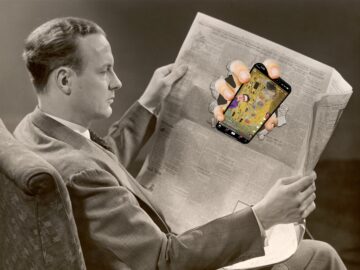 Art criticism is thriving. It’s taking on new forms, shedding old skin, and adapting to novel venues. It’s as alive and relevant as ever, still generating conversation and controversy. Instead of fizzling out, it’s being embraced by new generations of critics, whether in these pages or on Substack, Instagram, YouTube, and TikTok (no matter the platform, it always comes down to writing). It’s a buzzing genre that attracts readers of all ages, from septum-pierced college students to cigar-puffing art collectors.
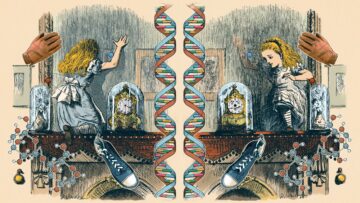 After her adventures in Wonderland, the fictional Alice stepped through the mirror above her fireplace in Lewis Carroll’s 1871 novel Through the Looking-Glass to discover how the reflected realm differed from her own. She found that the books were all written in reverse, and the people were “living backwards,” navigating a world where effects preceded their causes.
 For much of the 20th century, young Americans were seen as free speech’s fiercest defenders. But now, young Americans are growing more skeptical of free speech.
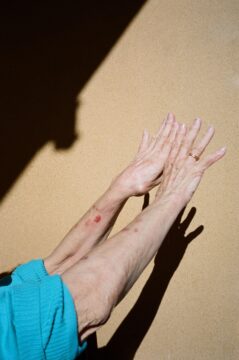 Meet my patient Mrs. L. R. She’s 98 years young and has never suffered a day of serious illness in her long life. She was referred to me by her primary care physician to assess her
  It was a cold, gray afternoon in December, and at the American Museum of Natural History, a half million leaf-cutter ants were hunkered down in their homes. The ants typically spend their days harvesting slivers of leaves, which they use to grow expansive fungal gardens that serve as both food and shelter. On many days, visitors to the
  What is the history of bureaucracies? Where did the concept originate, and how has it evolved?
 Wintour is the longtime editor in chief of Vogue and the chief content officer for the publishing behemoth Condé Nast, whose stable of magazines includes Bon Appetit, Teen Vogue and New Yorker. She is the mastermind behind the Met Gala, which lit up the pop culture cosmos earlier this month. In many respects, Wintour, at 75, remains the most recognizable face of the fashion establishment. But fashion, at the level where Wintour has long served as gatekeeper, and with its subjective assessment of aesthetics, has struggled more than most industries with diversity and inclusivity, from the pages of its magazines to its corporate boardrooms. And despite moments of intense focus on racial justice, big changes have often been superficial and real change has been slow.