
Category: Recommended Reading
Sunday Poem
The Night Poetry Danced With Us
Orlando 49
emblazoned on the back of a t-shirt
worn by a white queer
who looked through and past
our table of Latinx, Indigenous, Black, Muslim queers
right in front of her
as if we never existed
as if we were not sitting there
laughing and thriving
radiating life
insistent in our brown, black, mixed skinned existence
as if we were not the brilliance of the sun streaking fire
when it decides to go down on the horizon
as if you were not our queer siblings
familia yaars dildars
our amours our pyars
our everything
shaking beautiful bronzed hips
the night poetry danced with us
before being shot
the night poetry danced with us
before being assumed to be a shooter
the night poetry danced with us
before it became second nature
to check for exits
the night poetry danced with us
before bullets replaced stanzas
before the breath of our beloveds
became a line break
with too much finality
the night poetry danced with us
before we understood
some only value our lives
after we are gone
the night poetry danced with us
until we realized
we were the poem
by Amal Rana
from Split This Rock
Saturday, August 15, 2020
Geoeconomics and the Balance of Payments
Dreams and Nightmares of the World’s Middle Classes
 Goran Therborn in the New Left Review:
The world has been getting contradictory messages about its class structure. According to one authoritative account, it has reached a ‘global tipping point’—‘half the world is now middle class or wealthier’. This was based on figures marshalled by Homi Kharas, a former World Bank chief economist now at Brookings. More excitably, the Economist has hailed the ‘relentless rise’ of a ‘burgeoning bourgeoisie’ and trumpeted the arrival of a middle-class world. Yet serious scholarship also assures us of the opposite: according to Peter Temin, emeritus professor of economics at mit, we should be concerned about ‘the vanishing middle class’. Readers could be forgiven for feeling bewildered. What is going on in economics—and in the economic sociology of the real world? This contribution will examine the varying definitions of ‘middle class’ in play and the contrasting trajectories analysed by development economists, sociologists and financial journalists across the different sectors of the world economy. It will go on to outline a rather different future for the world’s middle classes than either of the extremes suggested here. But first, a few historical and conceptual considerations may be in order, for the concept of the ‘middle class’ has long given rise to debate.
The term ‘middle class’ entered the English language two centuries ago—‘sometime between 1790 and 1830’, according to Eric Hobsbawm—as a rising industrial society overtook the ‘military’ order of monarchy and aristocracy. The nineteenth century saw intensive discussion over where this new society was headed and the place of the middle class within it. The liberal argument was that the task of government should, and would, fall to the middle class, ‘the most wise and the most virtuous part of the community’, as James Mill put it. Had this already been accomplished? For Tocqueville, writing in 1855, the reign of the middle class had been realized not only in the United States but also in France, where the July Revolution of 1830 marked its ‘definitive’ and ‘complete’ triumph. Would the emergent middle-class society lead on to a new and stable political order? In the later decades of the nineteenth century, this was increasingly questioned. Novel ‘isms’ appeared: mobilizing ideas, first and foremost socialism, which theorized ‘middle-class society’ as capitalism, doomed to be overthrown by the expanded ranks of the industrial working class.
More here.
Raj Chetty on the economic impacts of COVID-19: Real-time evidence from private sector data
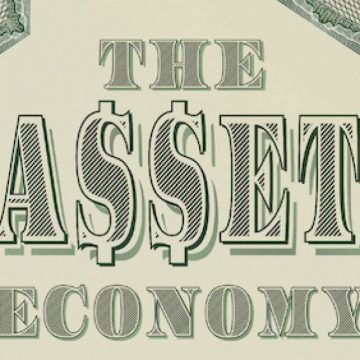
The Asset Economy
 Lisa Adkins, Melinda Cooper, Martijn Konings in the LA Review of Books:
At the start of 2019, The Economist coined the term “millennial socialism” to refer to the growth of strong critical and left-wing sentiments in a generation that until recently was primarily known for its sense of entitlement and its obsession with social media. It noted that a large percentage of young people hold a favorable view of socialism and that “[i]n the primaries in 2016 more young folk voted for Bernie Sanders than for Hillary Clinton and Donald Trump combined.” The Economist acknowledged that some of these millennials may have good reasons for their political sentiments. But it immediately went on to declare that understanding this trend shouldn’t lead us to justify or legitimate it — socialism remains as dangerous as The Economist has always known it is. It views millennial socialism as being too “pessimistic” and as wanting things that are “politically dangerous.” The Sydney Morning Herald followed up in the same month with an opinion piece arguing that while millennial socialism has roots in millennials’ “rising anxiety about their economic prospects” (and in particular the virtual impossibility of ever attaining home ownership in the country’s largest cities), as a political choice it seemed to reflect above all ignorance and the lack of memory of the horrors of communism.
Framing this political shift in terms of a generational schism would seem to rest on flimsy conceptual foundations. Indeed, while generational analysis may be making a return to public debate, where the mainstream press loves to cover millennials, among social scientists it has largely gone out of fashion. The idea that being born around the same time or experiencing the same historical events at the same age produces a natural solidarity or a similar experience of life is now considered overly simplistic. It is typically seen as too abstracted from a range of other structural inequalities that would seem to have far greater bearing on people’s position in the social hierarchy. Just as there are poor baby boomers, so there are fabulously wealthy millennials.
Yet some element of generational distinction seems to be playing an undeniable role in the logic of the present. So what do we make of this?
More here.
The Death and Rebirth of American Internationalism
 Edward Fishman in the Boston Review:
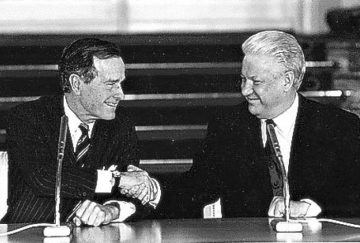
While the implementation of U.S. foreign policy has fluctuated widely across administrations, the overarching aims have remained remarkably stable since the end of the Cold War. From George H. W. Bush’s “new world order” to Bill Clinton’s “democratic enlargement,” George W. Bush’s “freedom agenda” to Barack Obama’s “rules-based international order,” the goal has been to extend the reach of democracy and free markets around the globe. During the Cold War, the United States and its allies built one international order, and the Soviet Union built another. For the past thirty years, the United States has sought to universalize the order that survived the fall of the Berlin Wall—a project we can call liberal universalism. Its objective—expanding an order that already existed—explains why there has been little innovation in international organizations since the end of the Cold War, whereas Washington has labored to increase membership in institutions that predate 1989.
The fourth year of Trump’s presidency has ended this history. To be sure, the viability of liberal universalism has been waning for some time—the 2003 invasion of Iraq, the 2008 financial crisis, and the 2016 presidential election sowed serious doubts about the United States’ global role, economic stewardship, and democratic processes. But Washington’s flailing response to COVID-19 has been the nail in the coffin, calling into question the basic competence of the American state and the cohesion of American society. We now face widespread disillusionment not only with U.S. leadership, but with the American political and economic model itself: a crisis of confidence caused by a crisis of competence. Even if Trump loses in a landslide in November, restoring liberal universalism is no longer feasible or desirable.
More here.
The Two Philosophies of Wittgenstein
https://www.youtube.com/watch?v=qm1XcODLKvk
Kingdom of Dolls
Brianna Beehler at Public Books:

Nowhere in Europe were more dolls born in the 19th and 20th centuries than in Sonneberg, Germany, the former center of Europe’s toy-making industry. Sonneberg, like a child lost without breadcrumbs to follow, lies hidden in the heart of the Thuringian forest. The surrounding forest initially supported a successful wood-carving toy trade. But it was the introduction of papier-mâché in the early 19th century—a technique that uses molds rather than individual wood carvings—that spurred mass production.
By the end of the 19th century, Sonneberg was well known for crafting and distributing toys of all kinds, but it was particularly famed for its doll-making industry. This booming production drew vendors and tourists from near and far, who came to witness the origins of children’s playthings.
more here.
Indigenous Writers Are Changing Sci-Fi
Alexandra Alter at the NYT:
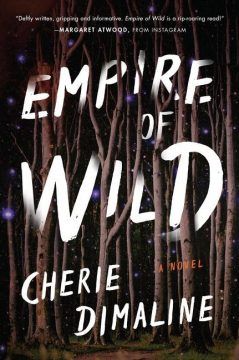 Roanhorse said she started out writing “Tolkien knockoffs about white farm boys going on journeys” because she figured that’s what epic fantasy was supposed to be. After deciding to feature a Native woman as the hero, in 2018 she released “Trail of Lightning,” the first novel in a four book fantasy series. Set on a reservation after a flood destroys most of North America and reawakens traditional gods and monsters, the series centers on a Navajo woman named Maggie, who has superhuman monster-slaying powers, and features sacred figures from Navajo mythology like Coyote and Neizghání, one of the Hero Twins.
“The stories that I’m writing, these are the traditional American gods,” Roanhorse said. Some see the rise of Indigenous sci-fi as a natural extension of Native American narrative traditions, which often have sci-fi elements, like tales about visitors from outer space and a creation myth about humanity descending from the sky.
more here.
Making Your Zoom Look More Professorial
Saturday Poem
When One Has Lived a Long Time Alone (excerpt)
When one has lived a long time alone,
one refrains from swatting the fly
and lets him go, and one is slow to strike
the mosquito, though more than willing to slap
the flesh under her, and one hoists the toad
from the pit too deep to hop out of
and carries him to the grass, without minding
the poisoned urine he slicks his body with,
and one envelops, in a towel, the swift
who fell down the chimney and knocks herself
against window glass, and releases her outside
and watches her fly free, a life line flung at reality,
when one has lived a long time alone.
by Galway Kinnell
from When One Has Lived a Long Time Alone
Houghton Mifflin, 1990
A Vision of Healthcare In a Post COVID-19 World
Raphael Rakowski in Scientific American:
A new set of forces emerging from this crisis will drive healthcare delivery in the years to come.
 Uncoupling healthcare assets from healthcare services: Using technology and next-generation logistics, many healthcare services will be uncoupled from their facility-based operations. The explosion of telemedicine over the past 60 days, substituting for the legacy in-person physician visit, points to a future in which the home is the optimal site of medical care.
Patients as the organizing principle for healthcare delivery: While talk of patients becoming consumers has been growing for years, consumer power has yet to fully materialize. Driving this incoherence between providers of care and patients receiving that care are intermediary third parties (i.e. insurance companies, Medicare and Medicaid) that pay for the care received by patients. In the future, when patient co-pays and deductibles reach intolerable levels, those patients will demand value, convenience and customer service from their healthcare.
Artificial intelligence, point-of-care diagnostics, and wearable biometric monitoring: These three core technologies, more than any others, will help propel a decentralized care delivery platform. AI will democratize optimum medical care by using large amounts of patient data and best-practice evidence to guide diagnosis and treatment. Point of care diagnostics technologies (think of the Tricorder in Star Trek) will allow medical providers to have instant confirmation of patient diagnoses in decentralized settings. This will reduce costs and accelerate access to appropriate treatment. Wearable biometric monitoring devices will allow patients and medical providers to remotely monitor their medical status, allowing for safe medical care at home or in other decentralized care sites.
Next-generation paramedics: To bring care to patients when and where they need it, paramedics, tethered to physicians in centralized medical command centers, will receive increased training to deliver rapid care to patients wherever they are.
Houses of worship and religion: With growing pressures on the economy and the increase in unemployment and homelessness, the number of Americans on Medicaid roles will grow, and with that growth, there will be a need to provide lower cost creative sites of medical care in the community. Churches, mosques and synagogues will become community-based sites of care delivery for under-served patients.
Clinical trials at home: With a decentralized healthcare delivery chassis in place, clinical trials will be conducted in patients’ homes, enabling a democratization of access to advanced experimental therapies.
More here.
Ottessa Moshfegh: ‘Americans are really good storytellers and really good liars’
Lisa Allardice in The Guardian:
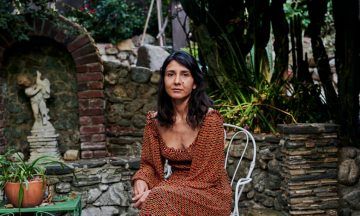 Routinely hailed as one of the most exciting young American authors working today, she has been compared to Flannery O’Connor, Shirley Jackson and Charles Bukowski (one of her heroes). Her characters are a miserable ensemble of drunks and dropouts, misfits and murderers, pervs and pill-heads – all loners. And she has created an inimitable band of angry, sometimes amoral, often unpleasant and always unreliable narrators, who challenge our assumptions about femininity in uncomfortable ways. Her work takes dirty realism and makes it filthier. But it is is also beautiful: “like seeing Kate Moss take a shit”, as she memorably described her writing; the depravity of her material matched by the purity and precision of her prose (a sort of American Edward St Aubyn, minus the aristos). Just don’t call her a millennial writer, “even though I am millennial”, says the author, who turns 40 next year. “There’s nothing flattering at all about the description right now.”
…The pandemic has provoked “a kind of war-like situation” in the US, she says. But the rise of Black Lives Matter and the recent Native American protests against Trump’s speech at Mount Rushmore have given her hope, despite “everything else that is coming to the surface, which is so rotten and so overdue in its exposure”. Americans are “really good storytellers and really good liars”, she says, especially about their country’s history. “It’s over! Enough of us have woken up … have disabused ourselves of a fantasy that everything is OK here because our own lives are fine.” Of course “things can always get worse”, she says, especially “if Trump is re-elected. You can’t underestimate the incredible power of stupidity.”
More here.
Friday, August 14, 2020
Dickens in Brooklyn
Jay Neugeboren in the New York Review of Books:
 My parents were married at six o’clock on Sunday evening, October 25, 1936, at the Quincy Manor in the Bedford-Stuyvesant section of Brooklyn, and a week or so later, they began clipping coupons from the front page of The New York Post, one coupon a day, and mailing them to the Post, twenty-four coupons at a time, which coupons, along with ninety-three cents, brought them four volumes of a twenty-volume set of The Complete Works of Charles Dickens, a set that, with full-page illustrations, was printed from plates Harper & Brothers had used for older, more expensive sets. The Post’s promotion began in January 1936 and expired on May 16, 1938, two weeks before I was born. And when, eighty-two years later, in the week of June 9, 2020—a week that marked the 150th anniversary of Dickens’s death—I was isolated in my New York City apartment due to the Covid-19 lockdown, it occurred to me that this might be a good time to do what I’d often thought of doing: reread all of Dickens.
The Post was the first newspaper in the United States to offer complete sets of Dickens. This kind of marketing campaign, whose primary purpose was to increase circulation, was known as a “continuity” program, and it originated in England, where a young Englishman, John Stevenson, had used similar promotional methods to help increase the circulation of the London Daily Herald from 350,000 to over a million within a year. In 1936, when he was twenty years old, Stevenson came to New York and worked for The Post.
More here.
Transgender and gender diverse people up to six times more likely to be autistic
Varun Warrier and Simon Baron-Cohen in The Conversation:
 In our latest study, published in Nature Communications, we found that transgender and gender-diverse adults were between three and six times more likely to be diagnosed as autistic compared with cisgender adults. But this only includes diagnosed autism – and many adults on the spectrum may be undiagnosed. We estimate that around 1-1.5% of the global population may be autistic. This would suggest that somewhere between 3-9% of transgender and gender-diverse adults may be autistic.
We also found that, regardless of an autism diagnosis, transgender and gender-diverse adults were also more likely to report a higher level of autistic traits compared with cisgender adults. We know that autism may present slightly differently in cisgender men and women. Yet we don’t know if autism presents differently in transgender and gender-diverse individuals – and this is something we need to understand to ensure that doctors can better identify autism in this group.
More here.
The Language of Being Human
What We Can Learn From India’s Improbable Democracy
Ashutosh Varshney in the Boston Review:
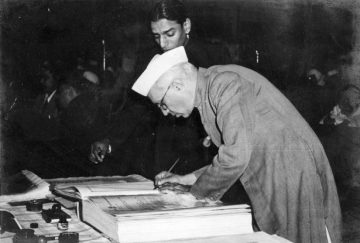 This August India celebrates seventy-three years as an independent nation. During these decades of independence, the country has been run democratically (aside from the twenty-one months of the infamous Emergency from 1975 to 1977). With the exception of Costa Rica, no other developing country has enjoyed as long a democratic run since World War II. And in the case of Costa Rica, it is worth bearing in mind that the country is small, with a GDP per capita six times that of India’s (in 2019 Costa Rica’s GDP per capita was $12,238, while India’s was $2,104). Modern democratic theory holds that democracies generally live longer when their citizens have higher levels of income. And in societies with lower incomes, the mortality rate of democracy is often high. For decades now India has defied this conventional scholarly wisdom.
Surprise at India’s democratic success is well documented. Barrington Moore was the first major social scientist to note the uncommon and the unexpected. In 1966 he observed that “as a political species, [India] does belong to the modern world. At the time of Nehru’s death in 1964 political democracy had existed for seventeen years. If imperfect, the democracy was no mere sham.” Half a decade later, in 1971, Robert Dahl—arguably the most influential figure in democratic theory—wrote that India was a “deviant case . . . indeed a polyarchy.”
More here.
Friday Poem
For My Brothers
My brother was a dark-skinned boy
with a sweet tooth, a smart mouth,
and a wicked thirst. At seventeen,
when I left him for America, his voice
was staticked with approaching adulthood,
he ate everything in the house, grew
what felt like an inch a day, and wore
his favorite shirt until mom disappeared it.
Tonight I’m grateful he slaked his thirst
in another country, far from this place
where a black boy’s being calls like crosshairs
to conscienceless men with guns and conviction.
I remember my brother’s ashy knees
and legs, how many errands he ran on them
up and down roads belonging to no one
and every one. And I’m grateful
he was a boy in a country of black boys,
in the time of walks to the store
on Aunty Marge’s corner to buy contraband
sweeties and sweetdrinks with change
snuck from mom’s handbag or dad’s wallet—
how that was a black boy’s biggest transgression,
and so far from fatal it feels an un-American dream.
Tonight, I think of my brother
as a black boy’s lifeless body spins me
into something like prayer—a keening
for the boy who went down the road, then
went down fighting, then went down dead.
My brother was a boy in the time of fistfights
he couldn’t win and that couldn’t stop
him slinging his weapon tongue anyway,
was a boy who went down fighting,
and got back up wearing his black eye
like a trophy. My brother who got up,
who grew up, who got to keep growing.
Tonight I am mourning the black boys
who are not my brother and who are
my brothers. I am mourning the boys
who walk the wrong roads, which is any road
in America. Tonight I am mourning
the death warrant hate has made of their skin—
black and bursting with such ordinary
hungers and thirsts, such abundant frailty,
such constellations of possibility, our boys
who might become men if this world spared them,
if it could see them whole—boys, men, brothers—human.
by Lauren K. Alleyne.
from the Academy of American Poets
An Open Letter to My Sister, Miss Angela Davis
James Baldwin in The New York Review of Books:
Dear Sister:
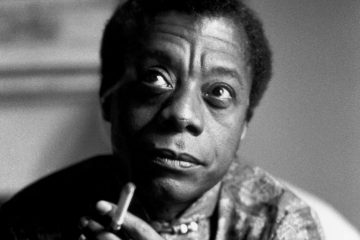
One might have hoped that, by this hour, the very sight of chains on black flesh, or the very sight of chains, would be so intolerable a sight for the American people, and so unbearable a memory, that they would themselves spontaneously rise up and strike off the manacles. But, no, they appear to glory in their chains; now, more than ever, they appear to measure their safety in chains and corpses. And so, Newsweek, civilized defender of the indefensible, attempts to drown you in a sea of crocodile tears (“it remained to be seen what sort of personal liberation she had achieved”) and puts you on its cover, chained.
You look exceedingly alone—as alone, say, as the Jewish housewife in the boxcar headed for Dachau, or as any one of our ancestors, chained together in the name of Jesus, headed for a Christian land.
Well. Since we live in an age in which silence is not only criminal but suicidal, I have been making as much noise as I can, here in Europe, on radio and television—in fact, have just returned from a land, Germany, which was made notorious by a silent majority not so very long ago. I was asked to speak on the case of Miss Angela Davis, and did so. Very probably an exercise in futility, but one must let no opportunity slide.
Iam something like twenty years older than you, of that generation, therefore, of which George Jackson ventures that “there are no healthy brothers—none at all.” I am in no way equipped to dispute this speculation (not, anyway, without descending into what, at the moment, would be irrelevant subtleties) for I know too well what he means. My own state of health is certainly precarious enough. In considering you, and Huey, and George and (especially) Jonathan Jackson, I began to apprehend what you may have had in mind when you spoke of the uses to which we could put the experience of the slave. What has happened, it seems to me, and to put it far too simply, is that a whole new generation of people have assessed and absorbed their history, and, in that tremendous action, have freed themselves of it and will never be victims again. This may seem an odd, indefensibly impertinent and insensitive thing to say to a sister in prison, battling for her life—for all our lives. Yet, I dare to say, for I think that you will perhaps not misunderstand me, and I do not say it, after all, from the position of a spectator.
I am trying to suggest that you—for example—do not appear to be your father’s daughter in the same way that I am my father’s son.
More here.