
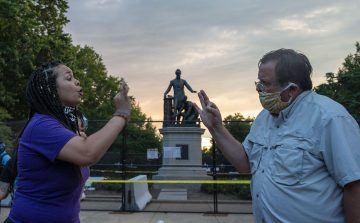
Kenan Malik in the NYRB:
“We stand today at the national center to perform something like a national act—an act which is to go into history.”
So said the great nineteenth-century former slave and staunch abolitionist Frederick Douglass at the unveiling of the Emancipation Memorial in Lincoln Park, Washington, D.C., in 1876. “That we are here in peace today,” Douglass told a crowd of almost 25,000, many of them African-American, “is a compliment and a credit to American civilization, and a prophecy of still greater national enlightenment and progress in the future.”
The idea for the memorial had come originally from former slave Charlotte Scott, of Virginia, who wanted a monument in honor of Abraham Lincoln. She gave five dollars to begin a funding drive, and the monument was eventually paid for entirely by former slaves.
Almost a hundred and fifty years later, many African Americans feel differently about the memorial. In June, Black Lives Matter protesters attempted, unsuccessfully, to topple the statue. D.C. Congresswoman Eleanor Holmes Norton vowed to introduce legislation to have the memorial removed. The Boston Art Commission unanimously resolved to take down a copy of the statue in Boston.
Some critics of the statue view Lincoln as a false friend of African Americans. Others see the statue itself as demeaning, with Lincoln represented as standing upright, while the free black man is on his knees. For defenders of the statue, on the other hand, to remove it is to erase a memorial paid for by former slaves and anointed by Douglass. It is to besmirch black history itself.
What is striking in this contemporary debate is that there is nothing new about it.
More here.
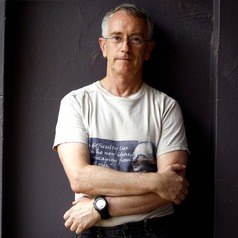
 Isabella Weber in The Guardian:
 Jacob Bacharach in TruthDig:
 Astra Taylor in The New Republic:
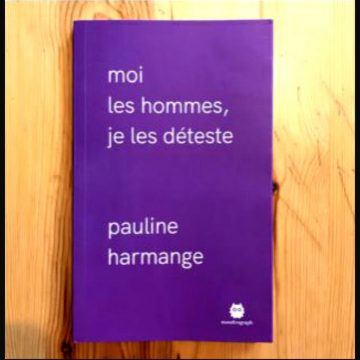 When Pauline Harmange, a French writer and aspiring novelist, published a treatise on hating men, she expected it to sell at the most a couple of hundred copies among friends and readers of her
 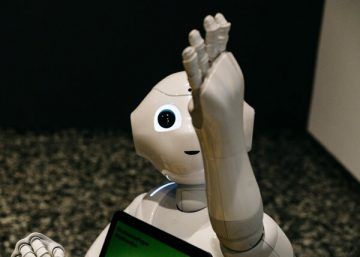 “Science fiction is not about the future,” the sci-fi novelist Samuel R. Delany wrote in 1984. The future “is only a writerly convention,” he continued, one that “sets up a rich and complex dialogue with the reader’s here and now.” That is a useful way of understanding all the many pop nonfiction books that speculate about the technologies of the future, and attempt to divine their effects on human beings. Their predictions depend on how well they interpret the present.
 There are in
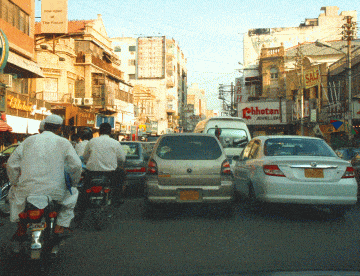
 The city of Abbottabad, in the former North-West Frontier Province of Pakistan, was named after James Abbott, a 19th-century British Army officer and player in the “Great Game,” the power struggle in Central Asia between the British and Russian Empires. Today it’s perhaps best known as the garrison town that sheltered Osama bin Laden before he was
  Mark Blyth is stumped. He’s the people’s economist who speaks the people’s language through his thick working-class Scottish accent. He hasn’t gone silent in the pandemic ruins of our prosperity. He’s as noisy as ever, but he’s dumbfounded by his adopted people, us American people who can’t see the trouble we’re in. The hardship of the pandemic is real and unfair, he’s saying, and the problem is obvious and deep: that forty million Americans don’t have enough to eat, at the same time our billionaire class, having poisoned our politics, has grown billions richer week by week through the COVID disaster.
 Dear H,
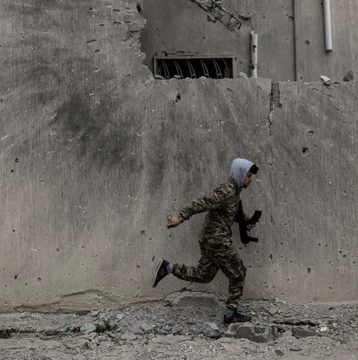 Summer always seems to be the cruelest season in the Middle East. The examples include the June 1967 war, Israel’s invasion of Lebanon in 1982, the hijacking of Trans World Airlines Flight 847 in 1985, Saddam Hussein’s invasion of Kuwait in 1990, and the Islamic State’s rampage through Iraq in 2014. The summer of 2020 has already joined that list. But the world should also be attuned to another possibility. Given how widespread bloodshed, despair, hunger, disease, and repression have become, a new—and far darker—chapter for the region is about to begin.
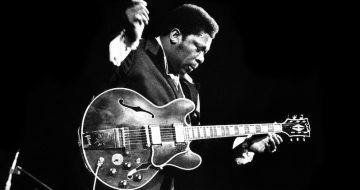 B.B. King, Indianola, Mississippi, 2013—The fat red sun settled against the horizon, throwing a last honey-sweet light across the humid evening and over a small crowd on the lawn beside a railroad track that cut through the cotton fields beyond. A quarter-moon was rising and a chorus of cicadas serenaded the imminent twilight, now joined by the sound of the band; the drummer caught the backbeat and the compere announced: “How about an Indianola hometown welcome for the one and only King of the Blues—B.B. King!”
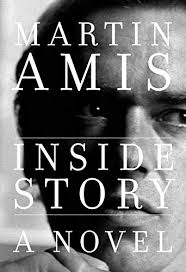 A novel tells you far more about a writer than an essay, a poem, or even an autobiography,” says Martin Amis. He then adds, “My father thought this, too.” This statement is especially intriguing in light of his soon-to-be-published book,
 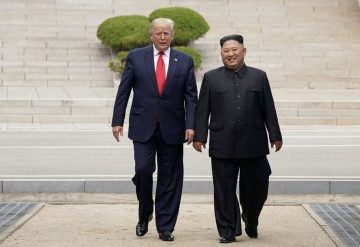 Four days before ordering a drone strike against the Iranian military commander Qassem Suleimani, Donald Trump was debating the assassination on his own Florida golf course, according to Bob Woodward’s new book on the mercurial president.