
Rebecca Onion in Slate:
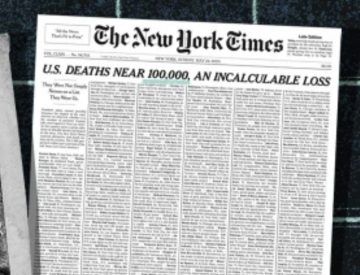 At first, some believed the numbers of Americans dead of the coronavirus might stay in the five figures. Then, as the toll climbed into six, some grieved, some grew numb, some made comparisons to the numbers lost in wars, some threw up every possible defense to deny that these numbers mattered. How is it that so many deaths—194,000 in the U.S. as of this weekend’s official count—can feel so intangible, so hard for so many people to fathom?
Jacqueline Wernimont, a historian who writes about quantification and commemoration, has been watching this unfold and feeling no small sense of déjà vu. Wernimont’s book, Numbered Lives: Life and Death in Quantum Media, is a history of the way we came to quantify mass death—and how those numbers have, too often, blunted the pain of those deaths. We spoke recently about the blurry historical line between “bills of mortality” in plague times and COVID dashboards, and why numbers can make some people feel, and others stop feeling. Our conversation has been condensed and edited for clarity.
Rebecca Onion: In your book, you point to the bills of mortality, which publicized the numbers of dead during 17th century plague epidemics in London, as a first instance of media that people in the middle of an outbreak could use to keep up with death counts. What were the bills of mortality, for the unfamiliar?
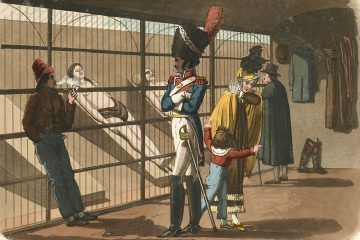
Jacqueline Wernimont: The bills were publications, but also internal government documents. They were often published as broadsides—longer pieces of paper that could be nailed to poles or put in taverns or, say, at the entrance of London Bridge. They were sold as a single sheet for about 2 pence in the market and were compiled by what was known as the “Worshipful Company of Parish Clerks,” an incorporated group that had a royal warrant to gather information about people who had died and to publish and sell it.
The practice of gathering deaths and birth information had been going on for a long time, back to the medieval period, but around this time the tradition shifted.
More here.
 Many have called for a people’s vaccine for COVID-19—a vaccine provided universally and accessibly to the entire world population. The moral arguments may be familiar, but economics supports the case, too. Economics also helps to explain what role the public sector should play in developing a people’s vaccine and how such efforts should be coordinated across countries.
 We’re seeing
 From the start, Lopes makes clear the fusion of style and substance that, no less than the fusion of reportage and reënactment, gives “Belarmino” its (and Belarmino his) artistic identity. The boxer—a former
  You’d think that overseeing an entire issue of The Scientist focused on artificial intelligence would cause my mind to wander far into the future—robotic researchers formulating digital hypotheses, whizzing about in sleek, metallic labs. But immersing myself in stories about the novel insights and deep analyses enabled by smart instruments and machine learning did not transport me into a vision of science in the 23rd century.
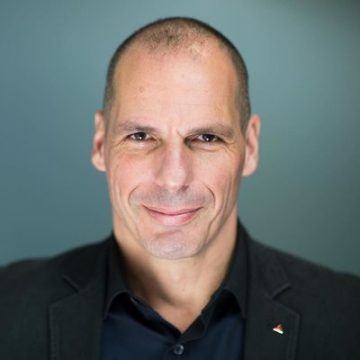 Leftists excel at pinpointing what is wrong with capitalism. We wax lyrical about the possibility of some “other” world in which one contributes according to one’s capacities and obtains according to one’s needs. But, when pushed to describe a fully fledged alternative to contemporary capitalism, for many decades we have oscillated between the ugly (a Soviet-like barracks socialism) and the tired (a social democracy that financialised globalisation has rendered infeasible).
 Covid-19
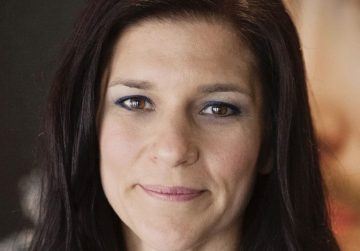 The term “super recognizer” first appeared in 2009 and describes people who can remember more than 80 percent of the faces of people they meet (the average is 20 percent). The neural-mechanism behind super recognition is still largely unknown, but the skill seems to be genetic and possessed by only about one percent of the population.
 Though domestic violence constitutes one of the direst public health and criminal justice crises in the country, its gravity has been a belated and recent revelation in the American psyche, one many would still consider provisional. Around one in four American women will be harmed by a partner over the course of their lives, and while violent crime has declined in recent years, homicides due to domestic violence have not. Over half of the women killed in this country are killed by a loved one. Covid-19’s stay-at-home orders have left those suffering domestic violence more cut off from resources to protect them from abuse, including formal services like health care and shelters, as well as sites of informal social control like public playgrounds and churches, which have been shown to regulate the occurrence of abuse.
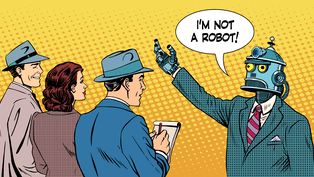 One of the most salient features of our culture is that there is so much bullshit.” These are the opening words of the short book On Bullshit, written by the philosopher Harry Frankfurt. Fifteen years after the publication of this surprise bestseller, the rapid progress of research on artificial intelligence is forcing us to reconsider our conception of bullshit as a hallmark of human speech, with troubling implications. What do philosophical reflections on bullshit have to do with algorithms? As it turns out, quite a lot.