
David Graham in The Atlantic:
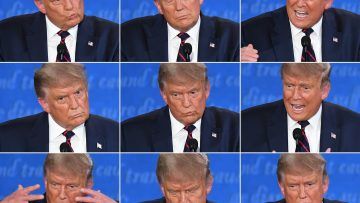 Pity the poor closed-caption writers. Pity the poor ASL interpreters. But most of all, pity poor us, the American electorate.
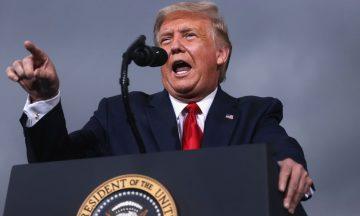
Tonight was the first presidential debate of the 2020 election, and if there is any sense or mercy left in this nation, it will be the last too. The event was a shambolic shout fest, with scarcely a single morsel of substance to be found. President Donald Trump, the Republican candidate, lied repeatedly, refused to condemn racist groups even after explicitly offering to do so, and sought to undermine trust in the election. Former Vice President Joe Biden, the Democrat, meandered through his positions, only occasionally finishing a sentence. Moderator Chris Wallace lost control within minutes and never regained it.
Voters who tuned in hoping to learn something new about either man’s plans for the country, or about his character, must have realized early on that they were in the wrong place. The three septuagenarians onstage were speaking over one another within minutes. Trump interrupted Biden; Biden interrupted Trump; Wallace tried to interrupt both, with limited efficacy, especially against Trump, with whom he at one point offered to switch seats.
The president entered the debate most in need of a big night, given that he consistently trails in polls. There is no doubt that he dominated the stage, as was clearly his plan coming in. Whether that actually benefits him is another question. His most effective moment of the night came in a broadside against Biden on the issue of “law and order.” But several months of hard experience show that Americans are appalled by Trump’s handling of racial justice and protests. The president keeps coming back to the issue, hoping it will break through. Perhaps this is the night it will—but don’t place money on it.
More here.
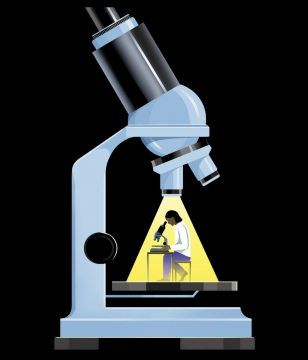 Recorded history is five thousand years old. Modern science, which has been with us for just four centuries, has remade its trajectory. We are no smarter individually than our medieval ancestors, but we benefit, as a civilization, from antibiotics and electronics, vitamins and vaccines, synthetic materials and weather forecasts; we comprehend our place in the universe with an exactness that was once unimaginable. I’d found that science was two-faced: simultaneously thrilling and tedious, all-encompassing and narrow. And yet this was clearly an asset, not a flaw. Something about that combination had changed the world completely.
 How can, and should, we talk to each other, especially to people with whom we disagree? “Free speech” is rightfully entrenched as an important value in liberal democratic societies, but implementing it consistently and fairly is a tricky business. Political theorist Teresa Bejan comes to this question from a philosophical and historical perspective, managing to relate broad principles to modern hot-button issues. We talk about the importance of tolerating disreputable beliefs, the senses in which speech acts can be harmful, and how “civility” places demands on listeners as well as speakers.
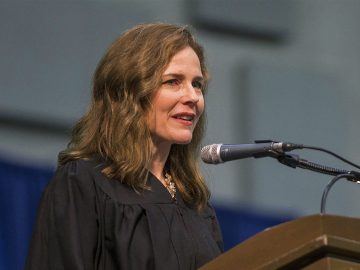 Like many other liberals, I’m devastated by Justice Ruth Bader Ginsburg’s death, which opened the way for President Donald Trump to nominate a third Supreme Court justice in his first term. And I’m revolted by the hypocrisy of Senate Majority Leader Mitch McConnell’s willingness to confirm Trump’s nominee after refusing to even allow a vote on Judge Merrick Garland.
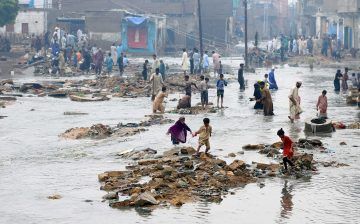 Karachi is home. My bustling, chaotic city of about 20 million people on the Arabian Sea is an ethnically and religiously diverse metropolis and the commercial capital of Pakistan, generating more than half of the country’s revenue. Over the decades, Karachi has survived
 It’s uncontroversial among biologists that many species have two, distinct biological sexes. They’re distinguished by the way that they package their DNA into ‘gametes’, the sex cells that merge to make a new organism. Males produce small gametes, and females produce large gametes. Male and female gametes are very different in structure, as well as in size. This is familiar from human sperm and eggs, and the same is true in worms, flies, fish, molluscs, trees, grasses and so forth.
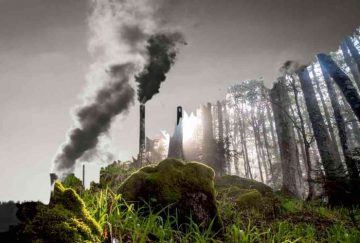 Over a decade ago, California put a price on carbon pollution. At first glance the policy appears to be a success: since it began in 2013, emissions have declined by more than
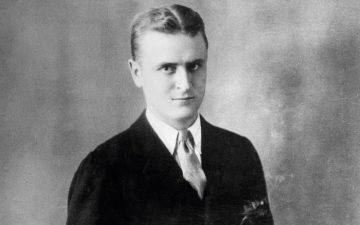 Maybe my book is rotten,” F Scott Fitzgerald told a friend, in February 1925, shortly before the publication of The Great Gatsby, “but I don’t think so”. If the first half of his sentence was perfunctory, the second half was the wildest kind of understatement. By that point, Fitzgerald knew what he had achieved. Six months earlier, he informed Maxwell Perkins, his editor at Scribner’s, that his work in progress “is about the best American novel ever written”. And Perkins’s reaction had done little to shake his sense of confidence. He called the book “a wonder”, adding: “As for sheer writing, it’s astonishing.”
 What is America really fighting over in the upcoming election? Not any particular issue. Not even Democrats versus
  Katrina vanden Heuvel in The Nation: