Emma Garman in The Paris Review:
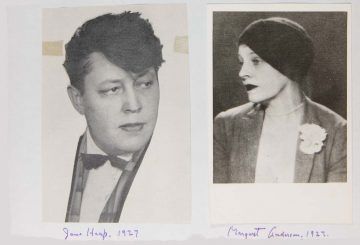 In the early thirties, for a certain clique of Left Bank–dwelling American lesbians, the place to be was not an expat haunt like the Café de Flore or Le Deux Magots. Nor was it Le Monocle, the wildly popular nightclub owned by tuxedoed butch Lulu du Montparnasse and named for the accessory worn to signal one’s orientation. According to the writer Solita Solano, the “only important thing in Paris” was a study group on the philosophies of the Greek-Armenian mystic George Ivanovich Gurdjieff, held at Jane Heap’s apartment. Heap, a Kansas-born artist, writer, and gallerist, was Gurdjieff’s official emissary, a rare honor. Under her supervision, the group engaged in intense self-revelation, narrating the stories of their lives without censoring or embellishing. As the author Kathryn Hulme explained in her memoir, Undiscovered Country: A Spiritual Adventure, the goal was to uncover the real I and thus escape being “a helpless slave to circumstances, to whatever chameleon personality took the initiative.”
Among those who gathered in Heap’s small sitting room were Janet Flanner, the New Yorker Paris correspondent and Solano’s lifelong partner; the journalist and author Djuna Barnes; and the actress Louise Davidson. One attendee, Hulme noted, would enter the room “like a Valkyrie” and “knew how to load the questions she fired at Jane, how to bait her to reveal more than perhaps was intended for beginners.” The Valkyrie was Margaret Caroline Anderson, founder of the trailblazing Little Review, with whom Heap had first encountered Gurdjieff in New York in the early twenties. Heap and Anderson, whose friendship outlasted a love affair and a professional partnership, were kindred geniuses with an exclusive affinity. When Barnes, after a fling with Heap, marveled at her “deep personal madness,” Anderson replied: “Deep personal knowledge—a supreme sanity.” Heap called Anderson “my blessed antagonistic complement.” Via their shared endeavors and the cross-pollination of their ideas—artistic, literary, and spiritual—these two remarkable women left an indelible imprint on avant-garde culture between the wars.
More here.

 Hydraulic fracturing — the controversial oil and gas extraction method usually called “fracking” — has divided Democrats and the political left for a decade now. Many in the environmental community claim that allowing fracking is incompatible with climate action. Others, including Joe Biden and Kamala Harris, take a more nuanced position: During their respective debates, both Biden and Harris emphasized that a Biden-Harris administration would not ban fracking.
 From Jacob Blake, to George Floyd, to Breonna Taylor, 2020 has seen immense pressure to re-examine how the police interact with society. The oft-cited statistic that Black individuals are
 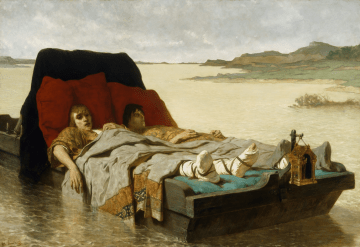 When one thinks about the Merovingians—and, really, who doesn’t?—one seldom thinks of the Mediterranean. There is good reason for that. Whatever else the Merovingians may have been, they were a hodgepodge of northern clans, tribes, and kingdoms who came from one end of the northern tier of Europe and settled eventually in the other. They drank beer rather than wine; cooked in lard rather than olive oil; avoided cities as centers of evil spirits; had little literature that we know of and less science; had no ships other than rivercraft; and lived, fought, and died on scattered parcels of farmland cleared from the immense, dense forest of the continent. That is not to say they fitted the prejudiced Dark Age caricature of them as mere “barbarians”—a kind of gruesome but temporary way station between the glories of Rome and Aachen. As shown by a generation of scholars from Walter Goffart and Ian Wood to Chris Wickham, Andreas Fischer, and Peter Heather, the period from Rome’s fall to Aachen’s ascent deserves to be studied for its own self and not merely as another of history’s dreary “periods of transition”; after all, every age is one of transition, and the transitions involved—political, cultural, intellectual, technological, and every other type—are usually themselves the chief points of interest.
 Today, Kashmiri writers are of all forms. They write folklore, journalism, novels, blogs, poems, ghazals, nazms: literature can be found scribbled on trees, on social media, in notebooks kept in attics. They write across languages: in Kashmiri, Urdu and English, and within Kashmir lie distinctions, of class, caste and language.
 Like a lot of folks, I occasionally hear people espouse values and beliefs different and often counter to my own. When I was young, I didn’t understand this. Many of these beliefs and positions seemed irrational to me. How could people believe such crazy things? But as I read, traveled and met more people, I learned that values and convictions that might seem strange to me often serve a purpose for others.
 A common refrain in the social sciences is that evolutionary psychological hypotheses are “just-so stories.” Amazingly, no evidence is typically adduced for the claim—the assertion is usually just made tout court. The crux of the just-so charge is that evolutionary hypotheses are convenient narratives that researchers spin after the fact to accord with existing observations. Is this true?
 In 2020, much of the public discussion of social issues revolves around notions of identity. Ideas about race, reformulations of gender, and considerations of class or religious confession. But it is not often stated that these identity categories are qualitatively different, and these differences have different implications for the real world. Some reflection on the real-world consequences of identity ought to make this apparent. Why is a party based on working-class solidarity far less sinister than a party based on a racial or ethnic group? Perhaps because being working-class is not a fixed identity, and solidarity is open to all. One’s race or ethnicity is viewed as more static. Most of us can imagine struggling to pay bills and keep a roof over our heads, but few can imagine being another race. Race-thinking is anti-empathetic by its nature.
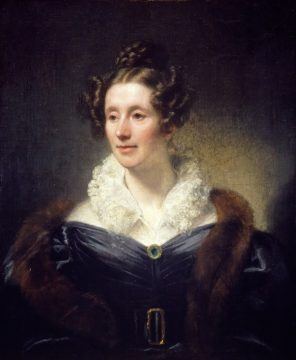 Despite her precocity and her early determination, it took Somerville half a lifetime to come abloom as a scientist — the spring and summer of her life passed with her genius laying restive beneath the frost of the era’s receptivity to the female mind. When Somerville was forty-six, she published her first scientific paper — a study of the magnetic properties of violet rays — which earned her praise from the inventor of the kaleidoscope, Sir David Brewster, as “the most extraordinary woman in Europe — a mathematician of the very first rank with all the gentleness of a woman.” Lord Brougham, the influential founder of the newly established Society for the Diffusion of Useful Knowledge — with which Thoreau would take issue thirty-some years later by making a case for
  A direct line runs between the vibrant, colorful, and earthy diction of canting to cockney rhyming slang, or the endangered dialect of Polari used for decades by gay men in Great Britain, who lived under the constant threat of state punishment. All of these tongues are “obscene,” but that’s a function of their oppositional status to received language. Nothing is “dirty” about them; they are, rather, rebellions against “proper” speech, “dignified” language, “correct” talking, and they challenge that codified violence implied by the mere existence of the King’s Speech. Their differing purposes, and respective class connotations and authenticity, are illustrated by a joke wherein a hobo asks a nattily dressed businessman for some change. “’Neither a borrower nor a lender be’—that’s William Shakespeare,” says the businessman. “’Fuck you’—that’s David Mamet,” responds the panhandler. A bit of a disservice to the Bard, however, who along with Dekker and Middleton could cant with the best of them. For example, within the folio one will find “bawling, blasphemous, incharitible dog,” “paper fac’d villain,” and “embossed carbuncle,” among such other similarly colorful examples.
 There’s really nothing in
  The study of memory has always been one of the stranger outposts of science. In the 1950s, an unknown psychology professor at the University of Michigan named James McConnell made headlines—and eventually became something of a
 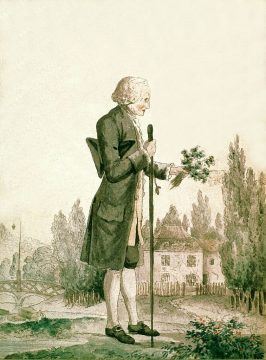 You will recall that while I carried on and on about myself in