
Justin E. H. Smith in Tablet:
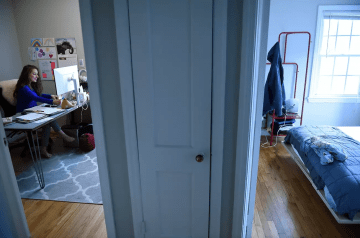 You will surely have heard by now of Jeffrey Toobin. Last week the CNN legal analyst and New Yorker writer was participating in an “election simulation” via Zoom, with other staffers from the magazine and employees of WNYC. Masha Gessen played Donald Trump; Toobin played the courts. At some point, believing his computer’s camera was turned off (or “muted” as he would later say, a confusion that seems to bespeak sincerity), Toobin engaged in a sexual act. He was swiftly suspended from his position at the magazine, and from his role as news analyst at CNN.
I do not wish to say anything more about Toobin. As always with such incidents, it is far more interesting to stop and dwell on what they reveal about our current technological and cultural moment. The social media mobs relished this juicy scandal. The shitposters turned it into a source of easy jokes (election simulation/erection stimulation), while other more purportedly high-minded commentators saw it as yet another opportunity for the display of their own towering high-mindedness and righteousness. This was, they said, standard-fare workplace sexual harassment—perhaps even assault. The possibility of interjecting more humane interpretations was forestalled by accusations that to do so would be to lapse into “himpathy.”
More here.
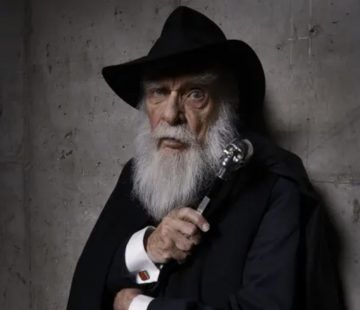 Spoon-benders are unlikely to be the only profession toasting the disappearance – supposing we rule out further hauntings – of Randi, who, being himself a brilliant magician as “The Amazing Randi: The Man No Jail Can Hold” (previously “The Great Randall: Telepath”) was repeatedly more effective than scientists at examining paranormalist claims, sometimes by simply performing their stunts himself.
 Weathered, wiry and in his early 60s, the man stumbled into clinic, trailing cigarette smoke and clutching his chest. Over the previous week, he had had fleeting episodes of chest pressure but stayed away from the hospital. “I didn’t want to get the coronavirus,” he gasped as the nurses unbuttoned his shirt to get an EKG. Only when his pain had become relentless did he feel he had no choice but to come in. In pre-pandemic times, patients like him were routine at my Boston-area hospital; we saw them almost every day. But for much of the spring and summer, the halls and parking lots were eerily empty. I wondered if people were staying home and getting sicker, and I imagined that in a few months’ time these patients, once they became too ill to manage on their own, might flood the emergency rooms, wards and I.C.U.s, in a non-Covid wave. But more than seven months into the pandemic, there are still no lines of patients in the halls. While my colleagues and I are busier than we were in March, there has been no pent-up overflow of people with crushing chest pain, debilitating shortness of breath or fevers and wet, rattling coughs. But surprisingly, even months later, as coronavirus infection rates began falling and hospitals were again offering elective surgery and in-person visits to doctor’s offices, hospital admissions remained almost 20 percent lower than normal.
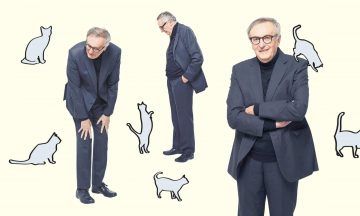 What’s it like to be a cat?
 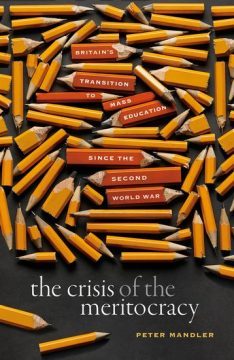 Timothy Larsen over at the LARB:
 Kathleen Tyson over at the Official Monetary and Financial Institutions Forum:
 Gilad Edelman in Wired:
 Salomé Viljoen in Phenomenal World:
 Raphaële Chappe and Mark Blyth debate Sebastian Mallaby in Foreign Affairs (registration required):
 “I have a crazy new way of writing poems,” John Berryman wrote to illustrator Ben Shahn in January 1956. He had indeed hit on something crazy and new: an 18-line structure he ended up calling his “
 W
W No writer understood loneliness better than
 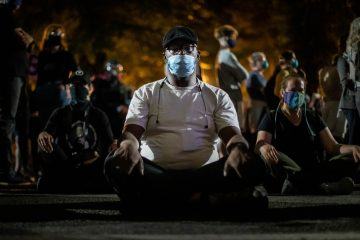 Ah, election season. There’s a patriotic buzz in the air. Bumper stickers and lawn signs all over the neighborhood. Now comes the time when we check the location of our polling places, make a plan to vote—and pack a “go bag” in case we need to take to the streets in sustained mass protest to protect the integrity of the vote count. That last one is not something you’d expect to be doing in the United States, but things are different in the
  Kazim Ali’s latest book of poems is born out of our collective existential crisis. How do we continue to survive “in a world governed by storm and noise”? Creating an ingenious form on the page, Ali uses sound to give us a sort of research project that grapples with this crisis of survival over time. But the project’s beauty manifests from the impossibility of its findings. After all, how is one supposed to answer the colossal question of existence?