 Thea Riofrancos in The Baffler:
GLOBALIZATION IS UNDER ATTACK from all quarters. It’s hard to pinpoint when the discord began: the concept, and the process it grasps, is nearly coterminous with the contention swirling around it. January 1, 1994, the day the North American Free Trade Agreement went into effect, was also the day the Zapatista Army declared war on the Mexican government. In the United States, the alter-globalization movement erupted in the 1999 Battle of Seattle; in the hemisphere, it peaked with the 2005 World Social Forum in Porto Alegre, Brazil, which registered over 150,000 participants. A few years later came the “movements of the squares” as protesters occupied public spaces from Athens to New York to Cairo. These events coincided with an entire era of resistance to free trade and U.S. hegemony in Latin America, culminating in the Pink Tide, which in turn foreshadowed the global spread of populisms left and right that, though diametrically opposed in their diagnoses, targeted the insipid managerialism of market democracies.
And that was just the beginning. Having survived the turbulence of social movements and financial crises, the fate of the flat earth utopia—the dream of a global humanity linked by the sinews of peaceful trade, digital communication, and international institutions, all protected by benevolent American imperialism—entered into yet another phase of uncertainty. Across multiple continents, right-wing nationalism, itself nurtured by neoliberalism, captured state power. Trade wars, withdrawals from multilateralism, and reconfigurations of historic alliances ensued. Global integration already appeared at a nadir when the novel coronavirus emerged in China before spreading everywhere through the pathways of transnational interconnectedness. Supply chains premised on frictionless circulation and just-in-time production ground to a halt; meanwhile, political leaders of all ideological stripes bemoaned “dependency” not just on China, but on globally dispersed production itself, which manufactures everything from the superficial (fast fashion) to the essential (personal protective equipment). In their place, they called for “re-shoring” supply chains, scaling down production to domestic and regional levels, and balancing economic efficiency with newly salient exigencies of public health. Are we witnessing the twilight of globalization?
More here.

 In 1964, a twenty-year-old Canadian singer named Joan Anderson began composing her own folk songs. They were good folk songs, sturdily constructed and memorable, but the genre corseted her. She would need to roam the mountains and plains of rock and jazz in order to claim her gift. Folk was not enough—but it was what was available to her as a young woman from Saskatoon, Saskatchewan, in the early nineteen-sixties, a woman in possession of an ethereal soprano and a four-string baritone ukulele, the instrument she could afford to buy on her own after her mother nixed a guitar. At nineteen, she left home for art school in Alberta—painting was her first creative outlet—and then began touring, playing in coffeehouses or church basements in Toronto and Calgary and Detroit. For her mother Myrtle’s birthday in 1965, Joan made her a tape with three of the songs she had written, “Urge for Going,” “Born to Take the Highway,” and “Here Today and Gone Tomorrow.” In the folk tradition, they celebrate footloose rambling.
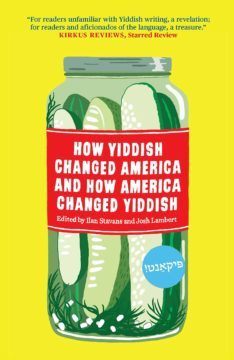 ONE HUNDRED YEARS AGO, when most American Jews were immigrants from Eastern Europe, nearly every Jew in the United States spoke Yiddish, but no one gave it any respect. Today, by contrast, everyone is full of affection for Yiddish, even though almost no one speaks it. Though one hears from every synagogue pulpit and reads in most university Jewish Studies mission statements that Hebrew is the eternal and unifying language of the Jewish experience, Yiddish maintains an emotional claim on the descendants of Eastern European Jews, as well as leaving an indelible imprint on the popular culture created by, for, and among these immigrants and their offspring. Is this valorization of Yiddish commensurate with knowledge and appreciation of — or respect for — the language and the culture it created beyond the lexicon of sentimental melodies, off-color jokes, and redefined adjectives? One could gesture to the 2020 Seth Rogen film An American Pickle without having to answer the question further. Emotional relationships can often lead in nonrational directions, seldom directed by facts.
 Heini Hediger, a noted 20th-century Swiss biologist and zoo director, knew that animals ran away when they felt unsafe. But when he set about designing and building zoos himself, he realised he needed a more precise understanding of how animals behaved when put in proximity to one another. Hediger decided to investigate the flight response systematically, something that no one had done before.
 The beating heart of literature is writers’ engagement with sadness and the conflicts of their time. Many of these conflicts are centred on wealth and access to natural resources: land, water, mineral, forest, stone, sand, clean air. Big money, often with the aid of big media, attempts to shape public opinion about who controls the world, who deserves what, how resources ought to be shared. In a similar vein, traditional hegemonies in India – patriarchy and the caste system – try to control the stories we tell about each other.
 THERE’S A WEALTH OF
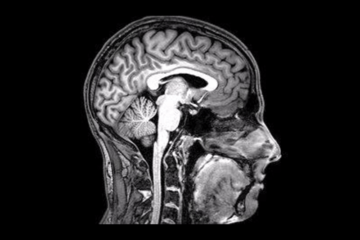 The Covid-19 pandemic has made the world feel lonelier than ever as people have been shut away in their homes, aching to gather with their loved ones again. This instinct to evade loneliness is deeply engrained in our brains, and a new study published in the journal
 More than 40 years ago, three psychologists published
  Gerry Canavan in the LA Review of Books:
 Suzanne Schneider in n+1:
 Nicola Miller in Boston Review:
 Gray never bought the idea that his book was a handbook for despair. His subject was humility; his target any ideology that believed it possessed anything more than doubtful and piecemeal answers to vast and changing questions. The cat book is written in that spirit. If like me you read with a pencil to hand, you will be underlining constantly with a mix of purring enjoyment and frequent exclamation marks. “Consciousness has been overrated,” Gray will write, coolly. Or “the flaw in rationalism is the belief that human beings can live by applying a theory”. Or “human beings quickly lose their humanity but cats never stop being cats”. He concludes with a 10-point list of how cats might give their anxious, unhappy, self-conscious human companions hints “to live less awkwardly”. These range from “never try to persuade human beings to be reasonable”, to “do not look for meaning in your suffering” to “sleep for the joy of sleeping”.
 To write as an ironist, especially today, is to risk that the reader loses patience with hedging, backtracking, spirals of cleverness. But sometimes the layers of the onion ensure the purity of the tears. “That Was Now, This Is Then” is anchored by “Collins Ferry Landing,” an elegy for the poet’s father. Its middle section, in prose, begins by addressing Seshadri’s father in the self-amused voice that is typical for this writer: “I have a friend. (You’ll be glad to know.) She and I work together. (You’ll be glad to know I still have a job.) She’s an ally. She’s sympathetic.” But it turns out that this sympathetic ally has done something terrible. The poet had been speaking about his loss (“I was telling her about you”) and then shied away from it into a galaxy of other subjects (“I was describing cultures of shame evolving across millennia; economies of scarcity versus economies of surplus. … Deep India, strewn with elephants and cobras”). And then the woman does this: “She put her right hand on my left arm and said, ‘He’ll always be with you. In your heart.’”