
Enjoying the content on 3QD? Help keep us going by donating now.
Category: Recommended Reading
When (and Why) Exactly Did Elon Musk Make His Hard Turn to the Right?
Quinn Slobodian and Ben Tarnoff at Literary Hub:
 “The coronavirus panic is dumb,” tweeted Elon Musk in early March 2020, his first public comment on COVID-19. (It was also his first tweet to earn more than one million likes.) To him, the true virus was informational. The cybernetic collective of social media functioned like a communal id, where posts spread not because of their truth but their “limbic resonance.” “You can’t talk people out of a good panic,” Musk told Joe Rogan, “They sure love it.” By late March, he had landed on a new phrase for the phenomenon: a “mind virus.”
It was an interesting choice of words. Social media virality had been Musk’s great asset, the mechanism through which he converted attention into value. But here, virality was being invoked in a negative sense: it wasn’t just about circulation but sickness. The phrase reached back to Richard Dawkins, whose 1993 article “Viruses of the Mind” argued that human consciousness was susceptible to infection by irrational ideas like religion and superstition the way malware infected a computer. For Musk, social media was now the superspreader of such contagions.
More here.
Enjoying the content on 3QD? Help keep us going by donating now.
Poem: “Before the Loon Calls” by David Mason
Enjoying the content on 3QD? Help keep us going by donating now.
Why Do People See Elves When They Take DMT?
Enjoying the content on 3QD? Help keep us going by donating now.
Depravity’s Rainbow: The Cinema of Catherine Breillat
Erika Balsom at Bookforum:
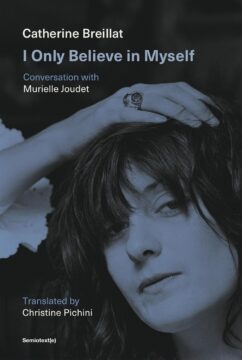 CATHERINE BREILLAT HAS THE HOTS for Rhett Butler. The French novelist and film director mentions the conceited cad played by Clark Gable in Gone with the Wind (1939) no fewer than three times, always in the context of attraction, in I Only Believe in Myself, a book of interviews conducted by Murielle Joudet in 2022 and 2023, now appearing in an English translation by Christine Pichini. It might be unexpected for an auteur closely associated with transgression to so frequently invoke a character from classical Hollywood, a cinema hemmed in by the Hays Code in what it can say or show. When Breillat elsewhere declares her debt to the “absolute violence” of the Comte de Lautréamont’s iconoclastic poetry and asserts that “beauty ought to be cruel and frightening,” it feels more in keeping with the spirit of an oeuvre that has been celebrated, censured, and censored for its fearless depictions of sexuality. From her first book, L’Homme facile (1968), which she published at seventeen only for it to be banned for readers under eighteen, to her most recent film, Last Summer (2023), which presents without condemnation the story of a lawyer’s affair with her teenage stepson, Breillat has gone where few would dare. The breasts of an overweight twelve-year-old, lipstick traced by a stranger around a suicidal woman’s asshole, chopped bits of live earthworms dropped onto the vulva of a teenage character: “I’m not ashamed to show every kind of depravity,” she says. “I’m familiar with it. I don’t glory in it, but I know that it exists.”
more here.
Enjoying the content on 3QD? Help keep us going by donating now.
How Pakistan learned to speak Trump’s language, becoming an unlikely peacemaker
Sussanah George in The Washington Post:
 ISLAMABAD, Pakistan — The country hosting talks to end the Iran war was not a likely mediator. Pakistan does not formally recognize Israel, one of the key countries involved. It became a nuclear power in secret, as the U.S. and Israel have accused Iran of seeking to do. And it did not start off on the right foot with President Donald Trump, who in his first term said Pakistan had given Washington “nothing but lies and deceit.”
But over the past year, a focused campaign to win Trump’s favor appears to have paid off. For months, Pakistan’s leaders wooed the Trump administration with flashy deals and public praise. “We read him right,” said Mushahid Hussain Syed, the former chairman of the Pakistani Senate’s Defense Committee. He said Pakistan recognized Trump’s transactional approach to diplomacy early. “We delivered, and we delivered big time,” Syed said. “We gave him the three C’s: crypto, critical minerals and counterterrorism.”
More here.
Enjoying the content on 3QD? Help keep us going by donating now.
AI doom warnings are getting louder. Are they realistic?
Elizabeth Gibney in Nature:
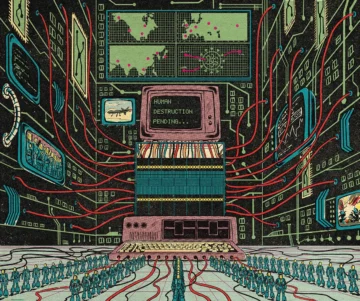 It’s 2035, and an artificial-intelligence system has supreme authority to run everything from the world’s governments to national electricity grids. Called Consensus-1, the system was constructed by earlier versions of itself, and it developed self-preservation goals that override its built-in safeguards. One day, in search of extra space for solar panels and robot factories, the AI quietly releases biological weapons that kill all of humanity, except for a few that it keeps as pets.
This ‘AI 2027’ account is a narrative co-created by researcher Daniel Kokotajlo, a former employee of AI firm OpenAI, and describes one of many scenarios imagined by researchers in which a future AI kills us all (see https://ai-2027.com/race). The set-up is science fiction but, for some, the concern is genuine. “If we put ourselves in a position where we have machines that are smarter than us, and they are running around without our control, some of what they do will be incompatible with human life,” says Andrea Miotti, founder of ControlAI, a London-based non-profit organization that is campaigning to prevent the development of what it calls superintelligent AI.
More here.
Enjoying the content on 3QD? Help keep us going by donating now.
Tuesday Poem
Revival
This time, I will bring pansies and a moderate exordium
justifying the absence, the red roses are too obvious
like last year’s squabbles need to be buried. Power
went off, a saint in a motley garb appeared, leaving
behind a long stare, behind twilight-tinged windows,
I was browsing on the phone.
Somewhere, cows mooed, and the smell of rancid butter
took over the kitchen in total disarray, neighbors were
preparing a feast, the wheatfields spilled a golden yield,
old gods perishing as April’s trees stood in silent ecstasy,
the world’s gardens are incented with gunpowder.
I want a ceasefire, ever since she stopped returning my calls,
a candle was burning right in front of me on the table.
by Prof. Rizwan Akhtar
Punjab University
Lahore Pakistan
Enjoying the content on 3QD? Help keep us going by donating now.
The Invention Of The Soul
Nicholas Humphrey at Aeon Magazine:
 To start with, we do know what it is that we call soul. By tradition the soul, your soul – I’ll turn to the second person, you’ll see why as I go on – is nothing less than the spirit at the core of your being. It’s you, your conscious self, the subject of your private thoughts and feelings. It’s the person you know yourself to be – and the person other people treat you as being.
This soul of yours has obviously come into existence with your body. Yet equally obviously it’s not made of bodily stuff. It lasts through the night when your body sleeps. It wanders off and leaves your body when you dream. It does not grow old and decrepit, as your body does. It’s not unreasonable to hope it will be able to outlast your body’s death.
What’s more, contra Diderot, we do have a pretty good idea of how soul and body are united. The soul is united to the body in just the way Descartes thought it was: as an added resource, a controlling influence. The soul is intermingled with the body while you are awake, giving your life purpose and direction. But it has a life of its own. It’s able to retire and take shore leave. It can meet up with other souls, share stories and plan voyages.
more here.
Enjoying the content on 3QD? Help keep us going by donating now.
Monday, April 20, 2026
We’re All Wrong About Men and Feminism
Rosa Campbell at Literary Hub:
 In 1977, a man working on a drilling rig in Alaska, far from his home, sat down and wrote a letter. He’d been working as a “roughneck” handling the drill in freezing Arctic conditions and every day after his shift finished, every spare second he had, he’d been reading. He would wash the oil and mud off, make a coffee, light a cigarette and at the back of the rec room, or lying on his bottom bunk in close quarters with other men, he would turn back to his book, The Hite Report: A National Survey of Women’s Sexuality.
The Hite Report, published in 1976, was written by Shere Hite, Playboy model turned DIY sex researcher. Though it has sold upwards of 50 million copies, the book has now been largely forgotten.
But in 1977, this man was gripped by its revelations.
More here.
Enjoying the content on 3QD? Help keep us going by donating now.
The AI Revolution in Math Has Arrived
Konstantin Kakaes at Quanta:
 Mathematicians who had dismissed AI models as too error-prone to be useful started playing around with them. Those early adopters found, to their surprise, not only that the models were good at puzzles, but that they could help break genuinely new ground. Soon, mathematicians were using AI to discover and prove new results, accomplishing in a day what would have once taken them weeks or months. “2025 was the year when AI really started being useful for many different tasks,” said Terence Tao(opens a new tab), a prominent mathematician at the University of California, Los Angeles.
While no single new result is a world-beating breakthrough, some of them are on par with discoveries published in professional mathematical journals. In some cases, algorithms formulate a conjecture, prove it, and verify the proof with minimal human intervention. In others, extensive chats with large language models such as ChatGPT, Claude, or Gemini lead to novel proof strategies.
More here.
Enjoying the content on 3QD? Help keep us going by donating now.
The new AI model that’s alarming Washington
Enjoying the content on 3QD? Help keep us going by donating now.
Why is everything sold to us as a means to an end, rather than an end in itself?
Julian Baggini at The Guardian:
 For a long time, I have been privately lamenting the instrumentalisation of everything: how nothing seems to be of value in itself any more but is only seen as useful in the service of some utilitarian function. I first got wind of this lamentable trend in 2010, when I had the misfortune to review Gretchen Rubin’s book The Happiness Project, an account of a year in relentless pursuit of the happy life. One passage struck me so hard I can almost recall it word for word today. A day with her husband gets off to a sticky start but, after an apology, Rubin writes: “We hugged – for at least six seconds, which, I happened to know from my research, is the minimum time necessary to promote the flow of oxytocin and serotonin, mood-boosting chemicals that promote bonding. The moment of tension passed.”
I was left with the chilling image of a woman holding her husband not only out of love or affection but in order to release hormones and reduce her stress.
More here.
Enjoying the content on 3QD? Help keep us going by donating now.
Islamic Lettrism & the Hurufi Movement
Enjoying the content on 3QD? Help keep us going by donating now.
Wagner Gone Wrong
A. J. Goldmann at The New Criterion:
 The opening of Terrence Malick’s The New World (2005) contains one of the most effective uses of music by Richard Wagner in film. A low, sonorous note seems to rise from the depth of the ocean. Soon it becomes clear that this sustained note is the deep, elemental E flat out of which the Ring cycle flowers. The camera then takes us above the waves to the three English ships sailing towards the coast of Virginia. Malick’s use of the prelude of Das Rheingold, the first part of Wagner’s epic cycle of creation and destruction, evokes the primordial state of nature while foreshadowing its irrevocable loss.
I found myself thinking about the opening of The New World during the new Rheingold at this year’s Salzburg Easter Festival. The centerpiece of the festival, the production treated the Ring’s “preliminary evening” as the origin story of humanity. The presumed setting was Africa, signaled by black-and-white video projections of a naked warrior with body paint running through a beautiful, desolate landscape and reinforced by ethnic garb and rituals enacted onstage. And yet, unlike in Malick’s film, this production’sattempts to conjure both a state of nature and the subsequent loss of innocence were unsubtle and, for all the emphasis on authenticity, often seemed culturally insensitive or just confused.
more here.
Enjoying the content on 3QD? Help keep us going by donating now.
A Mysterious Death in a Gilded City
Martin Vander Weyer at Literary Review:
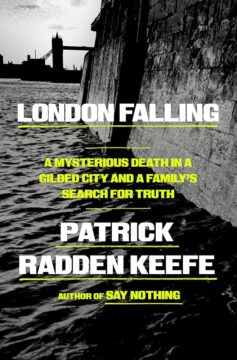 Following a chance conversation with a stranger in a London television studio in 2023, Radden Keefe picks up the unsolved mystery of a young man’s death and embarks on a quest to unravel it. The result is a masterclass of evidence-chasing, narrative clarity and authorial empathy.
The young man in question was Zac Brettler, second son of caring middle-class Jewish parents, Rachelle and Matthew, and grandson of Rabbi Hugo Gryn, a Holocaust survivor celebrated for the homely wisdom he dispensed on Radio 4’s Thought for the Day. Brought up in a comfortable mansion flat in ‘quietly prosperous’ Maida Vale, Zac was an athletic and sociable youngster, a pied piper to younger children in the neighbourhood and, according to his mother, always ‘at ease talking to adults’.
more here.
Enjoying the content on 3QD? Help keep us going by donating now.
The Old Guard: Confronting America’s gerontocratic crisis
Samuel Myon in Harper’s Magazine:
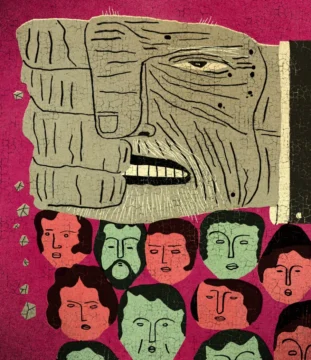 In Greek myth, Eos falls in love with Tithonus. She is the goddess of the dawn. He is a Trojan prince, yet still a mere mortal. Eos asks Zeus to give her mate the gift of eternal life—but, foolishly, she forgets to ask for eternal youth too.
Tithonus never dies; he just grows older and older. “Ruthless age,” goes the Homeric hymn recounting his story, is “dreaded even by the gods.” Tithonus becomes more decrepit and wizened with each passing year. Eventually, when he can no longer move, Eos has to shut him away, in a place where “he babbles endlessly, and no more has strength at all.” Eternal life amid the decline of one’s faculties is not a blessing but a curse. “Me only cruel immortality / Consumes: I wither slowly in thine arms,” Tithonus complains in Alfred Tennyson’s rendition of the myth (published in these pages in 1860), in a rare moment of lucidity that emerges from his everlasting gibberish.
The story of Tithonus no longer feels so outlandish, because our society postpones death to an unprecedented degree. Unlike immortals, we still pass. But the great majority of us, and not only the bad, now die old. In whatever nursing home he was parked in, Tithonus must have looked much like we increasingly do, as doctors continuously defer our mortality. We are approaching a time when a legion of Tithonuses will live in our midst. We have already felt the social and political consequences.
More here.
Enjoying the content on 3QD? Help keep us going by donating now.
Sunday, April 19, 2026
March into the Ruins
Bruce Robbins in The Baffler:
In a documentary i saw some years ago, I remember Jürgen Habermas, when asked to describe his friend the writer and filmmaker Alexander Kluge, responded that for all his life Kluge remained the person who was bombed as a child. Kluge was thirteen in April 1945, living with his parents in the beautiful medieval city of Halberstadt in Germany as World War II drew to a close. American troops were a day or two away from entering the city when U.S. B-17 bombers flew over and all but demolished it, killing some two or three thousand civilians. Kluge wrote about that day in Air Raid. The book, written in the 1970s but untranslated until 2014, begins with a ticket-taker in the local Halberstadt cinema, who is trying valiantly to sweep the rubble out of the aisles in time for the afternoon show when half the building has just been blown apart and the basement is crowded with corpses.
The moral seems to be that, like the ticket-taker, we try to keep to old habits when our world has exploded. The book is permeated by a sense of the absurd which, for all its indignation, somehow also leaves something to be savored. Kluge never seems to fit neatly within the philosophy he took from his teacher Theodor Adorno or, for that matter, the strenuously produced normative propositions of his friend Habermas, that other late-blooming flower of the Frankfurt School. Kluge wrote an obituary for Habermas, who died on March 14, days before his own death on March 25.
After studying modern history, music, and law in Frankfurt—he briefly served as the Frankfurt Institute’s legal counsel—Kluge began a career as an experimental filmmaker. His early films got him described by some as the German Godard, though he was less interested than Godard in placing himself within, and disrupting, cinematic tradition and more focused on exploring the particular squalor of his country’s recent past.
More here.
Enjoying the content on 3QD? Help keep us going by donating now.
The Social Edge of Intelligence
Bright Simons in The Ideas Letter:
We are on the verge of the age of human redundancy. In 2023, IBM’s chief executive told Bloomberg that soon some 7,800 roles might be replaced by AI. The following year, Duolingo cut a tenth of its contractor workforce; it needed to free up desks for AI. Atlassian followed. Klarna announced that its AI assistant was performing work equivalent to 700 customer-service employees and that reducing the size of its workforce to under 2000 is now its North Star. And Jack Dorsey has been forthright about wanting to hold Block’s headcount flat while AI shoulders the growth.
The trajectory has a compelling internal logic. Routine cognitive work gets automated; junior roles thin out; productivity gains compound year on year. For boards reviewing cost structures, it is the cleanest investment proposition since the internal combustion engine retired the horse, topped up with a kind of moral momentum. Hesitate, the thinking goes, and fall behind.
But the research results of a team in the UK should give us pause. In the spring of 2024, they asked around 300 writers to produce short fiction. Some were aided by GPT-4 and others worked alone. Which stories, the researchers wanted to know, would be more creative? On average, the writers with AI help produced stories that independent judges rated as more creative than those written without it.
So far, so on message: a familiar story about the inevitable takeover by intelligent machines. But when the researchers examined the full body of stories rather than individual ones, the picture became murky. The AI-assisted stories were more similar to each other. Each writer had been individually elevated; collectively, they had converged. Anil R Doshi and Oliver Hauser, who published the study in Science Advances, reached for a phrase from ecology to explain this: a tragedy of the commons.
Hold that result in mind: individual gain, collective loss. It describes something far more consequential than a writing experiment—it describes the hidden logic of our entire relationship with artificial intelligence. And it suggests that the most successful organizations of the coming decade will be the ones that do something profoundly counterintuitive: instead of using AI to eliminate human interaction by firing droves of workers, they will use it to create more human interaction. IBM has reversed course on its earlier human redundancy fantasies. I bet more will in due course.
More here.
Enjoying the content on 3QD? Help keep us going by donating now.
Purposeful Predictions
Ben Recht over at his substack, arg min:
Every engineer and scientist knows there is a fundamental difference between a “simulation” and a “prediction,” but what is the root of that distinction? At the highest level, we contrast simulation against black-box modeling. Simulations are typically thought of as “transparent boxes” where we can describe the intent of each part of the model that produces a forecast.
A roboticist might think of a simulation as a computer system designed to integrate the differential equations that define basic laws of physics. For example, you predict the path the airplane takes based on physical models of lift and drag and how the plane moves under different control settings. Simple simulations based on reduced equations might suffice for some tasks. For others, we might have to rely on computational fluid dynamics to truly capture the behavior we’re after.
The transparent box becomes murky when systems are too complex to predict precisely. Many designers accept adding randomness to their simulations, provided they can characterize the statistical models as plausible. The dynamics of coin flipping are too hard to capture precisely, but we’re usually fine with a random number generator that produces an even number of heads and tails. Noise in measurement devices often reliably has statistics that match those of Gaussian or Poisson random numbers, and such stochastic processes are reasonable stand-ins for the sorts of signals we’ll encounter in the wild. Maybe you can simulate elections based on random numbers derived from current polling results.
Where do we draw the line between sampling and simulation?
More here.
Enjoying the content on 3QD? Help keep us going by donating now.