Kaiser Kuo in The Ideas Letter:
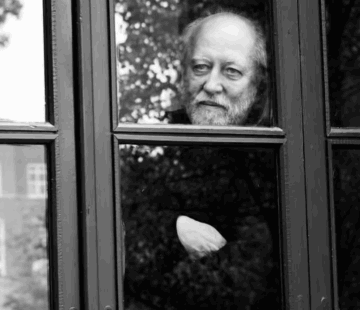
The world feels unsettled, as if history itself were changing tempo. The familiar landmarks of the modern age are blurring, slipping away, and the stories we once told ourselves about progress and power no longer map cleanly onto the terrain before us. What we are living through seems, with each new day, less like a passing rearrangement of power, less like a momentary realignment of nations. We sense something deeper and more enduring: a transformation whose outlines we are only beginning to discern. History no longer feels like something unfolding behind us but something rushing toward us, urgent and impossible to ignore.
The economic historian Adam Tooze, reflecting on his recent, intense engagement with China, put it to me in July with characteristic directness: “China isn’t just an analytical problem,” he said. It is “the master key to understanding modernity.” Tooze called China “the biggest laboratory of organized modernizations there has ever been or ever will be at this level [of] organization.” It is a place where the industrial histories of the West now read like prefaces to something larger.
His observation cuts to the heart of what makes this moment so difficult to process. We have witnessed not merely the rise of another great power, but a fundamental challenge to assumptions long embedded in Western thought—about development, political systems, and civilizational achievement itself. We simply haven’t yet found the intellectual courage to face it.
This reckoning touches all of humanity, but it falls especially hard on the developed world and hardest on the United States, where assumptions about exceptionalism and hierarchy are most exposed and most fiercely denied. The familiar framing of China as “rising” or “catching up” no longer holds. China is now shaping the trajectory of development, setting the pace economically, technologically, and institutionally. For Americans especially, the deeper psychic shock lies in the recognition that modernity is no longer something they authored and others merely inherit. That story has outlived its usefulness.
More here.
Enjoying the content on 3QD? Help keep us going by donating now.

 T
T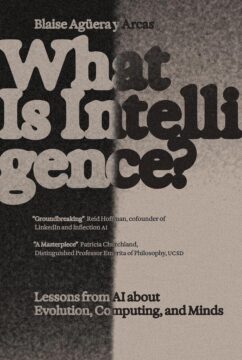 The trajectory of intelligent life on this planet can be described as an evolution of its verbs: to move, to reproduce, to hunt, to hide, to feel, to make, to use, to think. With the recent rise of artificial intelligence and competent chatbots, many experts have volubly opined about which verbs matter for what counts as “intelligence.” But like artificial insemination, artificial hearts, and artificial reefs, artificial intelligence was designed to interface with biology; its abilities and purpose are inferred exclusively from this interaction.
 During the 2018 election, Americans – candidates, parties, PACs, and small donors like you – spent a combined $5 billion pushing their preferred candidates. Although that sounds like a lot of money, Americans spent $12 billion on almonds that same year. Why the imbalance? The oil industry has strong political opinions, and they make $500 billion per year. Do they really think electing oil-friendly politicians isn’t worth 2% of revenue?
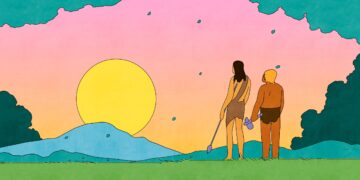 We are naturally a highly violent species with a thin veneer of civilization that masks a brutal proclivity for violence – or so many people think. In the seventeenth century, Thomas Hobbes said that human life without government is ‘solitary, poore, nasty, brutish, and short’. William Golding’s novel, The Lord of the Flies, which helped him win the Nobel Prize for literature in 1983 and many of us read in school, suggests that boys will rapidly descend into mob violence and brutal cruelty without oversight from authority. To know whether this is true, we need to understand the rates of violence among our ancestors.
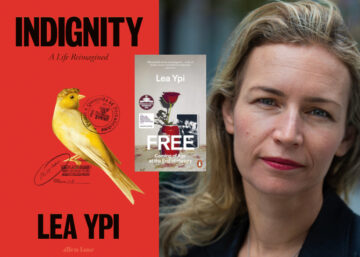 Ypi, a professor of political theory at the London School of Economics, is a transgressive “Kantian Marxist” (her own descriptor) in a world in which the Right claims a monopoly on transgression. Although she made her career as a serious interpreter of nineteenth-century German philosophy, she has also published widely on Marxism and political parties. Ypi’s last book, Free: Coming of Age at the End of History, released in 2021, held up Hoxha’s Albania as a funhouse mirror, bringing liberalism’s ideological delusions into relief in the process. The book was an international hit: it received near-universal acclaim and was translated into thirty-five languages.
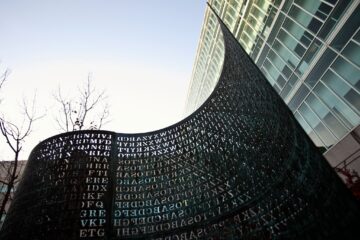 The sculptor Jim Sanborn opened his email account one day last month expecting the usual messages from people claiming to have solved his famous, decades-old puzzle.
 Our new research, published in the Journal of Social Psychology, suggests that some people consider it
 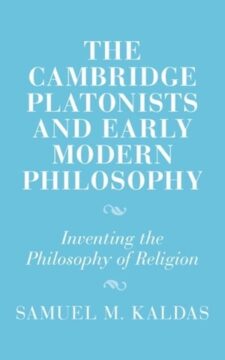 Samuel Kaldas’s book is an extremely welcome addition to the growing literature on the Cambridge Platonists. These philosophers have suffered from significant neglect by historians of philosophy, but as a result of the recent interest in lesser known early modern thinkers, this has been changing. Two questions are central to Kaldas’s book: (1) Is the term “Cambridge Platonists” an apt label for the philosophers in question? And (2) What is their significance in the history of philosophy? Contrary to some scholars (19-20), Kaldas convincingly argues that the label is warranted for Henry More, Ralph Cudworth, and the less well-known John Smith and Benjamin Whichcote. They shared a significant commitment to various Platonist ideas, and their contemporary critics sometimes accused them of inappropriately Platonizing tendencies. For Kaldas, their main importance lies in their contribution to the history of the philosophy of religion. He compellingly documents their significance in that context, but as I will explain later, they also have a lot to offer in other areas of philosophy.
 The office where Daniel Ksepka was working was overrun with ants. On the wall above the desk were army ants, bull ants, leaf-cutter ants and turtle ants. On a shelf were two honeypot ants that looked as if they had yellow balloons where their stomachs should have been. Kspeka, the curator of science at the Bruce Museum in Greenwich, Conn., did not call an exterminator. There was no need to: None of the ants in the office were real. The ones on the wall were drawings. The honeypot ants were plastic models made on the museum’s 3-D printer in preparation for an exhibition called “
 As time marches on, aging is inevitable. Naturally, a person can accumulate wrinkles, laugh lines, stress, and cellular damage. Of these, damaged cells can take multiple paths: they can undergo programmed death; they can proliferate uncontrollably and become cancer; or they can become senescent cells. They don’t claw their way out of graves, but senescent cells are the body’s biological zombies—damaged, unable to divide, but very much metabolically alive. Instead of dying like normal cells, these “undead” entities can avoid immune system clearance and linger in the brain and other parts of the body. “They are no longer the original cell that they once were,” explained
 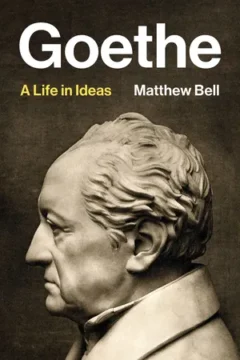 Goethe’s philosophical coordinates came initially from Rousseau and Spinoza, two thinkers who appealed to and fortified his own disposition. Rousseau’s concept of amour de soi, the urge for self–preservation, appears in Goethe as the need for individual authenticity. The opposing force, Rousseau’s amour propre, becomes the dead weight of social conventions suppressing whatever is distinctive, original and creative. Hence Goethe’s protagonists are powerful, charismatic personalities who experience society as a ‘prison’, the metaphor used by Werther and Faust. For some, such as Werther, the only way out is death. Others, such as Faust, preserve their essential character, but the struggle to do so leaves victims in its wake. Werther himself, unable to conquer his love for the married Lotte, leaves her and her husband devastated by his suicide. Faust’s egotism inflicts tragedy on his lover Gretchen. Goethe is honest about the cost to others of preserving one’s own authenticity.