
Daniel Immerwahr in The New Yorker:
 Robert Gates’s first memoir was titled “From the Shadows,” and that is an apt description of where Gates has comfortably resided. He is not a flashy man—a colleague once likened him to “the guy at P. C. Richards who sold microwave ovens”—but he has been for decades a quietly persistent presence in foreign policymaking. Gates has served as the Defense Secretary, C.I.A. chief, and deputy national-security adviser, among other roles. Unusually, he has occupied high positions under both Democratic and Republican Presidents. After George W. Bush placed him in charge of the Defense Department, Barack Obama kept him there as a trusted source of counsel. He has called Biden “a man of genuine integrity” and Trump “unfit to be Commander-in-Chief.”
Gates’s latest book, “Exercise of Power,” offers a stark view of the world. The country is “challenged on every front,” Gates believes. The places the United States must police are, in his various descriptions, a “bane” (Iran), a “curse” (Iraq), a “primitive country” (Afghanistan), and a “sinkhole of conflict and terrorism” (the Middle East). Its adversaries form a rogue’s gallery of “bad guys,” “thugs,” “serial cheaters and liars,” and “ever-duplicitous Pakistanis.”
More here.
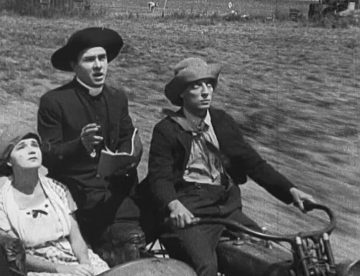 Comedy inverts norms and breaks barriers. But in order to reveal, as Northrop Frye suggested it must, “absurd or irrational [patriarchal] law,” comedy requires a fall guy. There has to be somebody on whom that law can come crashing down, in all its absurdity, all its irrationality—somebody who improbably emerges at the end, unscathed or even triumphant. Buster Keaton, that beautifully deadpan clown known as “The Great Stone Face,” had the pliability—and the subtle anarchic capacity for nonviolent resistance—to fill that role like nobody else before him. Or since.
 Emotions are at the same time utterly central to who we are — where would we be without them? — and also seemingly peripheral to the “real” work our brains do, understanding the world and acting within it. Why do we have emotions, anyway? Are they hardwired into the brain? Lisa Feldman Barrett is one of the world’s leading experts in the psychology of emotions, and she emphasizes that they are more constructed and less hard-wired than you might think. How we feel and express emotions can vary from culture to culture or even person to person. It’s better to think of emotions of a link between affective response and our behaviors.
 ERDAL ARIKAN was
 If some of the many thousands of human volunteers needed to test coronavirus vaccines could have been replaced by digital replicas—one of this year’s Top 10 Emerging Technologies—COVID-19 vaccines might have been developed even faster, saving untold lives. Soon virtual clinical trials could be a reality for testing new vaccines and therapies. Other technologies on the list could reduce greenhouse gas emissions by electrifying air travel and enabling sunlight to directly power the production of industrial chemicals. With “spatial” computing, the digital and physical worlds will be integrated in ways that go beyond the feats of virtual reality. And ultrasensitive sensors that exploit quantum processes will set the stage for such applications as wearable brain scanners and vehicles that can see around corners.
 We remember and we forget. Lots of people know that marijuana makes us forget, and researchers in the sixties and seventies wanted to understand how. They discovered that the human brain has special receptors that perfectly fit psychoactive chemicals like THC, the active agent in cannabis. But why, they wondered, would we have neuroreceptors for a foreign substance? We don’t. Those receptors are for substances produced in our own brains. The researchers discovered that we produce cannabinoids, our own version of THC, that fit those receptors exactly. The scientists had stumbled onto the neurochemical function of forgetting, never before understood. We are designed, they realized, not only to remember but also to forget. The first of the neurotransmitters discovered was named anandamide, Sanskrit for bliss.
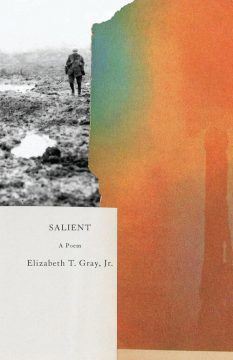 Elizabeth T. Gray, Jr., would seem to write discrete lyrics but no reader gets far in her work without succumbing to an overwhelming sense that a quest is relentlessly underway. It’s a quest that can only be fathomed through a total immersion in history and landscape and immediate psychic needs of those en route: kids out for a journey to the east, soldiers heading into death, the somewhat hidden but ever present presiding consciousness of her two long poems, Series India and Salient, the poet herself as a pained and adamant devotee to some ancient faith on a pilgrimage to the edge of the abyss. The immersion is at times so deep that we might doubt the existence of the wisdom that the figures in her poems are in search of and that the poet herself feels an unassuageable need for, and yet the force of the imagination brought to bear on this imperative for transcendence, and the acute mastery of cadence, phrasing, and image, make us want it too: to see the other side of death, to feel within ourselves some ecstatic completion.
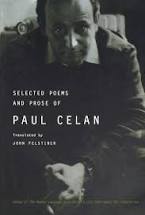 From his iconic “Deathfugue,” one of the first poems published about the
  Among the
 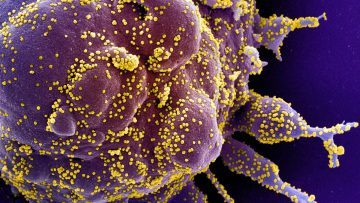 As far as scientists and historians can tell, the bacterium that caused the Black Death never lost its virulence, or deadliness. But the pathogen responsible for the 1918 influenza pandemic, which still wanders the planet as a strain of seasonal flu, evolved to become less deadly, and it’s possible that the pathogen for the 2009 H1N1 pandemic did the same. Will SARS-CoV-2, the virus that causes Covid-19, follow a similar trajectory? Some scientists say the virus has already evolved in a way that makes it easier to transmit. But as for a possible decline in virulence, most everyone says it’s too soon to tell. Looking to the past, however, may offer some clues.
 Government has descended into near-permanent deadlock. The resulting populist movements, on both the right and left, are highly democratic: intensely broad-based and grassroots, and at least rhetorically anti-elite. But they are neither liberal nor tolerant. On an operational level, it has become more important to “own the libs” or “cancel conservatives” than to achieve any meaningful objective, let alone compromise. All opposition is now treated as an existential threat.
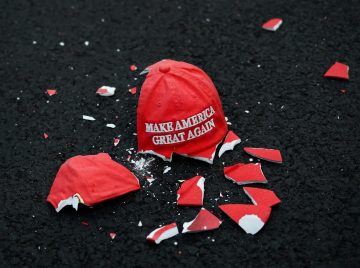 Historic is not a word that should be used lightly. It should nearly never be used for anything contemporary and only sparingly for events long past. Yet, it is being used with considerable frequency to describe the 2020 US Presidential elections; maybe, not inappropriately.
 Based on the last two presidential elections, there is clearly a failure in reporting, polling and understanding of almost half of America. Perhaps liberals would simply like to govern and run for office by only mobilizing their half of the population and overlooking that other half, but I would imagine this country won’t get closer to equal opportunity with that type of thinking. It’s true that much of the divisive language comes from Trump supporters who seems to enjoy Trump’s deplorable approach to life and politics. Does that embody every single person who voted for Donald Trump in the last two elections? If you think that, then you are as lost as the narrow reporting and polling I have witnessed during the last four years.
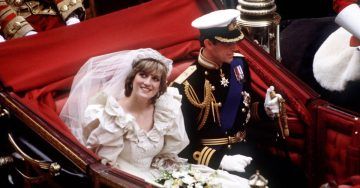 When Prince Charles and Lady Diana Spencer exchanged vows on July 29, 1981, the archbishop officiating the ceremony