The Paris Morgue

Amelia Soth at JSTOR Daily:

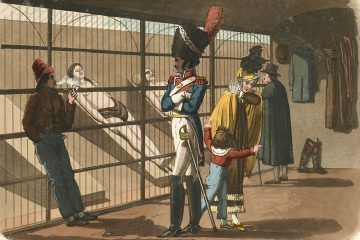
Behind a plate-glass window, framed by grand Doric columns, repose three bodies. Except for their leather loincloths, they are naked. From a pipe above each bed, a trickle of cold water runs down their faces. Their eyes are closed. They bear the marks of their deaths: one is swollen by drowning, one gashed by an industrial accident, another stabbed. A crowd of people gathers outside the window, staring at the bodies. This is the Paris Morgue, circa 1850.

Theoretically, the purpose of the display was to enlist public help in identifying unnamed corpses. But around the turn of the century, the morgue developed a reputation as a gruesome public spectacle, drawing huge crowds daily. The morgue was even listed in tourist guidebooks as one of the city’s unmissable attractions: Le Musée de la Mort.

more here.

The Media Learned Nothing From 2016

James Fallows in The Atlantic:

We’re seeing a huge error, and a potential tragedy, unfold in real time.

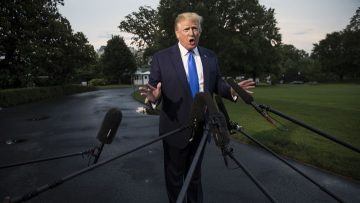
That’s a sentence that could apply to countless aspects of economic, medical, governmental, and environmental life at the moment. What I have in mind, though, is the almost unbelievable failure of much of the press to respond to the realities of the Trump age. Many of our most influential editors and reporters are acting as if the rules that prevailed under previous American presidents are still in effect. But this president is different; the rules are different; and if it doesn’t adapt, fast, the press will stand as yet another institution that failed in a moment of crucial pressure.

In some important ways, media outlets are repeating the mistake made by former Special Counsel Robert Mueller. In his book about the Mueller investigation, True Crimes and Misdemeanors (and in a New Yorker article), Jeffrey Toobin argues that Mueller’s tragic flaw was a kind of anachronistic idealism—which had the same effect as naivete. He knew the ethical standards he would maintain for himself and insist on from his team. He didn’t understand that the people he was dealing with thought standards were for chumps. Mueller didn’t imagine that a sitting attorney general would intentionally misrepresent his report, which is of course what Bill Barr did. Mueller wanted to avoid an unseemly showdown, or the appearance of a “fishing expedition” inquiry, that would come from seeking a grand-jury subpoena for Donald Trump’s testimony, so he never spoke with Trump under oath, or at all. Trump, Barr, and their team viewed this decorousness as a sign of weakness, which they could exploit.

More here.

“Belarmino,” a Hidden Masterwork

Richard Brody at The New Yorker:

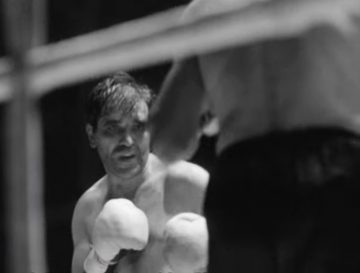
From the start, Lopes makes clear the fusion of style and substance that, no less than the fusion of reportage and reënactment, gives “Belarmino” its (and Belarmino his) artistic identity. The boxer—a former national champion in the featherweight division, who’s thirty-two and has been fighting for sixteen years—bounces down a long corridor to a training gym where, through a picture window, other athletes, all in striped shirts, are seen energetically working out as if in an angular dance scene choreographed by Jack Cole. Although others—younger, leaner, looser—spar and swarm, Belarmino, embodying the loneliness of the long-term boxer, punches the heavy bag with a fierce and solitary determination. It’s this very peculiarity—the essentially social and public nature of boxing versus the grimly encasing solitude of the boxer, the boxer’s desire for a private life and a social life versus the ferociously isolating dedication that the sport requires—which emerges in Lopes’s vision of Belarmino.

more here.

Cerebral Inception

Bob Grant in The Scientist:

You’d think that overseeing an entire issue of The Scientist focused on artificial intelligence would cause my mind to wander far into the future—robotic researchers formulating digital hypotheses, whizzing about in sleek, metallic labs. But immersing myself in stories about the novel insights and deep analyses enabled by smart instruments and machine learning did not transport me into a vision of science in the 23rd century.

Instead, I found myself thinking of the distant past, of a time when the first micro-vibrations of life were roiling the raw muck of early Earth. Rather than the grand sweep of what artificial intelligence may bring about—faster and more economical data processing, new insights, novel discoveries, and revolutionized workflows and transportation systems—I thought of the original form of intelligence on our planet. Intelligence on the molecular scale.

The Miller-Urey experiment of the 1950s began to shed mechanistic light on the dark mysteries of how Earth changed from an inanimate sphere to a planet bursting with life. But those famed researchers could zap into existence only amino acids, the building blocks of proteins. Later experiments pushed the chemical evolution toward life further by generating nitrogenous bases, the building blocks of RNA and DNA. But researchers have not yet succeeded in demonstrating a route from raw chemical materials to those crucial macromolecules. And it was through RNA, DNA, or both that life really burst from the starting blocks, those plucky nucleic acids acquiring a sort of self-motivation to replicate. That, I believe, was the dawn of intelligence.

More here.

Tuesday Poem

Eden Rock

They are waiting for me somewhere beyond Eden Rock:
My father, twenty-five, in the same suit
Of Genuine Irish Tweed, his terrier Jack
Still two years old and trembling at his feet.

My mother, twenty-three, in a sprigged dress
Drawn at the waist, ribbon in her straw hat,
Has spread the stiff white cloth over the grass.
Her hair, the colour of wheat, takes on the light.

She pours tea from a Thermos, the milk straight
From an old H.P. Sauce bottle, a screw
Of paper for a cork; slowly sets out
The same three plates, the tin cups painted blue.

The sky whitens as if lit by three suns.
My mother shades her eyes and looks my way
Over the drifted stream. My father spins
A stone along the water. Leisurely,

They beckon to me from the other bank.
I hear them call, ‘See where the stream-path is!
Crossing is not as hard as you might think.’

I had not thought that it would be like this.

by Charles Causley
from
Collected Poems 1951-2000
Picador, 2000

Sunday, September 13, 2020

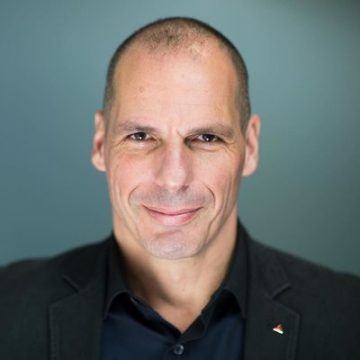
Yanis Varoufakis: Capitalism isn’t working, so here’s an alternative

Yanis Varoufakis in The Guardian:

Leftists excel at pinpointing what is wrong with capitalism. We wax lyrical about the possibility of some “other” world in which one contributes according to one’s capacities and obtains according to one’s needs. But, when pushed to describe a fully fledged alternative to contemporary capitalism, for many decades we have oscillated between the ugly (a Soviet-like barracks socialism) and the tired (a social democracy that financialised globalisation has rendered infeasible).

During the 1980s, I participated in many debates in pubs, universities and town halls whose stated purpose was to organise resistance to Thatcherism. I remember my guilty thought every time I heard Maggie speak: “If only we had a leader like her!” I was, of course, under no illusion: Thatcher’s programme was despotic, antisocial and an economic cul-de-sac. But, unlike our side, she understood that we lived in a revolutionary moment. The postwar class war armistice was over. If we wanted to defend the weak, we could not afford to be defensive. We needed to advocate as she did: out with the old system, in with a brand new one. Not Maggie’s dystopian one, but a brand new one nevertheless.

More here.

How to think about coronavirus risk in your life

Ezra Klein in Vox:

Covid-19 has turned life into an endless series of risk calculations. Can I take my child to see their grandparents, even if it means getting on a plane? Is it okay to begin seeing friends or dating? Should I attend religious services even if they are held inside? Do I have to wear a mask around my roommates? The profusion of these questions reflects public health failures, but we live in the wreckage of those failures. So how do we live our lives?

Julia Marcus is an epidemiologist at Harvard Medical School and a contributing writer for the Atlantic who has penned a brilliant series of essays about how to think about risk in the midst of this pandemic. Marcus’s starting point, which emerges from her previous work on HIV prevention, is that an all-or-nothing approach is blindly unrealistic: Everything is a trade-off. Shaming is a terrible public health strategy. And we can’t have a conversation about risk that ignores the reality of benefits, too.

More here.

The New Ten-Factor Authentication Processes For University Faculty

Jennie Young in McSweeney’s:

Dear Faculty,

Beginning next semester, we will be moving from two-factor to ten-factor authentication requirements for accessing the university’s digital resources. The first and second factors, signing in and entering a passcode from your phone app, will remain the same. From there:

Third Factor: Go out to your car and add the digits of your vehicle identification number to the digits of the passcode that your phone generates when you arrive at your car (we use GPS tracking between your phone and the University’s virtual parking pass technology to determine when you’ve arrived at your car).

Fourth Factor: When you return to the building with the sum of the VIN number and passcode, take it directly to your department’s Academic Administrative Assistant (AAA). Presuming she recognizes you on sight, she will take the sum you present to her and multiply it by a factor that only she can access. She will then use the new, increased total to remotely unlock your email. By the time you return to your office you’ll be able to continue signing in, no problem.

More here.

How Police Are Using ‘Super Recognizers’ Like Me to Track Criminals

Jak Hutchcraft in Vice:

The term “super recognizer” first appeared in 2009 and describes people who can remember more than 80 percent of the faces of people they meet (the average is 20 percent). The neural-mechanism behind super recognition is still largely unknown, but the skill seems to be genetic and possessed by only about one percent of the population.

Today, police in many countries employ super recognizers (possibly including Hong Kong) but police in the United Kingdom have recruited more than most.

Kelly Hearsey is one such super recognizer. She works for Super Recognizers International Ltd, which is contracted by a range of police departments across the country. She took a test in 2018 and got the highest score they’d ever seen from over six million candidates. She’s since worked full-time as a super recognizer on everything from murder investigations to keeping notoriously disruptive fans out of sporting events.

More here.

Outside the Man Box

Tracy O’Neill in The Baffler:
Though domestic violence constitutes one of the direst public health and criminal justice crises in the country, its gravity has been a belated and recent revelation in the American psyche, one many would still consider provisional. Around one in four American women will be harmed by a partner over the course of their lives, and while violent crime has declined in recent years, homicides due to domestic violence have not. Over half of the women killed in this country are killed by a loved one. Covid-19’s stay-at-home orders have left those suffering domestic violence more cut off from resources to protect them from abuse, including formal services like health care and shelters, as well as sites of informal social control like public playgrounds and churches, which have been shown to regulate the occurrence of abuse.

While “wife beating” has been illegal in every state since 1920, it was, until the 1970s, a crime often treated as a marginal misfortune. Its prohibition went largely unenforced by police and prosecutors. Psychologists tended to label survivors narcissistic, labile, and irresponsible. It took two to tango, the prevailing attitude held, and authorities were generally unwilling to step in to end the dance.

The battered women’s movement, as it was then known, emerged in the 1970s to advocate for the interests of those harmed. The first shelter in the United States opened in St. Paul, Minnesota, in 1974. Six years later, Ellen Pence, a feminist activist who would go on to earn her doctorate in sociology, co-founded the Domestic Abusive Intervention Project (DAIP). At once learned and funny, Pence bantered with judges, told irreverent jokes, and her warmth served her ambitious vision of building a “coordinated community response” to abuse, encompassing measures such as systematic arrest of offenders, court action, probation, resources for victim support, and auxiliary social services.

More here.

Sunday Poem

Hay for Horses

He had driven half the night
From far down San Joaquin
Through Mariposa, up the
Dangerous Mountain roads,
And pulled in at eight a.m.
With his big truckload of hay
behind the barn.
With winch and ropes and hooks
We stacked the bales up clean
To splintery redwood rafters
High in the dark, flecks of alfalfa
Whirling through shingle-cracks of light,
Itch of haydust in the
sweaty shirt and shoes.
At lunchtime under Black oak
Out in the hot corral,
—The old mare nosing lunchpails,
Grasshoppers crackling in the weeds—
“I’m sixty-eight” he said,
“I first bucked hay when I was seventeen.
I thought, that day I started,
I sure would hate to do this all my life.
And dammit, that’s just what
I’ve gone and done.”

by Gary Snyder

Welcome to the Next Level of Bullshit

Raphael Milliere in Nautilus:

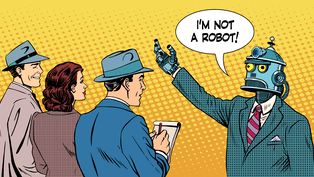
One of the most salient features of our culture is that there is so much bullshit.” These are the opening words of the short book On Bullshit, written by the philosopher Harry Frankfurt. Fifteen years after the publication of this surprise bestseller, the rapid progress of research on artificial intelligence is forcing us to reconsider our conception of bullshit as a hallmark of human speech, with troubling implications. What do philosophical reflections on bullshit have to do with algorithms? As it turns out, quite a lot.
In May this year the company OpenAI, co-founded by Elon Musk in 2015, introduced a new language model called GPT-3 (for “Generative Pre-trained Transformer 3”). It took the tech world by storm. On the surface, GPT-3 is like a supercharged version of the autocomplete feature on your smartphone; it can generate coherent text based on an initial input. But GPT-3’s text-generating abilities go far beyond anything your phone is capable of. It can disambiguate pronouns, translate, infer, analogize, and even perform some forms of common-sense reasoning and arithmetic. It can generate fake news articles that humans can barely detect above chance. Given a definition, it can use a made-up word in a sentence. It can rewrite a paragraph in the style of a famous author. Yes, it can write creative fiction. Or generate code for a program based on a description of its function. It can even answer queries about general knowledge. The list goes on.

GPT-3 is a marvel of engineering due to its breathtaking scale. It contains 175 billion parameters (the weights in the connections between the “neurons” or units of the network) distributed over 96 layers. It produces embeddings in a vector space with 12,288 dimensions. And it was trained on hundreds of billions of words representing a significant subset of the Internet—including the entirety of English Wikipedia, countless books, and a dizzying number of web pages. Training the final model alone is estimated to have cost around $5 million. By all accounts, GPT-3 is a behemoth. Scaling up the size of its network and training data, without fundamental improvements to the years-old architecture, was sufficient to bootstrap the model into unexpectedly remarkable performance on a range of complex tasks, out of the box. Indeed GPT-3 is capable of “few-shot,” and even, in some cases, “zero-shot,” learning, or learning to perform a new task without being given any example of what success looks like.

More here.

Saturday, September 12, 2020

When Monuments Fall

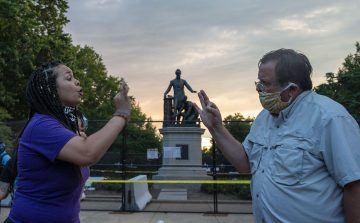
(Photo by Tasos Katopodis/Getty Images)

Kenan Malik in the NYRB:

“We stand today at the national center to perform something like a national act—an act which is to go into history.”

So said the great nineteenth-century former slave and staunch abolitionist Frederick Douglass at the unveiling of the Emancipation Memorial in Lincoln Park, Washington, D.C., in 1876. “That we are here in peace today,” Douglass told a crowd of almost 25,000, many of them African-American, “is a compliment and a credit to American civilization, and a prophecy of still greater national enlightenment and progress in the future.”

The idea for the memorial had come originally from former slave Charlotte Scott, of Virginia, who wanted a monument in honor of Abraham Lincoln. She gave five dollars to begin a funding drive, and the monument was eventually paid for entirely by former slaves.

Almost a hundred and fifty years later, many African Americans feel differently about the memorial. In June, Black Lives Matter protesters attempted, unsuccessfully, to topple the statue. D.C. Congresswoman Eleanor Holmes Norton vowed to introduce legislation to have the memorial removed. The Boston Art Commission unanimously resolved to take down a copy of the statue in Boston.

Some critics of the statue view Lincoln as a false friend of African Americans. Others see the statue itself as demeaning, with Lincoln represented as standing upright, while the free black man is on his knees. For defenders of the statue, on the other hand, to remove it is to erase a memorial paid for by former slaves and anointed by Douglass. It is to besmirch black history itself.

What is striking in this contemporary debate is that there is nothing new about it.

More here.

The appallingly bad neoclassical economics of climate change

Steve Keen in Globalizations:

ABSTRACT: Forecasts by economists of the economic damage from climate change have been notably sanguine, compared to warnings by scientists about damage to the biosphere. This is because economists made their own predictions of damages, using three spurious methods: assuming that about 90% of GDP will be unaffected by climate change, because it happens indoors; using the relationship between temperature and GDP today as a proxy for the impact of global warming over time; and using surveys that diluted extreme warnings from scientists with optimistic expectations from economists. Nordhaus has misrepresented the scientific literature to justify the using a smooth function to describe the damage to GDP from climate change. Correcting for these errors makes it feasible that the economic damages from climate change are at least an order of magnitude worse than forecast by economists, and may be so great as to threaten the survival of human civilization.

More here.

Could the US and Chinese economies really ‘decouple’?

Isabella Weber in The Guardian:

Talk of a new cold war is everywhere. Yet the economic context of the confrontation between the US and China is fundamentally different from the days of the iron curtain. The US and the Soviet Union had created competing globalisations, dividing the world into separate economic blocs. The two sides of the present divide are tied together as one “Chimerica” – with China as the global “workshop” and the US as the tech “headquarters” of the world. The old hope that this economic interdependence would prevent political conflict has been shattered. Instead, deep economic integration has increased the stakes: the core of the world economy could fall apart.

Today’s global economic order is still inscribed on the back of every iPhone: designed in California, assembled in China. Both parties in the race for the US presidency pledge to put an end to this arrangement. The promise, this time on both sides, is to bring manufacturing home. President Trump’s campaign proclaims that it will “end our reliance on China”. Joe Biden for his part is trying to out-hawk Trump and promises a future of “Made in America”.

Meanwhile, Xi Jinping proclaims “dual circulation” as China’s new economic strategy, which promises more focus on the domestic sphere rather than reliance on the rest of the world. It is true that one part of this dual approach is to signal that China’s door remains open. Xi has personally written to the CEOs of foreign firms assuring them of a favourable business environment. The Chinese government has announced plans to transform Hainan island into a gigantic free trade port and China has opened its financial and insurance markets at a pace that international fund managers had not dared to hope for. On the other hand, China is preparing for a falling-out with the US, emphasising the goal of self-reliance in critical sectors such as food and technology.

More here.

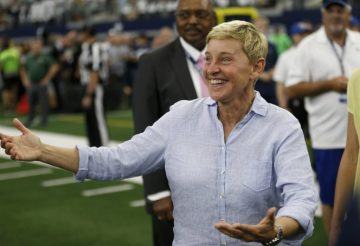
Ellen DeGeneres and the American Psychopath

Jacob Bacharach in TruthDig:

…Americans are too nice. That may seem like a paradox, since we are a country that blithely bombs the world and then weeps with self-pity and affronted dignity when the little people we just stomped on fail to forgive us for tearing out their fingernails. In fact, our niceness is itself a symptom of the moral obliviousness that permits us to enact atrocities in the first place. Niceness is not friendliness, not hospitality, not charity and not goodness. Niceness is the blank grin on the face of the psychopath: it is the public enactment of all the forms of love and kindness without the troublesome burden of loving anyone or treating people with kindness.

This is what an Ellen DeGeneres is really getting at when she brags about being friends with those who have “different beliefs.” It is not a matter of actual emotional attachment to any system of values, and it’s certainly not a matter of transcending minor political squabbles to form some approximation of a community. We are all friends with people who have different beliefs. It is quite literally nothing to brag about. For all the now-clichéd talk of America sorting itself ever more by affect and affinity group, pretty much every social person has friends with beliefs that differ—in ways large and small—radically from their own.

Rather, she is saying that it is more personally and professionally convenient just to be nice to whatever person happens to be in the same grandstand for the same spectacle of large men grievously injuring each other. It is not that there are disparate values to be bridged in order to form a diverse and tolerant society. Instead, it is hankering after the ease of a society in which there is no necessity to form a core of values beyond the practical calculation of personal and social advantage.

More here.