
Catherine Nicholson in New York Review of Books:
Nan Z. Da spent the first six and a half years of her life in the People’s Republic of China. She was born in the 1980s, during a period known as Gaige Kaifang, the “Reform and Opening-Up,” a time of political reorganization and economic liberalization undertaken in the long shadow of Mao’s dictatorship and the Cultural Revolution. Her family left China for the United States when she was a child, and she is now a scholar of nineteenth-century American literature and a professor of English at Johns Hopkins University. But of late she has undergone an uncanny reversion: “For more than six years I have taught Shakespeare’s King Lear, a piece of literature far outside my field, in a class that introduces students to the history and praxis of literary criticism.” Da added Lear to her syllabus, she says, “because it fast-tracks students to the hardest parts of literature and literary criticism”—close reading, textual bibliography, theater history, genre theory. It is plot-heavy, overburdened with detail, and careless of minor characters, and so it “places a great strain on interpretive validity, on accurate assessment and recall.” (Pop quiz: Who is Curan? How many people meet at Dover, or hide in trees? What happens to the King of France?) But Da’s reasons for assigning the play were also personal: “In my mind I was drawing a long and elaborate analogy.”
That analogy—“Lear, China, China, Lear”—forms the spine of Da’s new book, The Chinese Tragedy of “King Lear,” serving as axiom, intuition, experimental hypothesis, and knowing provocation. “Teachers of literature and criticism have to deal with bad analogies and allegoresis all the time,” Da observes. Shakespeareans in particular are well acquainted with the impulse to claim that the writer and his plays illuminate all manner of phenomena: modernity, Western civilization, “the human.” The impulse to analogize can generate fresh insights, but it can also efface what is urgently particular in a text, a time period, a cultural tradition, a historical crisis, a personal experience.
More here.
Enjoying the content on 3QD? Help keep us going by donating now.

 He was a radical,
 Guillermo del Toro has been shaping his vision for Victor Frankenstein’s monster since he was 11 years old, when Mary Shelley’s classic 1818 Gothic novel became his Bible, as he put it in a conversation in August.
 Many of the molecules in our bodies are
 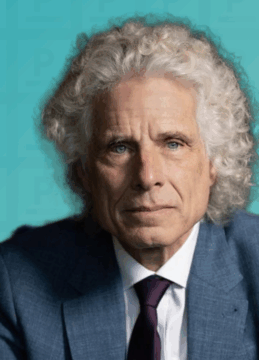 Steven Pinker: I’m using it in a technical sense, which is not the same as the everyday sense of conventional wisdom or something that people know. Common knowledge in the technical sense refers to a case where everyone knows that everyone knows something and everyone knows that and everyone knows it, ad infinitum. So I know something, you know it, I know that you know it, you know that I know it, I know that you know that I know it, et cetera.
 Almost
 At its core, The Ba***ds of Bollywood is a razor-sharp look at the dazzling yet treacherous world of
  The Ig Nobels were founded in 1991 by Marc Abrahams, editor of satirical magazine
  As its September meeting approaches, the US Federal Reserve is once again coming under political pressure to lower rates. President Donald Trump has been calling for such a move for months – sometimes demanding cuts as large as
 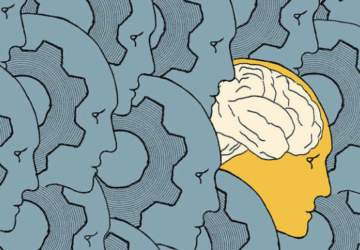 My life’s mission has been to create safe, beneficial AI that will make the world a better place. But recently, I’ve been increasingly concerned about people starting to believe so strongly in AIs as conscious entities that they will advocate for “AI rights” and even citizenship. This development would represent a dangerous turn for the technology. It must be avoided. We must build AI for people, not to be people.
 An omnipresent feature of liberal chronicles of the occupation is a fixation on how much was wasted: the $2.13 trillion spent and the 176,000 people who died. Surveying the destruction wreaked on Afghanistan, these accounts conclude, unsurprisingly, that the war was a total failure. The Taliban are once again in control of Kabul. Al Qaeda runs gold mines in Badakhshan and Takhar provinces. The Afghan army is a distant memory. This humiliation is often presented as a mystery. How could so much money—more than was spent on the Marshall Plan—and “goodwill,” in the New Yorker’s words, have achieved so little?