
Peter Singer and Agata Sagan in Project Syndicate:
 Many people make New Year’s resolutions. The most common ones, at least in the United States, are to exercise more, eat healthier, save money, lose weight, or reduce stress. Some may resolve to be better to a particular person – not to criticize their partner, to visit their aging grandmother more often, or to be a better friend to someone close to them. Yet few people – just 12%, according to one US study – resolve to become a better person in general, meaning better in a moral sense.
One possible explanation is that most people focus on their own well-being, and don’t see being morally better as something that is in their own interest. A more charitable explanation is that many people see morality as a matter of conforming to a set of rules establishing the things we should not do.
That is not very surprising in societies built on the Jewish and Christian traditions, in which the Ten Commandments are held up as the core of morality. But, today, traditional moral rules have only limited relevance to ordinary life. Few of us are ever in situations in which killing someone even crosses our mind. Most of us don’t need to steal, and to do so is not a great temptation – most people will even return a lost wallet with money in it.
More here.
 In the popular science world, physicist John Wheeler is probably best known for popularizing the term “black hole,” although his research spanned a broad range of fields, including relativity, quantum theory, and nuclear fission. He also worked on Project Matterhorn B in the early 1950s, the controversial US effort to develop a hydrogen bomb. In January 1953, Wheeler accidentally left a highly classified document concerning that program on a train as he traveled from his Princeton, New Jersey home to Washington, DC. It was a stereotypical “
 Our family had been fortunate. Ali was too young for school. Anna’s job allowed her to telework during the pandemic. Unlike many parents, we didn’t have to worry about money or child care. Our little boy adapted well to social isolation. He read, played catch and helped me cook. We explored local parks and ponds, avoiding people and chasing ducks.
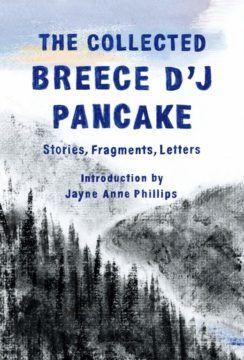 Pancake’s depictions of the culture and geography of Appalachia and the Trans-Allegheny were all but unprecedented. The hills and hollows of West Virginia were largely neglected in American literature, even the intensely regionalist literatures of the South, possibly because West Virginia had fought with the Union during the Civil War, and so had little to contribute to the revisionist horseshit of Lost Cause sentimentality. Pancake seems to know everything about this place, from its hilltops to its coal mines to its barrooms, and he has an eye for the small, sharp details that bring it to life. In “Hollow,” when Buddy wakes up on the floor of his trailer after a night of drinking and brawling, there is “a little ball of rayon batting against his nostril as he breathed.” Bo, in “Fox Hunters,” “stepped onto the pavement feeling tired and moved a few paces until headlights flooded his path, showing up the highway steam and making the road give birth to little ghosts beneath his feet.” At the same time, Pancake is always attentive to the natural world. He finds a kind of holiness in the history-dwarfing scale of geologic time.
 Both The Divine Comedy and Piers Plowman express verities accessed by the mind in repose; Langland’s poem, for not beginning in a dark wood but rather in a sunny field, embodies mystical apprehensions as surely as does Dante. A key difference is that Langland’s allegory is so obvious (as anyone who has seen the medieval play
 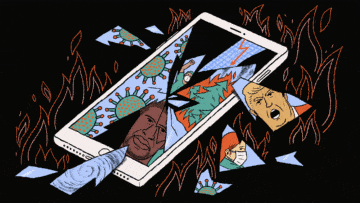 What tone can one possibly strike for an overview of 2020? The Queen’s old label of annus horribilis for her own most troubled time hardly seems adequate. Even the right point of view is hard to decide on. Does it make more sense to see the year from high above, taking a picture of an entire panicked planet, or to start from the ant’s- or worm’s-eye view, with the transformation of our manners and minds by the strangeness of 2020 (and by its sadness, too)? Begin with the scale of the misery and dislocation? Narrow down to the specific sensory strangeness of the year?
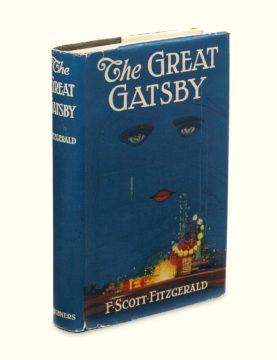 One of the pleasures of writing about a book as widely read as “The Great Gatsby” is jetting through the obligatory plot summary. You recall Nick Carraway, our narrator, who moves next door to the mysteriously wealthy Jay Gatsby on Long Island. Gatsby, it turns out, is pining for Nick’s cousin, Daisy; his glittering life is a lure to impress her, win her back. Daisy is inconveniently married to the brutish Tom Buchanan, who, in turn, is carrying on with a married woman, the doomed Myrtle. Cue the parties, the affairs, Nick getting very queasy about it all. In a lurid climax, Myrtle is run over by a car driven by Daisy. Gatsby is blamed; Myrtle’s husband shoots him dead in his pool and kills himself. The Buchanans discreetly leave town, their hands clean. Nick is writing the book, we understand, two years later, in a frenzy of disgust.
 It seems that there are all kinds of unresolved problems to do with Satyajit Ray – to do with thinking about him, with finding a language to speak about him that does not repeat the indubitable truisms about his humanism and lyricism. How does he fit into history, and into which history – the history of India; the history of filmmaking; some other – do we place him first?
 The population density of Africa is low overall, with its population being about the same as that of India, while its area is ten times larger. But Nigeria’s population density is fairly high, in fact higher than that of Italy. And its largest city, Lagos, a dense megalopolis of 20 million people living cheek by jowl, is just the kind of city where Covid-19 may be expected to spread fast.
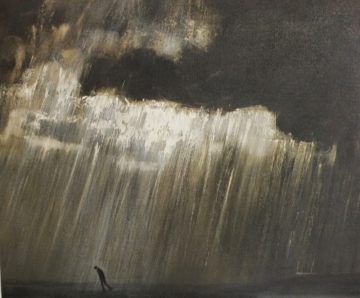 ‘
‘ With just three weeks left until the Inauguration of
 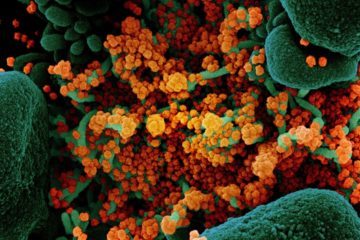 Editorials represent Nature’s collective voice on the week’s news, providing a commentary on a range of topics, from research discoveries to major world events involving science. And although 2020 has been dominated by just one topic, we’ve aimed to stay on top of other important developments, too.
 It’s important to see the full opportunity waiting ahead. Each planet or moon is its own world, with its own history and story to tell, and its own potential (however one might define this) for the future. Though mostly barren of life, they are far from empty; many are chock-full of the materials that would go into life-generating goo: sugars, amino acids, carboxylic acids and powerful molecules that drive reactions away from equilibrium. On bodies where widespread life might not be possible, many of them nevertheless contain microniches where life can take root and flourish for billions of years. Conceivably, for every planet that crossed the threshold of biogenesis, there were scores more that came part or even most of the way that just missed the nudge to do so.
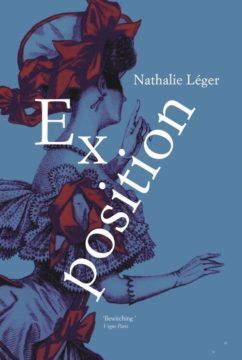 Exposition, Suite for Barbara Loden, and The White Dress are literary works of research. Léger is the Director of the Institut Mémoires de l’Édition Contemporaine (Institute for Contemporary Publishing Archives), so it is unsurprising that archives and the figure of the archive should feature in her work. What is perhaps more notable is the way in which Léger sees the archive as a literary space. In
 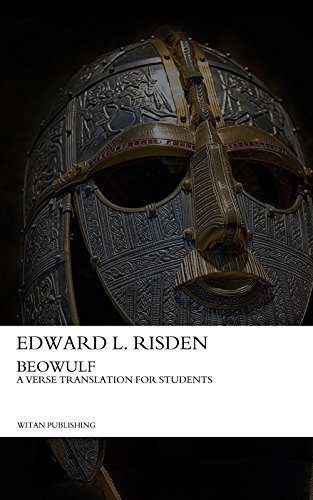 The tenth-century epic poem, Beowulf, is the longest surviving poem in Old English. Before the poem was transcribed in a single manuscript, now known as “The Nowell Codex, it was orally transmitted, which explains the alliteration, metrical structure, and memory aids alluding to previous events. At a surface-level, the poem is about a Geatish warrior who is employed to kill monsters, becomes king, and then gets killed by a dragon. Moreover, the poem also gives us some insight into the sociocultural context of early medieval England—the poem considers the politics of the comitatus bond (the relationship between lord and retainer), the history of several Germanic tribes, and as some scholars note, the transition from paganism to Christianity.