
Adam Gabbatt in The Guardian:
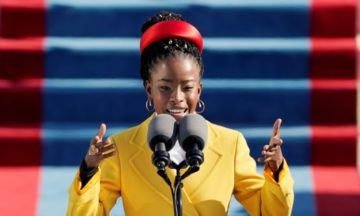 The inauguration of Joe Biden featured a slew of high-profile performers on Wednesday, but for many it was the lesser-known Amanda Gorman, the youngest inaugural poet in US history, who truly wowed the crowd. Gorman, who was named the first-ever national youth poet laureate in 2017, gave a powerful, five-minute performance after Biden was sworn in. She recited a poem she had written, in part, on the day of the US Capitol riots on 6 January. It was a tour-de-force from Gorman, who was approached by the Biden inaugural committee in late December, as the 22-year-old called for Americans to “leave behind a country better than the one we were left”. “We’ve seen a force that would shatter our nation rather than share it,” Gorman read. “Would destroy our country if it meant delaying democracy. And this effort very nearly succeeded. But while democracy can be periodically delayed, it can never be permanently defeated.”
The performance won instant plaudits, including from Michelle Obama, who sat just behind Gorman as she spoke. “With her strong and poignant words, @TheAmandaGorman reminds us of the power we each hold in upholding our democracy. Keep shining, Amanda! I can’t wait to see what you do next,” Obama tweeted.
More here.
 Like his many previous literary endeavors, Turkish novelist Orhan Pamuk’s new book Orange is about Istanbul, or rather how the city appears in his eyes. The book consists of color photographs of the city’s streets which Pamuk has been perpetually constantly taking for several years, always with the same technique and choice of motif. The result is a visual essay dedicated to the alleys and corners of his hometown. Over the author’s more than six decades living in Istanbul, Pamuk has witnessed the constant transformation of the city, notably from the gradual change from orange street lamps to white over the last ten years or so, not that the actual duration of the change matters. What does matter is the stark visible disappearance of the yellow-hued fluorescent lamps bringing a loss of the magical moments in a city landscape he dearly loves; the change is one he accepts only with some bitterness.
 The daily press conferences from Downing Street since March 2020 underline the prominence given to epidemiologists, behavioural scientists and the medical profession in driving policy reaction to the Covid-19 crisis. This may be evidence of a welcome return of scientific expertise to the heart of government after a period when much of the population and elements of the government had, in the words of
  We still don’t have all the technologies we need to address climate change.
 L
L Hester Street contains no muckraking impulse to uncover the “truth” of How the Other Half Lives. She rejected any sort of outsider gaze in favor of an awareness to the cadences of Yiddish, the shimmering falling leaves as an immigrant son and his father learn how to play baseball in a sun-kissed park, the loving camera effect gotten out of Keats’s blindingly over-exposed white shirt. It’s a perceptiveness that doesn’t advertise how perceptive it is. Much of Hester Street is consumed with the ordinary problem of how Carol Kane should style her wild hair, what raiment she should cross Delancey Street in, which hat to wear. Nearly a century after the events of Hester Street, in Crossing Delancey (my favorite Silver film, a rom-com set in contemporary 1988 New York), Amy Irving is obsessed by the same problem: whether to wear a Diane Keaton-ish bowler hat that was gifted to her by the owner of a pickle shop (Peter Riegert). The past constantly revives in Silver; newer generations never forget where they came from; time ebbs and flows in and out of style.
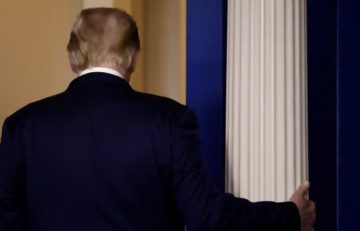 It could be considered a small thing that Trump can neither meet with Biden nor acknowledge that he has lost the election to him. But what if the refusal to acknowledge loss is bound up with the path of destruction we call Trump’s exit route? Why is it so hard to lose? The question has at least two meanings in these times. So many of us are losing people to Covid-19, or fearing death for ourselves or others. All of us are living in relation to ambient illness and death, whether or not we have a name for that sense of the atmosphere. Death and illness are quite literally in the air. And yet, it is unclear how to name or fathom these losses, and the resistance of Trump to public mourning has drawn from, and intensified, a masculinist refusal to mourn that is bound up with nationalist pride and even white supremacy. The Trumpists tend not to grieve openly pandemic deaths. They have conventionally rejected the numbers as exaggerated (“fake news!”) or defied the threat of death with their gatherings and maskless marauding through the public spaces, most recently in their spectacle of thuggery in the US Capitol in animal costumes. Trump never acknowledged the losses the US has suffered, and had no inclination or capacity to offer condolences. When the losses were referenced, they were not so bad, the curve was flattening, the pandemic would be short, it was not his fault, it was China’s fault. What people need, he claimed, was to get back to work because they were “dying” at home, by which he meant only that they were driven crazy by domestic confinement.
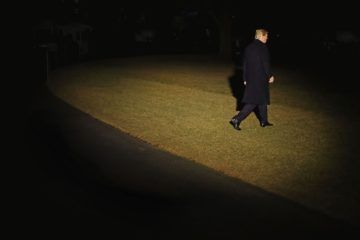 Precisely at noon on Wednesday,
 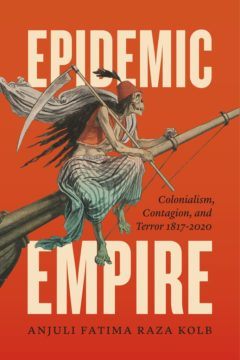 Anne Schult: Over the course of the Covid-19 pandemic, reflections on contagious disease as allegory have abounded, and some of the most canonical texts engaging with this trope—from Susan Sontag’s
 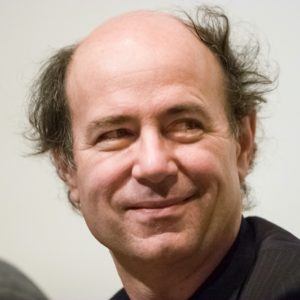 What is the world made of? How does it behave? These questions, aimed at the most basic level of reality, are the subject of fundamental physics. What counts as fundamental is somewhat contestable, but it includes our best understanding of matter and energy, space and time, and dynamical laws, as well as complex emergent structures and the sweep of the cosmos. Few people are better positioned to talk about fundamental physics than Frank Wilczek, a Nobel Laureate who has made significant contributions to our understanding of the strong interactions, dark matter, black holes, and condensed matter, as well as proposing the existence of
  It is time to define responsibility and hold these companies accountable for how they aid and abet criminal activity. And it is time to listen to those who have shouted from the rooftops about these issues for years, as opposed to allowing Silicon Valley leaders to dictate the terms.
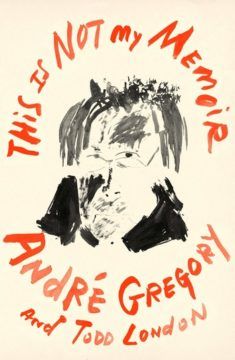 Earlier in his career, Gregory writes, theater was a “drug to relieve the pain of living.” But escaping into his “calling” came with no shortage of throbbing side effects. One of the “most awful” days of Gregory’s life is the one when he directs a scene at Strasberg’s Actors Studio only to receive a brutal critique from the famed teacher in front of his fellow students, among them Marilyn Monroe and Paul Newman. (He’d stay away from Strasberg’s class for months.) The belated success of his Alice came only after a succession of early failures: being fired from three consecutive directorships at small regional theaters. An “enfant terrible” in these years, Gregory hired a chemist to synthesize the smell of “rotting flesh” for a production in Philadelphia, resulting in an actor vomiting during a tech rehearsal and Gregory’s dismissal from the play. Another firing, from a theater in Los Angeles, came after he was punched by the program’s benefactor, the movie star Gregory Peck.
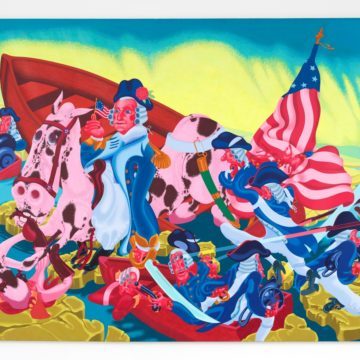 A mild sensation in the late Sixties, a cult artist in the early Aughts, and now a seasoned art world veteran, Saul, who is 86, is having a moment. “How long until Peter Saul is rediscovered once and for all,” Beau Rutland wrote on the occasion of Saul’s comprehensive 2017 show at the Schirn Kunsthalle in Frankfurt. European retrospectives and newly respectful reviews have culminated in a two-floor survey at the New Museum last February. It is Saul’s first retrospective in New York City, accompanied by a lavish catalog and the publication of his “professional artist correspondence,” a fascinating collection of letters written to his parents and his longtime gallerist Allan Frumkin.
 It was 10 years ago that