
 Eric Levitz in NY Magazine:
Last week, a motley mass of shitposters, gambling enthusiasts, and disaffected Zoomers — united by hate for Wall Street and love of chicken tenders — beat a multibillion-dollar hedge fund at its own game. Through their collective intelligence and audacity, users of the Reddit forum WallStreetBets executed a sophisticated “short squeeze” that took money away from some billionaire speculators, gave it to some badly indebted workers, and made a mockery of neoliberal capitalism’s legitimizing myths. Unfortunately, right when these working-class retail investors had Wall Street’s titans on the run, the plutocracy’s visible hand appeared to reach down and thwart them: Robinhood, a trading app popular with young recreational investors, suddenly barred its users from buying GameStop shares, thereby relieving pressure on the hedge-fund shorts.
That is one way of recounting the GameStop rally, anyway.
Here is another: A group of small-time speculators — including some finance-industry professionals — orchestrated a pump-and-dump scheme that involved convincing a lot of financially inexpert (and/or politically disaffected) people that they could stick it to Wall Street’s largest money managers by … bidding up the price of an equity that is owned by Wall Street’s largest money managers. This generated enough momentum to trigger a “short squeeze,” and the price of GameStop shares shot to the moon. Wall-to-wall media coverage ensued. Inexperienced investors bought the hype, and began piling into what now resembled a Ponzi scheme: When the bubble finally burst, those who bought in early would have a chance to cash out before the stock fell beneath their break-even price; those who bought late would have little warning before the “dump” wiped them out. By late last week, so many people were buying GameStop shares over gamified phone apps that regulations aimed at ensuring the stability of financial markets kicked into gear. The stock market’s central clearing hub calculated that it faced a high risk in facilitating more GME buys, and demanded billions in collateral from brokerages ordering such trades. Lacking the funds necessary to meet this demand, Robinhood was compelled to restrict GameStop buying on its platform while it sought an infusion of liquidity. That pause hastened the inevitable end of the GameStop rally, which ultimately achieved little beyond popularizing participation in stock trading (a development that will enrich Wall Street at the expense of working-class people with gambling problems).
More here.
 Virginia Jackson and Meredith Martin in Avidly:
 Jessica Boyall in Sidecar:
 Phenomenal World has releases its first collection
  Ian Balfour reviews The Benjamin Files by Fredric Jameson, in the LA Review of Books:
 If I had stepped onstage at a metal concert in the late ’80s and announced to the audience that in the future they would be listening to all-synthesizer metal albums, I’d have had enough beer thrown at me to turn in my outfit for a bottle deposit. The metal and noise genres are reputed to be intrinsically rigid, but that’s what makes them so fun, so compelling and infuriating. Nowhere is this more evident than when surveying the totality of Aaron Turner’s work as an artist, musician, and founder of the heavy, influential, and (mostly) defunct label Hydra Head Records. Turner’s present band SUMAC—since its inception on a nonstop tear of activity, including a recent collaboration with Keiji Haino—just released May You Be Held, the latest planet on their horizon of metal.
 In brief, the circumstances were these: Heine, a master of caustic wit and raw heartbreak, was in his early thirties and had found fame with his “Buch der Lieder” (“Book of Songs”), a collection of outwardly Romantic lyric poems with an ironic undertow that often escaped early readers. Platen bore a noble name—Count Platen-Hallermünde—but had grown up without financial advantages, serving in the military before turning to literature. He had won notice for finespun odes, sonnets, and adaptations of the Persian ghazal. Karl Immermann, a friend of Heine’s, had made cracks about pretentious poets who “vomit Ghaselen”; Heine quoted Immermann’s lines in one of his volumes of “Reisebilder” (“
 JANUARY 6 WAS SUPPOSED
  Stop me if you’ve heard this one: A Black man walks into a federal government office and says, “Give me a lot of money and I’ll build you a Black city.” And the government, to everyone’s surprise, says, “OK, here’s $14 million!” No? Most people haven’t. The story of Floyd McKissick’s dream, struggle and, ultimately, failure to build an American city on behalf of Black citizens is one of the greatest least-told stories in American history. In “Soul City,” Thomas Healy chronicles this tragically quixotic enterprise by McKissick, a civil rights activist turned capitalist, who attempted, beginning in 1969, to build “Soul City,” a Black-run city on a former slave plantation in rural North Carolina, close to Southern Klan country.
 I am just one of many artists who have been affected by a new McCarthyism that has taken hold amid a rising climate of intolerance in Germany. Novelist
  The creature stretched, then clung upright against the tree with its sharp claws and began to groom. Its skin required some attention as it had, frankly, a lot of it. A membrane stretched from its neck via its hands and feet to its tail, a kite-like feature that distinguishes the colugo, once popularly known as the flying lemur, from other night gliders like the flying squirrel, which has a long tail that it uses to fan itself through the air. Because they don’t fly, nor use a tail to fan, colugos, with the logic of a hand glider launching from a hillside, typically climb high into a tree before attempting to glide. Still, their range is impressive. According to Miard they’ve been recorded gliding a full 150m, although hops of 30m or less are far more common.
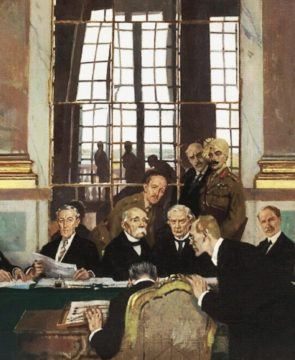 The Treaty of Versailles—a contract that changed the course of the century and beyond—has been all but forgotten in the public sphere and in popular discourse. As a result, few people think about the world we live in as being made by the Treaty. In fact, most don’t think about it at all.
 Like many women in their 30s, I feel a certain nostalgic connection to Britney Spears. In high school, I remember watching her dizzying rise as America’s golden girl. Then came her public struggles and searing battering by the paparazzi and tabloids while I was in my early 20s. I have also felt a fascination with her unusual
  What she was up against were, in short, warnings. These were most explicit each Lent and Easter. In April 1932, Eliot said he had gained so much that he could not give up his journey towards what he termed “reality”: as he put it in the Quartets, “human kind / Cannot bear very much reality.” The real thing lay beyond life, and he could no longer accept the kind of love that would mean giving that up. If he were to rank his two narratives, the supernatural did come first. Desire was evil, he believed, and talking to Hale more frankly than to anyone, he explained how difficult it was to fight this evil when he woke in the morning. When she notes his diminished expressiveness in the spring and summer of 1932, he explains this as a strategy, inseparable from unsatisfied desire. His typewriter stumbles, he crosses out and picks up the thought again with more deliberation, putting companionship before passion, then dependence, reverence and a protective instinct. He decides to label his feeling for her “respect.” True enough, though only one strand. He was not so earnest that he did not sometimes fix on her bathing costume and wavy hair.
 What is racial fraud and how is it possible? The answer would be clear enough, perhaps, if race were a biological reality. But the consensus seems to be that race is a social construction, a product of human ingenuity. So why can’t you choose to be any race you want?