
B. D. McClay in The Hedgehog Review:
 Lately, I’ve found myself wondering if the time spent in lockdown is going to be memorable or if it’s just going to be one long blur of days spent more or less the same way—waking up, staring, trying to work, forgetting to do things, drinking, sleeping. Even the initial flood of pieces about the lockdown experience has mostly dried up, replaced by tweets in which people confess not to know how to get through the sameness of each predictable tomorrow. There’s nothing to say about nothing. Furthermore, no one wants to read about it. No one even wants to write about it (though here I am anyway).
At the same time, however indistinct my memories may be, what’s going on is very much something. It seems likely that before the vaccine has been widely administered we will cross 500,000 American dead. Lockdown life is bad, but for people in my position—employed, childless, and able to work from home—about as good as it can be. I don’t have to risk my health to work. I don’t have children whose online classes I have to manage. I am not in an “at risk” category. From this comparatively sheltered position, lockdown is mostly about living the same day over and over as the background noise of the news grows slowly worse and promises of financial assistance from the government remain confusing and constantly changing.
More here.
 A common argument against free will is that human behavior is not freely chosen, but rather determined by a number of factors. So what are those factors, anyway? There’s no one better equipped to answer this question than Robert Sapolsky, a leading psychoneurobiologist who has studied human behavior from a variety of angles. In this conversation we follow the path Sapolsky sets out in his bestselling book
  In 2020, President Donald Trump received more votes, almost 75 million, than any sitting president in U.S. history. And yet he lost the popular vote to Joe Biden, who received more votes than any presidential candidate in U.S. history—full stop. The 2020 election will thus go down in history as one in which Americans were both remarkably mobilized and sharply divided.
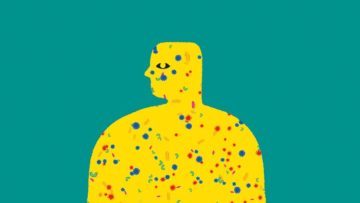 In contrast to the gut, which offers a near-ideal habitat for the growth of fermentative bacteria, the skin is an inhospitable expanse. Much of the epidermal layer that protects humans from the elements is dry, salty, acidic and nutrient-poor. The exceptions are the oases around lipid-rich hair follicles. Despite this adversity, a diverse and physiologically important array of bacteria, viruses, fungi and archaea make their home on the skin. Typically, a person has around 1,000 species of bacteria on their skin. And, as might be expected from such a large area — roughly two square metres for an average adult — the skin offers a variety of distinct ecosystems, which create conditions that favour different subsets of organisms.
 From December 31, 1957 until December 31, 1967, the artist and writer Henry Darger (1892–1973) kept a series of six ring-binder notebooks with almost daily entries on the weather in his native Chicago. On the outside cover of the first book, Darger describes the project, with encyclopedic enthusiasm, as a “book of weather reports on temperatures, fair cloudy to clear skies, snow, rain, or summer storms, and winter snows and big blizzards—also the low temperatures of severe cold waves and hot spells of summer.”
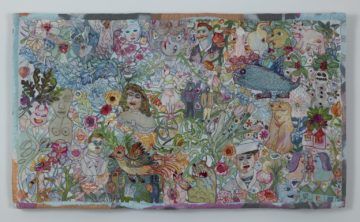 Angels, devils, dragons, and monsters are just a few of the unruly creatures that maraud across
 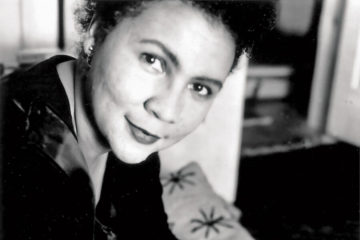 Black feminist thought has become crucial to how we navigate the social, economic, and political currents in America. To understand the consequences of pervasive racist narratives that seep into mainstream media – as well as into public policy and legislation – we must first examine how these narratives affect one of this country’s most vulnerable populations: Black women.
 As the pandemic raged in 2020, my boyfriend and I were confined within the closed quarters of my two-bedroom flat in Delhi. When the claustrophobia got too heavy, I would step out to rediscover the pleasure of walking with a sense of calm. I would try — and regularly fail — to meet my pre-pandemic mark of eight kilometers every day. It was not a means to an end. I did not have a grand plan. It was just a way to be a part of the city.
 A novel computer algorithm, or set of rules, that accurately predicts the orbits of planets in the solar system could be adapted to better predict and control the behavior of the
 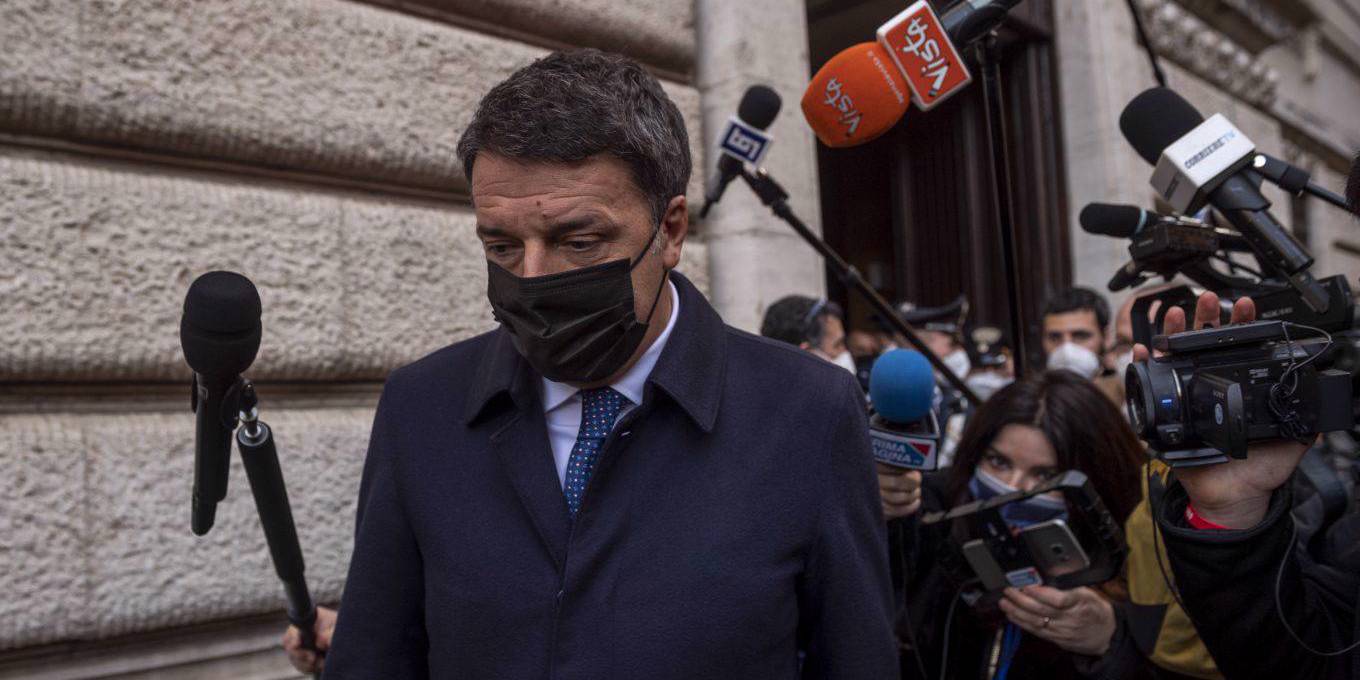 With deft and bold action, Mario Draghi’s unity government in Italy can go some way toward addressing the COVID-19 emergency, laying the groundwork for long-term economic recovery, and restoring Italians’ confidence in their political leaders. But he cannot do it alone.
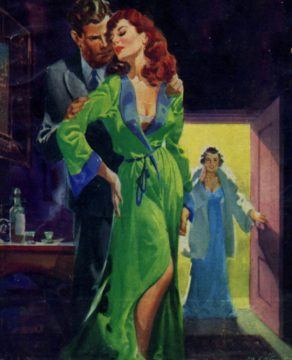 Tolstoy was a moralist. He wrote one novel—Anna Karenina—in which infidelity ends in death, and another—War and Peace—in which his characters endure a thousand pages of political, military and romantic turmoil so as to eventually earn the reward of domestic marital bliss. In the epilogue to War and Peace we encounter his protagonist Natasha, unrecognizably transformed. Throughout the main novel, we had known her as temperamental, beautiful and reflective; as independent, occasionally to the point of selfishness; as readily overwhelmed by ill-fated romantic passions.
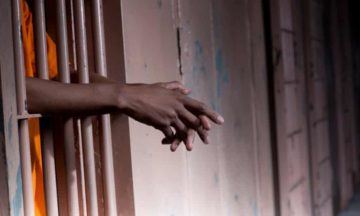 In 2008, months before his election as president, Barack Obama assailed feckless black fathers who had reneged on responsibilities that ought not “to end at conception”. Where had all the black fathers gone, Obama wondered. In The New Jim Crow, Michelle Alexander has a simple answer to their whereabouts: they’ve gone to jail.
 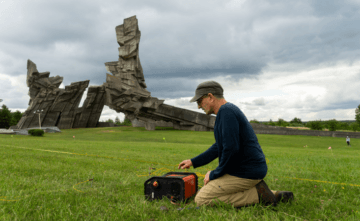 On a trip to Warsaw, Poland, in 2019, Richard Freund confronted the history of resistance against the Nazis at a Holiday Inn. Freund, an archaeologist, and professor of Jewish Studies at Christopher Newport University in Virginia, was led by the hotel manager into the basement. “Lo and behold,” Freund says, a section of the Warsaw Ghetto wall was visible. Freund was in Warsaw accompanied by scientists from